
Regional bird guide
Northeast Bird Guide
The Northeast, covering New England, New York, New Jersey, Pennsylvania, Delaware, Maryland and Washington, DC on this site, packs forests, coasts, wetlands and cities into a compact area. Bird presence and timing vary by location, weather and migration, so treat this guide as a starting point.
Landscape and habitats
The region runs from rocky coast and sandy barrier islands to the Appalachian ridges, northern hardwood and spruce-fir forests, river valleys and dense suburbs. Most of it was once forest, and mixed woodland still covers much of New England and the Appalachians. See our forests, coastlines and wetlands guides for how birds use each.
Because the region is densely populated, many of its best bird places are parks, preserves and refuges close to cities. Backyards and suburbs matter here too, and species such as the Northern Cardinal, Blue Jay and Black-capped Chickadee are familiar at feeders.
Elevation and latitude change the picture quickly. A walk from a coastal marsh to a northern hardwood hillside crosses very different bird communities, and the boreal spruce forests of northern New England hold birds that are rare farther south. Cities such as New York, Philadelphia and Boston lie on the migration route, and their parks can be surprisingly good in spring and fall. River corridors and lake shores serve as natural guides for birds on the move.
Migration and flyway context
The Northeast lies largely within the Atlantic Flyway, a corridor that follows the Atlantic seaboard and is one of the four administrative flyways used by the U.S. Fish and Wildlife Service. Birds also move across the region overland and along the coast, and the Great Lakes shorelines, Delaware Bay and coastal headlands often concentrate migrants.
Weather shapes the movement. Favorable winds can bring many migrants in one night, while storms can delay or redirect them. Coastal points and islands can attract unusual birds after strong weather, though nothing is guaranteed. Our migration hub explains the basics.
Birding highlights by season
Spring brings returning songbirds, including warblers and thrushes that move through woodlands and parks, plus waterfowl on thawing lakes. Summer is the nesting season, with marsh and woodland birds raising young and shorebird activity along beaches.
Fall is a good time for hawks following ridgelines, shorebirds on tidal flats and mixed flocks of songbirds. Winter brings ducks, geese and gulls to open water, and northern birds in some years. For more by month, see the seasonal calendar.
Seabirds and shorebirds add to the coastal calendar. Coastal waters hold gulls, terns and sea ducks, and offshore trips with licensed operators can show birds not seen from land. Hawk-watch sites along ridges and coasts count migrating raptors in fall, and their public tallies are a good way to see how migration varies by day and weather. Winter birds from farther north can appear in numbers some years and be nearly absent in others.
Regional hazards and etiquette
Ticks are a concern in grass and woods in much of the region, so wear long pants, use repellent as directed on the label and check yourself after a walk. Winter cold, coastal wind and slippery ice are real safety issues. Tides can cut off sandbars and flats.
Beach-nesting birds on the Atlantic coast are sensitive to disturbance. Obey closures and keep dogs leashed. Much of the region is private land, so ask permission and respect posted signs. Avoid playback and stay at a distance from nests, as covered in our guide to observing birds responsibly.
Planning tips
Check eBird or local Audubon chapters for recent sightings, and look at refuge and state park sites for closures. Mornings are usually best. Dress in layers and bring binoculars with a good field of view for fast-moving forest birds.
Use the bird finder to identify unfamiliar birds by size, color and habitat, and the explore tool to browse by region. Because migration timing shifts from year to year, local reports are a better guide than fixed dates.
Consider traveling off-peak. Weekdays and early hours are quieter in popular parks, which helps both you and the birds. Public transit reaches many city parks and some coastal sites, so a car is not always needed. Join a local walk to learn the best spots and to see how experienced birders handle crowds and sensitive areas.
Frequently asked questions
What is the best season for birding in the Northeast?
Spring and fall migration offer the greatest variety, and early mornings are usually best. Winter and summer each offer their own birds. Exact timing depends on location, weather and the year.
Which flyway covers the Northeast?
Most of it falls within the Atlantic Flyway, an administrative flyway defined by the U.S. Fish and Wildlife Service. Birds do not follow these lines strictly, and many migrate across wide fronts.
How can I protect myself from ticks while birding?
Wear long pants, use repellent following its label, stay on trails and check your skin and clothing afterward. Local health departments publish current guidance.
Season by season
Presence varies. Bird presence and timing change with location, weather, habitat and migration. Treat this page as a starting point, then check recent local sightings (for example on eBird) before you go.
Spring
Songbirds return to woods and parks, and waterfowl move through thawing lakes. Peak timing shifts north and with the weather.
From our library (24): American Goldfinch, American Robin, Bald Eagle, Barn Swallow, Belted Kingfisher, Black-capped Chickadee, Blue Jay, Canada Goose, Downy Woodpecker, Eastern Bluebird, Great Blue Heron, Great Horned Owl, House Finch, Mallard, Mourning Dove, Northern Cardinal, Northern Mockingbird, Osprey, Red-bellied Woodpecker, Red-tailed Hawk, Red-winged Blackbird, Ruby-throated Hummingbird, Song Sparrow, White-breasted Nuthatch
Summer
Nesting season in woods, marshes and beaches. Birds are less visible, so early mornings and listening work best.
From our library (25): American Goldfinch, American Robin, Bald Eagle, Barn Swallow, Belted Kingfisher, Black-capped Chickadee, Blue Jay, Brown Pelican, Canada Goose, Downy Woodpecker, Eastern Bluebird, Great Blue Heron, Great Horned Owl, House Finch, Mallard, Mourning Dove, Northern Cardinal, Northern Mockingbird, Osprey, Red-bellied Woodpecker, Red-tailed Hawk, Red-winged Blackbird, Ruby-throated Hummingbird, Song Sparrow, White-breasted Nuthatch
Fall
Migration returns, with hawks along ridges, shorebirds on flats and songbird flocks in cover. Timing varies by year.
From our library (25): American Goldfinch, American Robin, Bald Eagle, Barn Swallow, Belted Kingfisher, Black-capped Chickadee, Blue Jay, Brown Pelican, Canada Goose, Downy Woodpecker, Eastern Bluebird, Great Blue Heron, Great Horned Owl, House Finch, Mallard, Mourning Dove, Northern Cardinal, Northern Mockingbird, Osprey, Red-bellied Woodpecker, Red-tailed Hawk, Red-winged Blackbird, Ruby-throated Hummingbird, Song Sparrow, White-breasted Nuthatch
Winter
Ducks, geese and gulls gather on open water, and feeders get busy. Northern visitors vary from year to year.
From our library (17): American Goldfinch, American Robin, Bald Eagle, Belted Kingfisher, Black-capped Chickadee, Blue Jay, Canada Goose, Downy Woodpecker, Great Horned Owl, House Finch, Mallard, Mourning Dove, Northern Cardinal, Red-bellied Woodpecker, Red-tailed Hawk, Song Sparrow, White-breasted Nuthatch
Birds in our library for this region
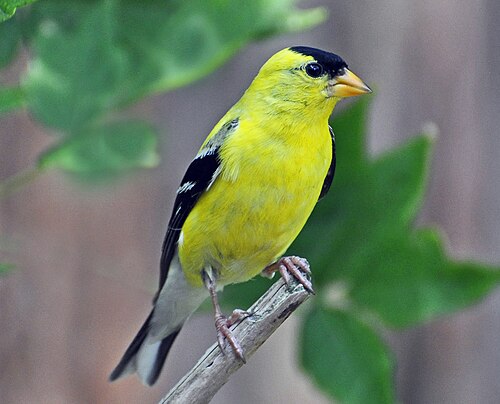
American Goldfinch
Spinus tristis
A small seed-eating finch. Breeding males are bright yellow with a black cap; winter birds turn a muted tan-olive.
- Tiny
- Grasslands
- Backyards
Year-round
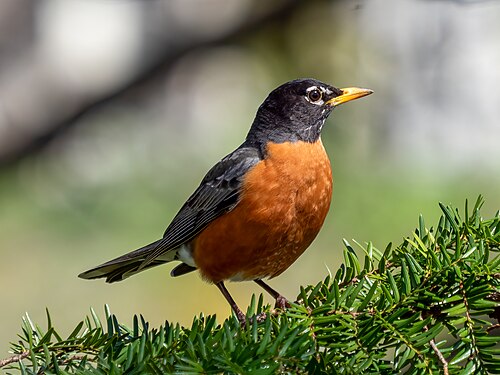
American Robin
Turdus migratorius
A gray-brown thrush with a rusty-orange breast, often seen sprinting and pausing across lawns while hunting worms.
- Medium
- Backyards
- Cities
Year-round
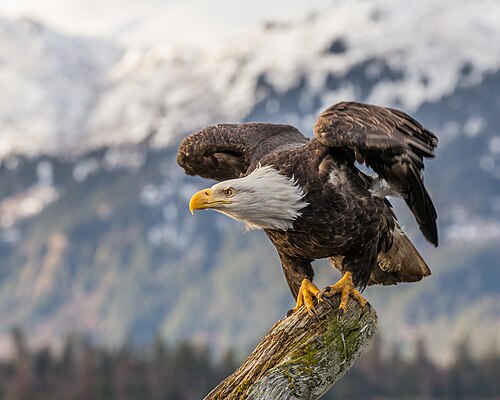
Bald Eagle
Haliaeetus leucocephalus
America’s national bird, a huge dark-brown raptor with a white head and tail that fishes along coasts, rivers and large lakes.
- Very large
- Wetlands
- Coastlines
Year-round
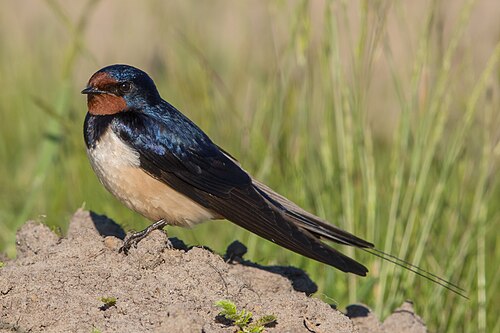
Barn Swallow
Hirundo rustica
A graceful, blue-backed swallow with a rusty throat and a deeply forked tail, often seen skimming over fields and nesting under bridges.
- Small
- Grasslands
- Wetlands
Spring, Summer, Fall
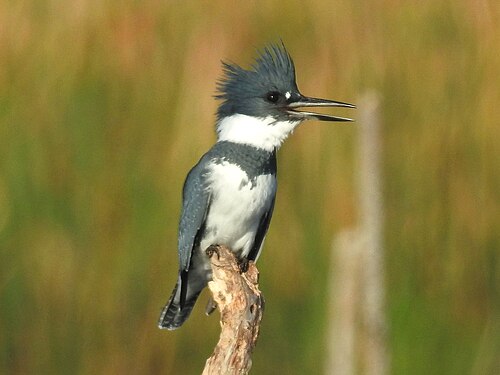
Belted Kingfisher
Megaceryle alcyon
A shaggy-crested, blue-gray waterside bird that rattles along rivers and plunges headfirst for fish.
- Medium
- Wetlands
- Coastlines
Year-round
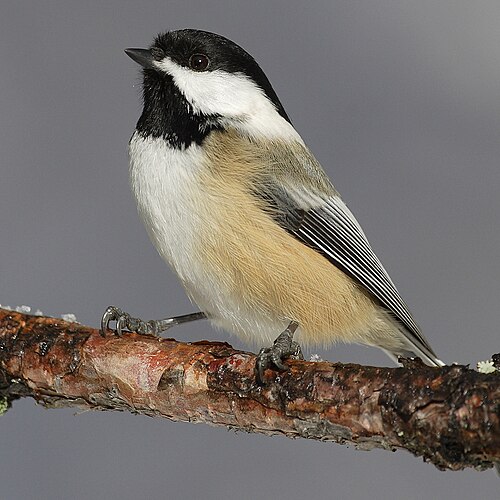
Black-capped Chickadee
Poecile atricapillus
A tiny, curious songbird with a black cap and bib, white cheeks and a clear fee-bee song. A resident across the northern states.
- Small
- Forests
- Backyards
Year-round
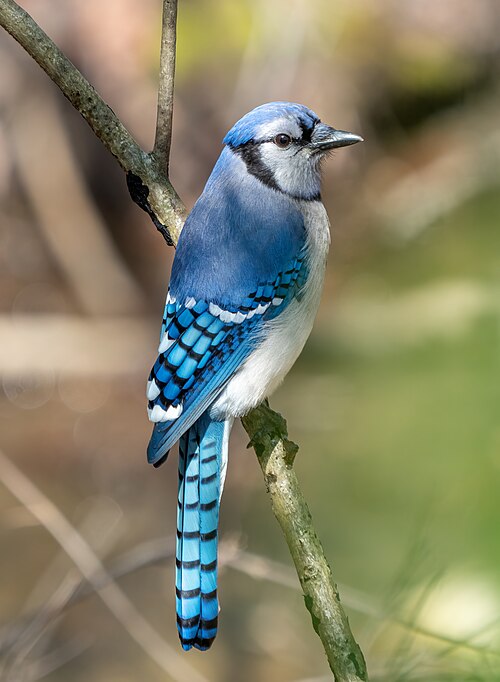
Blue Jay
Cyanocitta cristata
A loud, crested jay in blue, white and black. Common in eastern woods and yards, with some birds migrating in fall.
- Medium
- Forests
- Backyards
Year-round
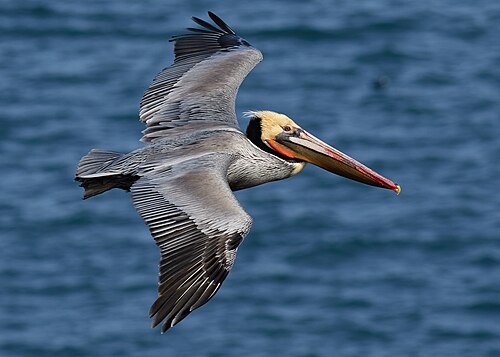
Brown Pelican
Pelecanus occidentalis
A big, dark coastal seabird that plunges headfirst for fish and glides low over the waves. Its recovery from pesticide losses is a conservation success.
- Very large
- Coastlines
Summer, Fall
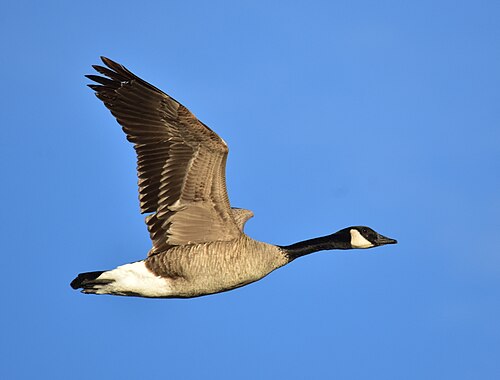
Canada Goose
Branta canadensis
A big brown goose with a black head and neck and a white chinstrap, now common on lakes, golf courses and fields across the US.
- Very large
- Wetlands
- Cities
Year-round
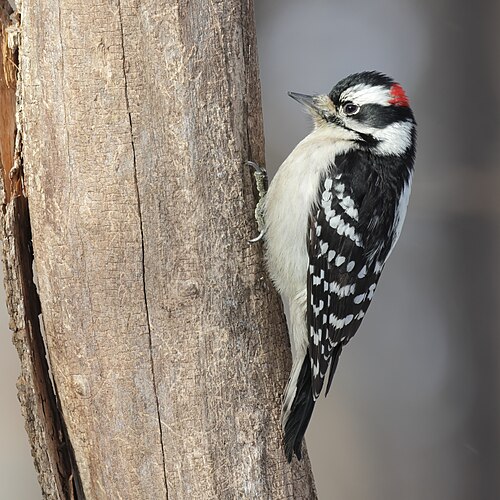
Downy Woodpecker
Dryobates pubescens
The smallest woodpecker in North America, a black-and-white bird with a short bill that visits suet feeders and tiny branches.
- Small
- Forests
- Backyards
Year-round
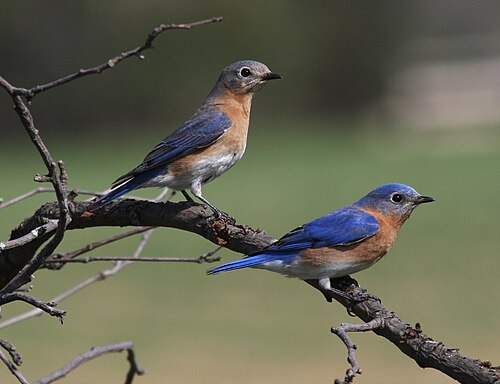
Eastern Bluebird
Sialia sialis
A small thrush of open country: the male is bright blue above with a rusty throat and chest, and a white belly.
- Small
- Grasslands
- Backyards
Spring, Summer, Fall
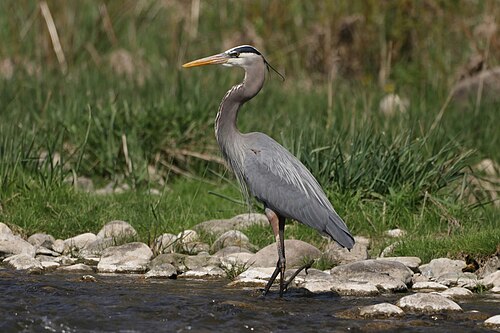
Great Blue Heron
Ardea herodias
North America’s largest heron, a tall gray-blue wader that stands motionless in shallows and strikes with a spear-like bill.
- Very large
- Wetlands
- Coastlines
Spring, Summer, Fall
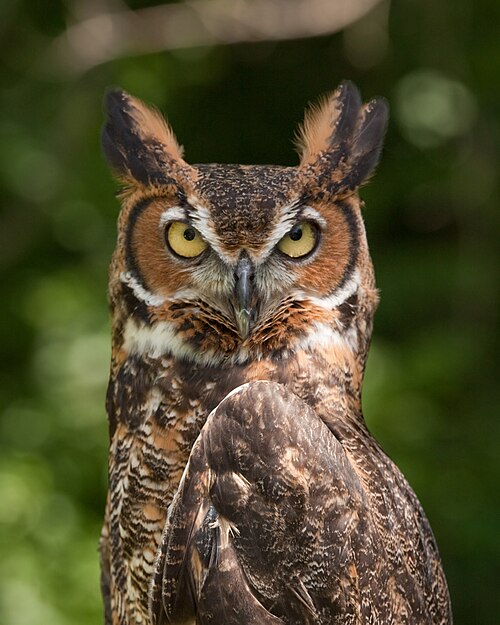
Great Horned Owl
Bubo virginianus
A big, heavy-bodied owl with feather tufts like horns and a deep, steady hoot. It lives in almost every kind of wooded or semi-open country.
- Large
- Forests
- Deserts
Year-round
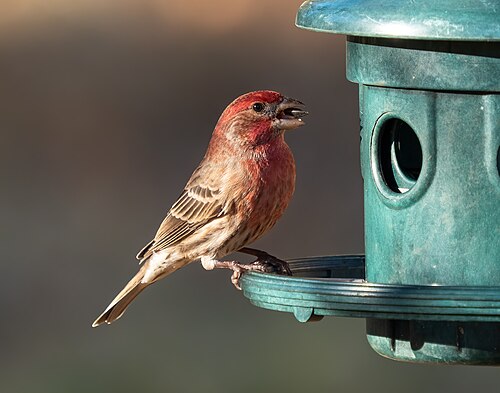
House Finch
Haemorhous mexicanus
A streaky brown finch. Males have a red head and chest. Native to the Southwest and now widespread in cities across the US.
- Small
- Cities
- Backyards
Year-round
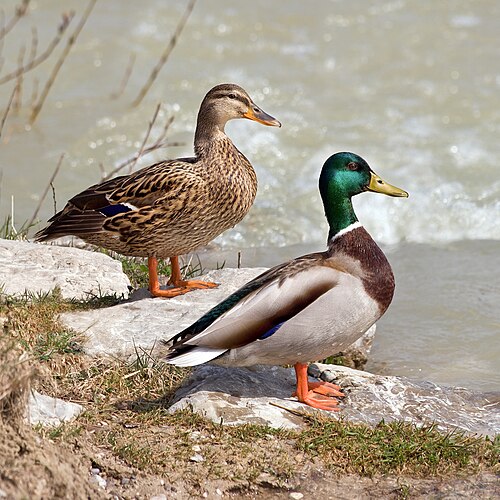
Mallard
Anas platyrhynchos
The familiar dabbling duck of ponds and park lakes. Males have a glossy green head; females are mottled brown with an orange bill.
- Large
- Wetlands
- Cities
Year-round
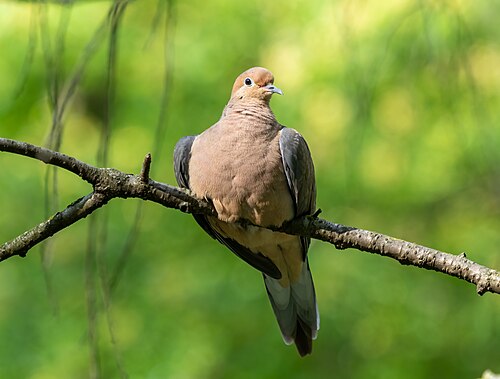
Mourning Dove
Zenaida macroura
A slim, soft gray-tan dove with a long pointed tail and a low, owl-like coo, common on wires, lawns and under feeders.
- Medium
- Backyards
- Grasslands
Year-round
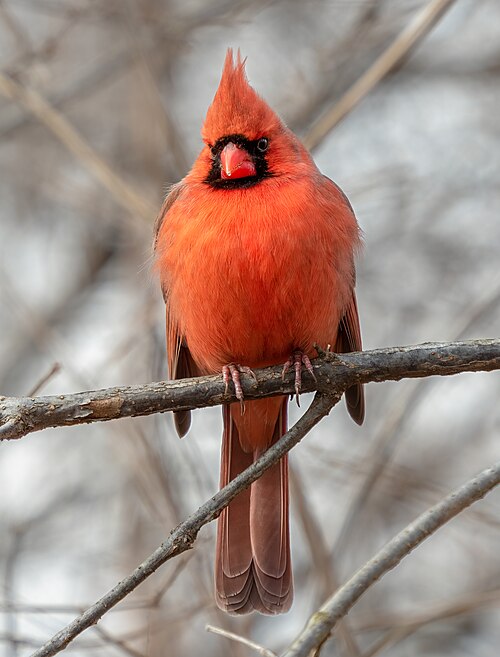
Northern Cardinal
Cardinalis cardinalis
A crested, year-round songbird. The male is brilliant red with a black face; the female is warm tan with red accents.
- Medium
- Backyards
- Forests
Year-round
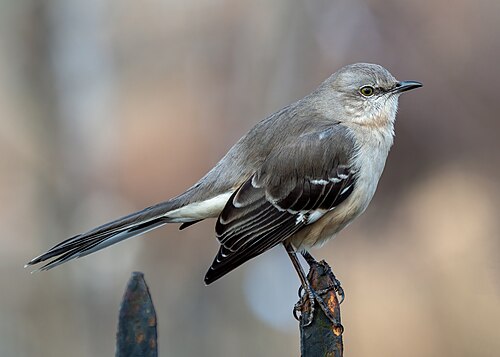
Northern Mockingbird
Mimus polyglottos
A slim gray songbird that sings from rooftops and wires, repeats borrowed phrases, and flashes white wing patches when it hops across a lawn.
- Medium
- Backyards
- Cities
Spring, Summer, Fall
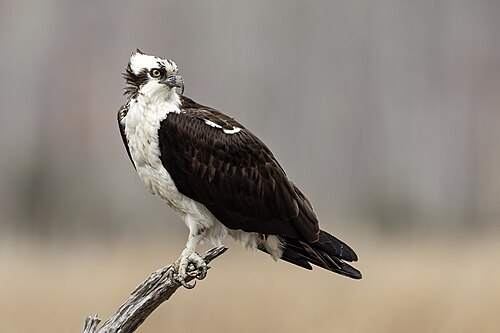
Osprey
Pandion haliaetus
A large fish-eating raptor that hovers over water and plunges feet-first for its catch. Look for its stick nests on poles and platforms.
- Large
- Wetlands
- Coastlines
Spring, Summer, Fall
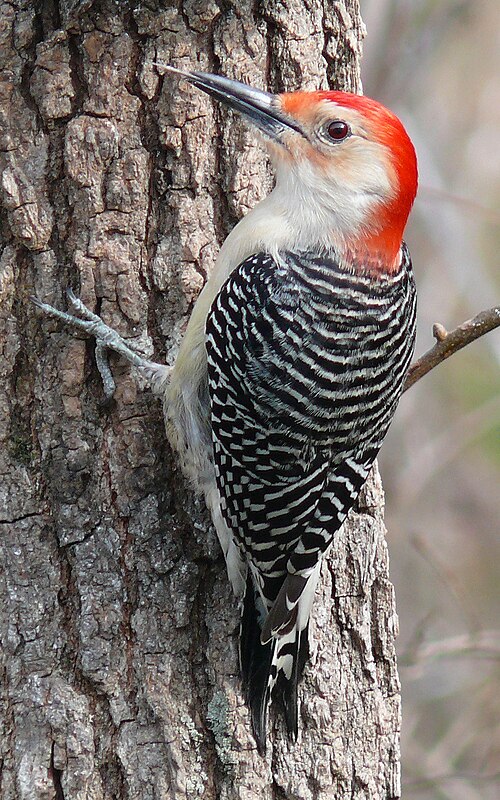
Red-bellied Woodpecker
Melanerpes carolinus
A medium woodpecker with a zebra-striped back and a red cap, familiar in eastern woods, suburbs and at suet feeders.
- Medium
- Forests
- Backyards
Year-round
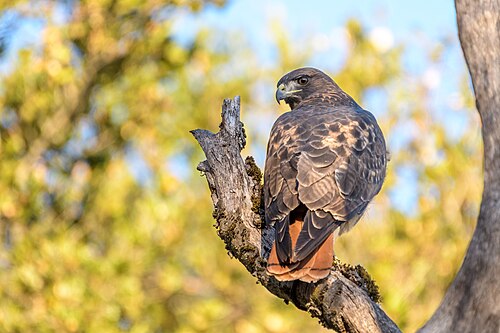
Red-tailed Hawk
Buteo jamaicensis
The most common large hawk in North America, often seen soaring over fields or perched on roadside poles, with a brick-red tail as an adult.
- Large
- Grasslands
- Forests
Year-round
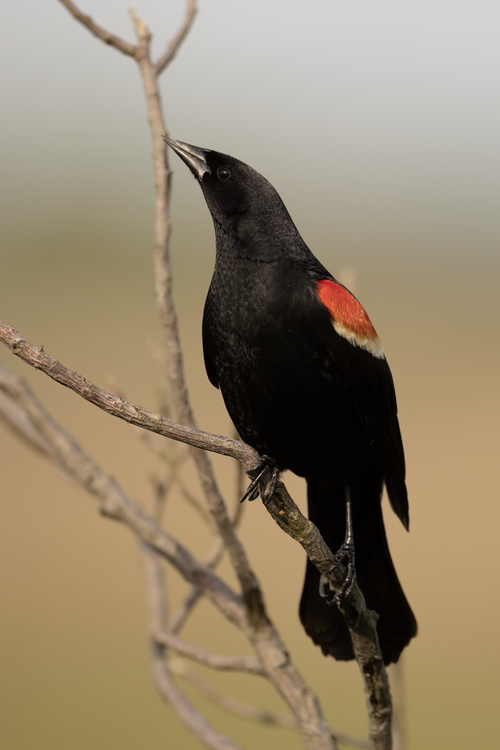
Red-winged Blackbird
Agelaius phoeniceus
A marsh-edge blackbird: males are glossy black with red-and-yellow shoulder patches, females are heavily streaked brown.
- Small
- Wetlands
- Grasslands
Spring, Summer, Fall
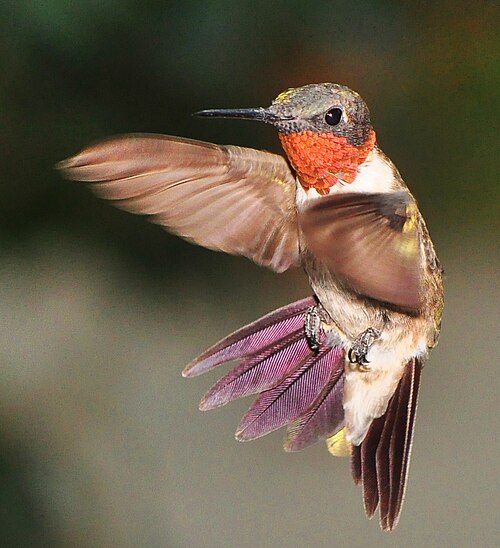
Ruby-throated Hummingbird
Archilochus colubris
The only hummingbird that breeds across eastern North America, a tiny summer visitor that migrates to Mexico and Central America.
- Tiny
- Backyards
- Forests
Spring, Summer, Fall
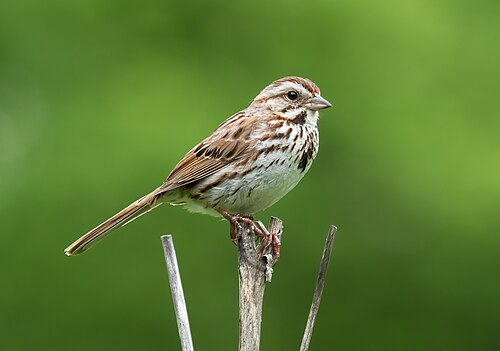
Song Sparrow
Melospiza melodia
A streaky, medium-sized sparrow with a central breast spot and a loud, varied song. It turns up in thickets, marsh edges and yards across the continent.
- Small
- Wetlands
- Backyards
Year-round
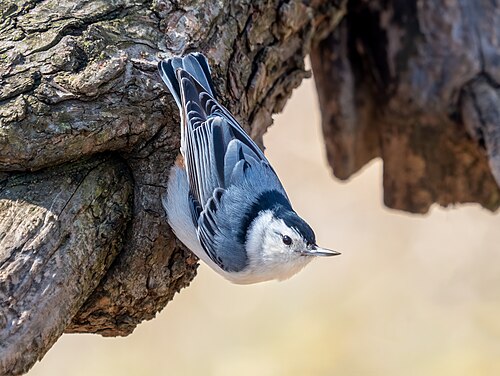
White-breasted Nuthatch
Sitta carolinensis
A compact, blue-gray bird that creeps headfirst down tree trunks and gives a nasal yank-yank. A regular at feeders with sunflower seeds and suet.
- Small
- Forests
- Backyards
Year-round
Related guides
Sources
- U.S. Fish & Wildlife Service: Administrative Flyways
- All About Birds (Cornell Lab of Ornithology)
- Audubon
Sources are the pages consulted when this entry was written. How we choose and use sources: sources and identification criteria.