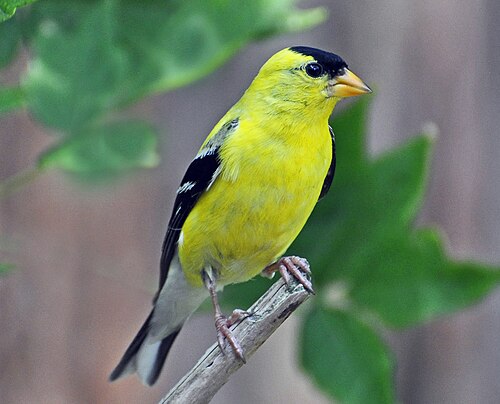
American Goldfinch
Spinus tristis
A small seed-eating finch. Breeding males are bright yellow with a black cap; winter birds turn a muted tan-olive.
- Tiny
- Grasslands
- Backyards

Topic
Each year, billions of birds move between breeding and wintering areas, and the shifts change what you can see from week to week. Some travel thousands of miles, some move only short distances, and some stay put. Timing is not fixed. It shifts with weather, food, latitude and the particular year, which is why a bird can show up days early in one place and late in another. In the United States, wildlife agencies describe four administrative flyways, the Atlantic, Mississippi, Central and Pacific, which help manage birds, though real routes are broader and more complex. This hub brings together the guides and tools for following migration. Start with the guide to understanding migration, then use the seasonal calendar to see which birds are around in each season. The regional guides explain how movement differs across the country. For planning, remember that migration is a flow and not a schedule. Check recent local reports, watch the weather, and treat every sighting as a bonus. Give resting birds room, since many are using their last energy to refuel.
In at least one region, these birds are not present in all four seasons. Timing varies with latitude, weather and the year.
Spinus tristis
A small seed-eating finch. Breeding males are bright yellow with a black cap; winter birds turn a muted tan-olive.
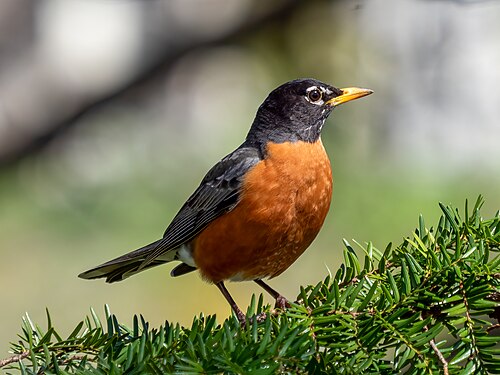
Turdus migratorius
A gray-brown thrush with a rusty-orange breast, often seen sprinting and pausing across lawns while hunting worms.
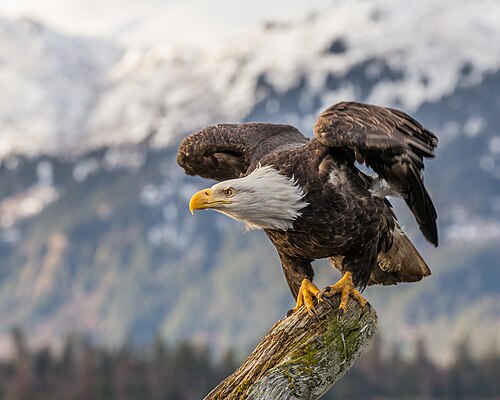
Haliaeetus leucocephalus
America’s national bird, a huge dark-brown raptor with a white head and tail that fishes along coasts, rivers and large lakes.
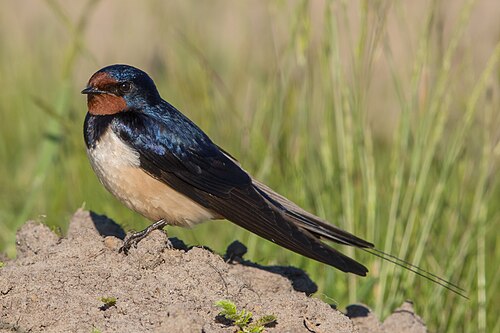
Hirundo rustica
A graceful, blue-backed swallow with a rusty throat and a deeply forked tail, often seen skimming over fields and nesting under bridges.
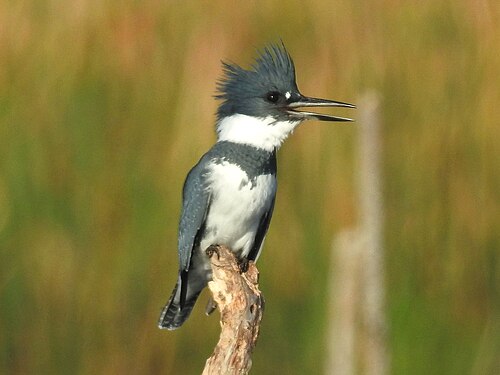
Megaceryle alcyon
A shaggy-crested, blue-gray waterside bird that rattles along rivers and plunges headfirst for fish.
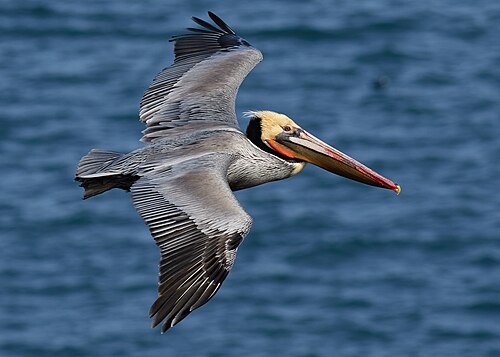
Pelecanus occidentalis
A big, dark coastal seabird that plunges headfirst for fish and glides low over the waves. Its recovery from pesticide losses is a conservation success.
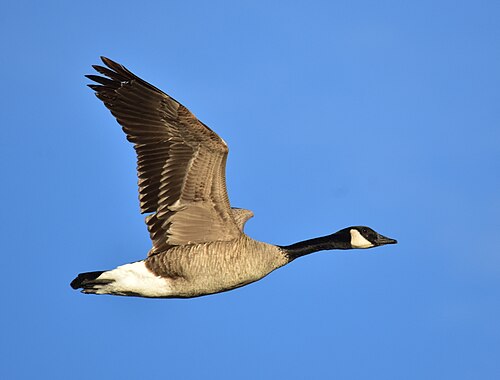
Branta canadensis
A big brown goose with a black head and neck and a white chinstrap, now common on lakes, golf courses and fields across the US.
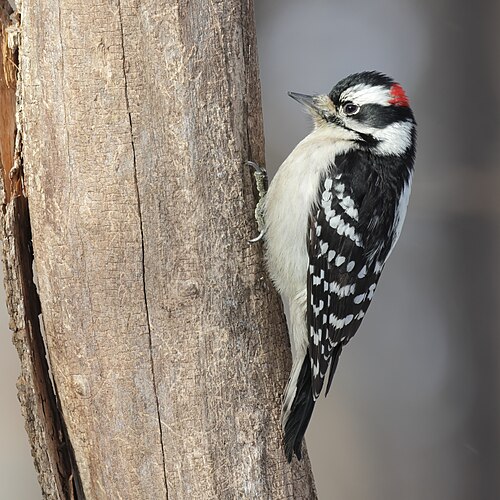
Dryobates pubescens
The smallest woodpecker in North America, a black-and-white bird with a short bill that visits suet feeders and tiny branches.
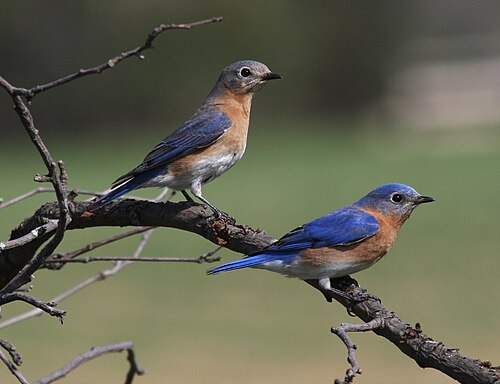
Sialia sialis
A small thrush of open country: the male is bright blue above with a rusty throat and chest, and a white belly.
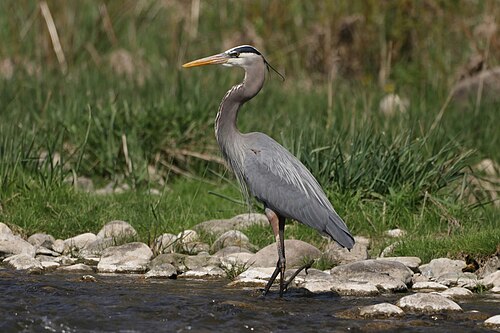
Ardea herodias
North America’s largest heron, a tall gray-blue wader that stands motionless in shallows and strikes with a spear-like bill.
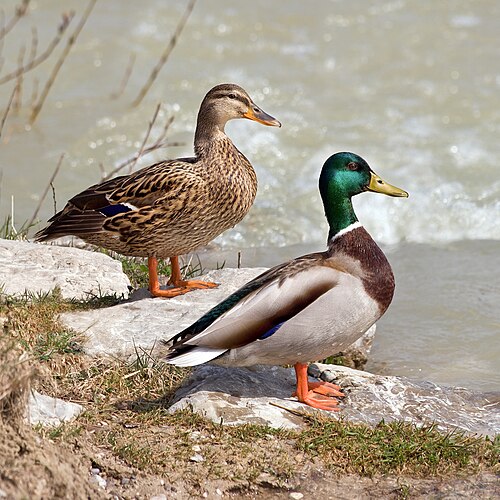
Anas platyrhynchos
The familiar dabbling duck of ponds and park lakes. Males have a glossy green head; females are mottled brown with an orange bill.
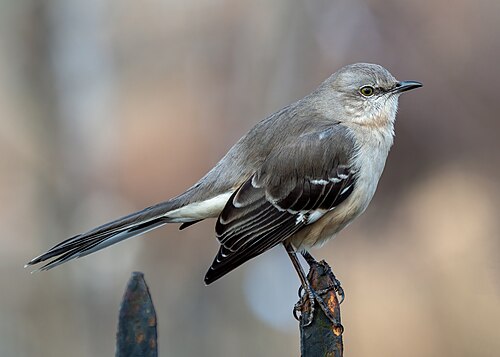
Mimus polyglottos
A slim gray songbird that sings from rooftops and wires, repeats borrowed phrases, and flashes white wing patches when it hops across a lawn.
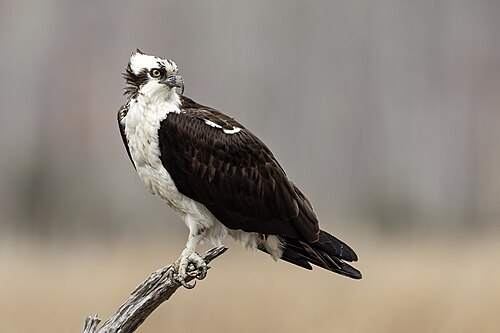
Pandion haliaetus
A large fish-eating raptor that hovers over water and plunges feet-first for its catch. Look for its stick nests on poles and platforms.
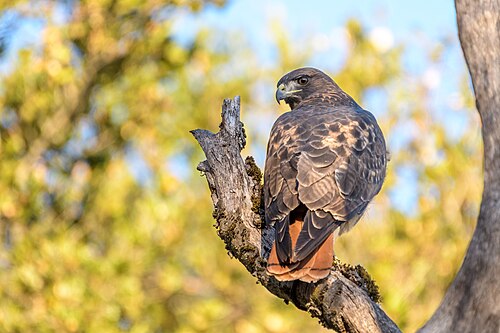
Buteo jamaicensis
The most common large hawk in North America, often seen soaring over fields or perched on roadside poles, with a brick-red tail as an adult.
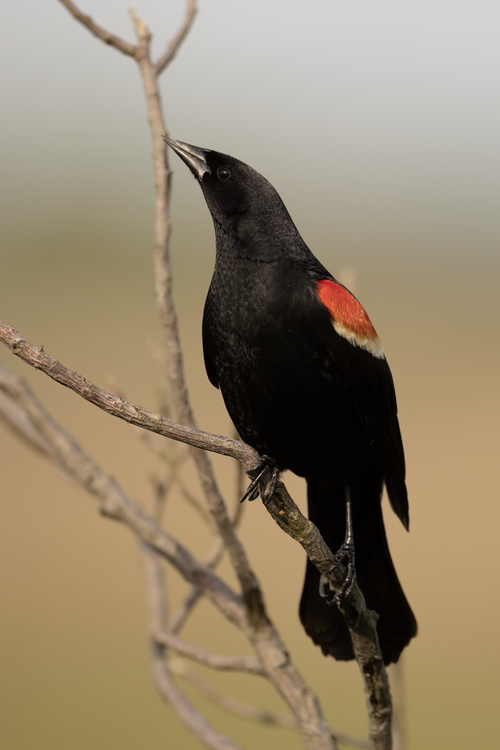
Agelaius phoeniceus
A marsh-edge blackbird: males are glossy black with red-and-yellow shoulder patches, females are heavily streaked brown.
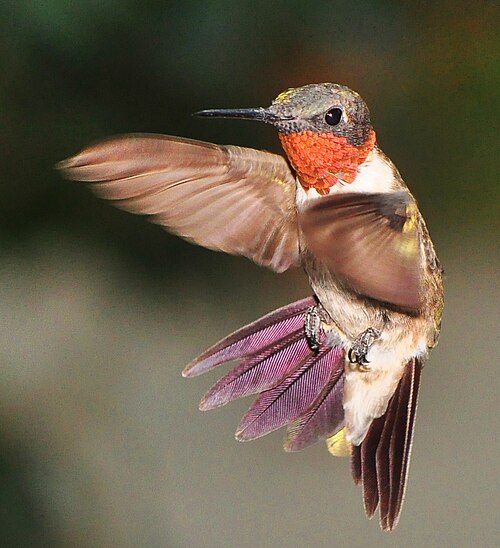
Archilochus colubris
The only hummingbird that breeds across eastern North America, a tiny summer visitor that migrates to Mexico and Central America.
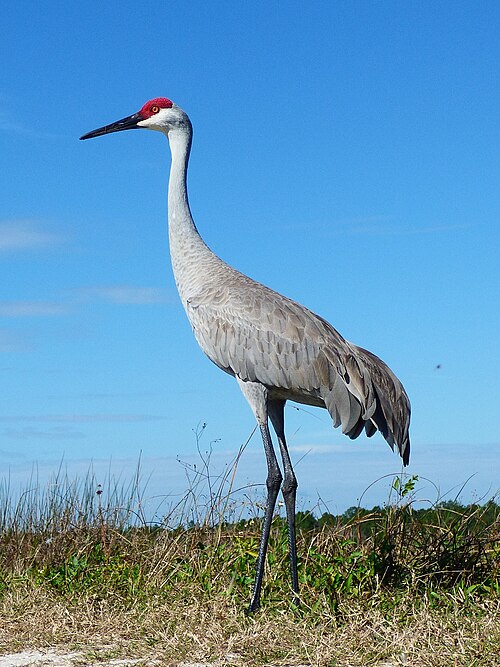
Antigone canadensis
A tall gray crane with a red forehead, a bugling rattle, and migrations that fill Great Plains skies with hundreds of thousands of birds.
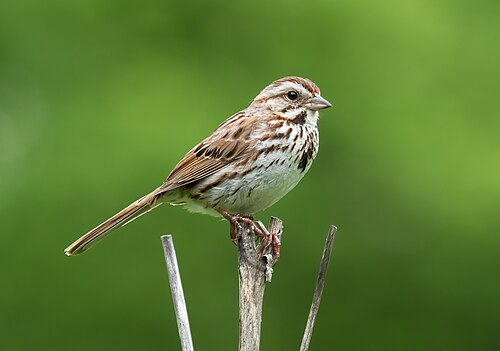
Melospiza melodia
A streaky, medium-sized sparrow with a central breast spot and a loud, varied song. It turns up in thickets, marsh edges and yards across the continent.
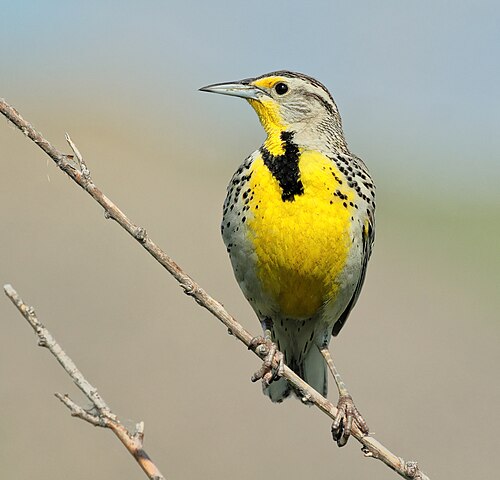
Sturnella neglecta
A streaky brown grassland bird with a bright yellow chest and black V, best known for its flute-like, gurgling song from a fence post.