
Blackbirds, Orioles and Allies · Icteridae
Red-winged Blackbird
Agelaius phoeniceus
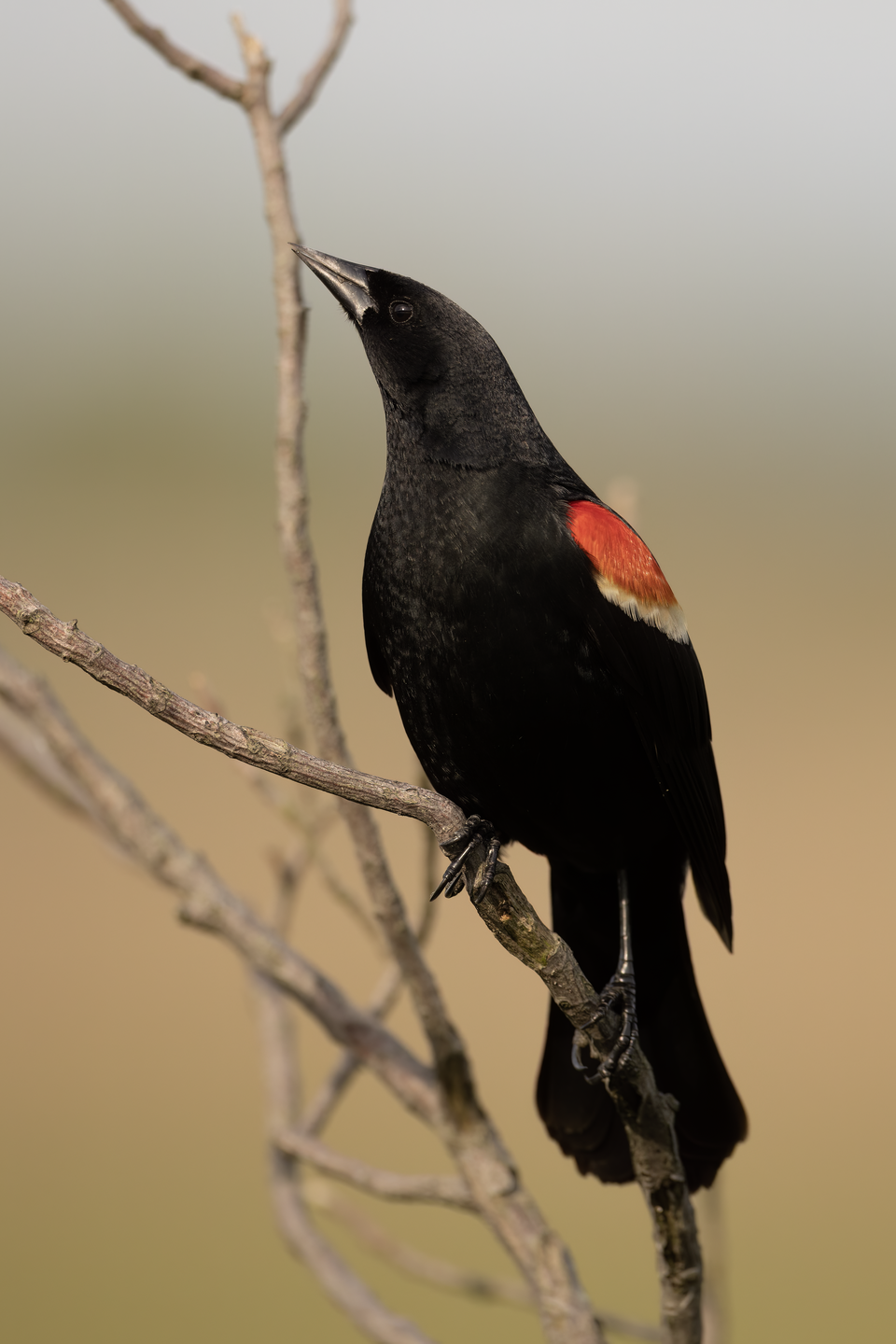
A marsh-edge blackbird: males are glossy black with red-and-yellow shoulder patches, females are heavily streaked brown.
Presence varies. Bird presence and timing change with location, weather, habitat and migration. Treat this page as a starting point, then check recent local sightings (for example on eBird) before you go.
Identification features
- Adult male is glossy black with a bright red shoulder patch edged in yellow, which can be hidden when he is resting.
- Female is heavily streaked brown and buff, with a pale line over the eye, and looks like a big sparrow.
- Perches on cattails and fence posts and sings with the body fluffed and the red patches flared.
- Young males are mottled brown and black, with orange-ish shoulders and little red.
- Travels in noisy flocks outside the breeding season, often mixed with grackles, starlings and cowbirds.
Size and appearance
This is a medium-sized blackbird about the length of a robin, with a thick, pointed bill. The male is all black except for the epaulets on the shoulders, red with a yellow edge. He can fluff these up to show them off, or tuck them away so only a yellow edge is visible. The female looks nothing like him. She is dark brown with heavy streaking above and below, a pale eyebrow stripe and a pointed bill, and a casual observer may think she is a sparrow. Immature males are blotchy black and brown. In central California the Bicolored form of this species has entirely red shoulder patches without the yellow edge.
Bill: A sharp, straight, cone-shaped black bill that works for seeds and insects.
Habitat
Red-winged Blackbirds breed mainly in freshwater marshes, but they also use brushy swamps, hayfields, weedy fields, roadside ditches and the upper edge of salt marshes. Nests are cups woven into standing plants, such as cattails, bulrushes, shrubs near water or dense grass. Away from the nest, birds feed in fields, pastures, mudflats and along water edges. In fall and winter, large flocks gather in farm fields, pastures and feedlots, and they roost together at night, sometimes in very large numbers. Backyards with feeders near wetlands can attract them.
Wetlands & water edges Grasslands & fields Backyards & feeders
Geographic range
One of the most abundant birds on the continent, the Red-winged Blackbird breeds across much of the US and Canada, from southern and central Alaska to Florida and Texas, and south into Mexico and Central America. Birds from the north migrate south, while many in the Southeast, the Gulf Coast and along the Pacific are present year-round. Some flocks stay surprisingly far north in winter. Several regional forms exist, so birds in different places can differ a little in plumage and size, and the Bicolored form lives in central California. Alaska birds are found in the central and southeastern parts of the state.
Northeast Southeast Midwest Southwest Pacific West Alaska & Hawaii
Seasonal presence
In the northern states the first Red-winged Blackbirds are among the earliest signs of spring, often arriving in February or March while snow is still on the ground. Males come first and set up territories; females follow weeks later. Summer is breeding season at wetlands and ditches. In fall, birds gather into flocks that move south, mostly during the day. Winter flocks are largest in the South and Southwest, though some stay as far north as Pennsylvania and the Pacific Northwest. Alaska birds are mainly present in spring and summer. Dates vary with weather and region.
| Region | Spring | Summer | Fall | Winter |
|---|---|---|---|---|
| Northeast | Present | Present | Present | Not typical |
| Southeast | Present | Present | Present | Present |
| Midwest | Present | Present | Present | Not typical |
| Southwest | Present | Present | Present | Present |
| Pacific West | Present | Present | Present | Present |
| Alaska & Hawaii | Present | Present | Not typical | Not typical |
A dot means the species is regularly present in that region in that season. Dates shift with latitude, elevation, weather and migration, and some regions are only partly covered by the species’ range.
Diet
About three-quarters of an adult’s yearly diet is seeds, including grass seeds, weed seeds and spilled grain. In summer, birds catch many insects such as beetles, caterpillars and grasshoppers, and also take spiders, snails and some berries or small fruit. They forage mostly on the ground, and sometimes in shrubs and trees. Feeders sometimes draw them: they eat cracked corn, millet, sunflower seeds and similar seed mixes. In large numbers, flocks can empty a feeder fast, and they are often considered pests near ripening crops. Offer only birdseed, never bread.
Behavior
Males are bold and aggressive on territory, perching high to sing and flash their red shoulders. They chase crows, hawks and larger birds that fly over the marsh, and may even dive at a person who walks too close to a nest, so keep your distance. Some males have several mates in the same territory. The female builds an open cup nest, incubates for roughly 10 to 12 days, and both parents feed the young. Chicks leave the nest about two weeks after hatching. Outside the breeding season, the birds form big flocks that feed and roost with other blackbirds and starlings.
Vocalizations
The classic song is a liquid, gurgling “conk-la-reee!” or “oak-a-lee,” with a metallic trill at the end, delivered from a cattail or a high perch. Calls include a sharp “check,” a harsh chatter, a rising whistle and a high “tseeee” alarm scream when a predator or intruder comes close. Females give a rapid, chattering call near the nest. Flocks in winter produce a continuous mix of chacks, creaks and squeaks. A marsh in spring, with dozens of males calling at once, can be loud.
Recordings are not hosted on this site. For audio, see the sources below. Please avoid playing recordings to attract birds in the field. See Learning Bird Songs and Calls.
Similar species
- Brown-headed Cowbird. Males have a brown head and a thick, short bill, with no red on the shoulder. Females are plain gray-brown, unlike the streaked female redwing.
- Common Grackle. Larger and longer-tailed, with an iridescent bronze or purple sheen and pale eyes. No red shoulder patch.
- Tricolored Blackbird. Found mainly in California, with a darker red shoulder edged in white rather than yellow.
Observation tips
- Look and listen at marsh edges and ditches in early spring, when males perch on cattails and announce their territories.
- Stay on trails and watch nests from a distance. Males will dive at you if you get close, and it stresses them.
- Look at streaky brown birds in the reeds before assuming they are sparrows, because females are easy to overlook.
- At the feeder, offer birdseed and cracked corn only, and never bread. Watch for flocks mixed with grackles and starlings.
- Do not play recordings of the song to draw males out, since it distracts them from guarding the nest.
Always keep your distance, stay on trails and leave nests alone. See How to Observe Birds Responsibly.
Conservation status
IUCN Red List: Least Concern. The IUCN lists the Red-winged Blackbird as Least Concern, and Audubon describes it as abundant and widespread, with a population estimated at around 180 million. It is protected under the Migratory Bird Treaty Act in most circumstances, but I could not verify specific legal details on an opened page. Status and trends change, so check the IUCN Red List.
Status last checked 2026-11-03. Status and trends change, so check the linked sources for the latest. Search the IUCN Red List.
Questions and answers
Why do Red-winged Blackbirds dive at people?
Males defend nesting territories fiercely, and a walker near a nest can look like a threat. The behavior is normal and usually ends if you move away calmly. Keep a good distance from marshes in late spring and early summer.
Is the female a different bird?
No. Females are the same species, but they are brown and streaked rather than black with red. The camouflage helps her stay hidden on the nest. Look for the pale eyebrow line and the pointed bill.
Related entries
Related birds
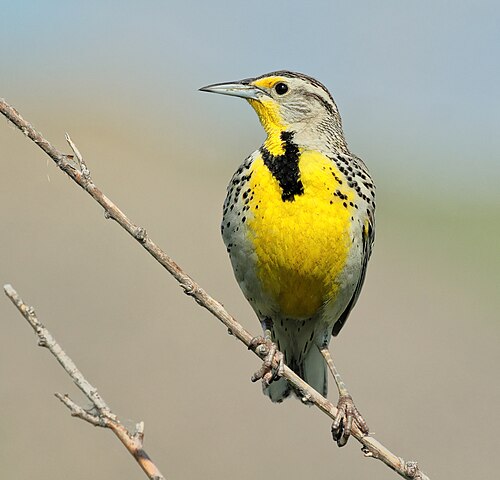
Western Meadowlark
Sturnella neglecta
A streaky brown grassland bird with a bright yellow chest and black V, best known for its flute-like, gurgling song from a fence post.
- Medium
- Grasslands
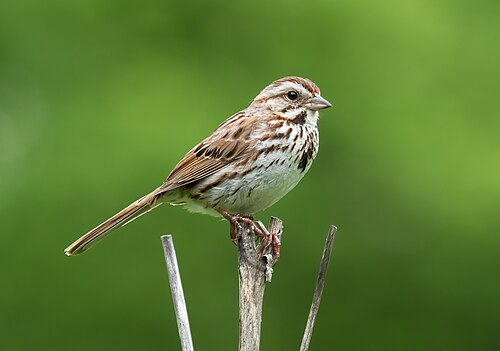
Song Sparrow
Melospiza melodia
A streaky, medium-sized sparrow with a central breast spot and a loud, varied song. It turns up in thickets, marsh edges and yards across the continent.
- Small
- Wetlands
- Backyards
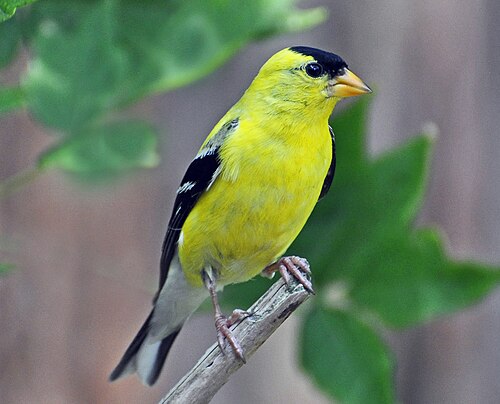
American Goldfinch
Spinus tristis
A small seed-eating finch. Breeding males are bright yellow with a black cap; winter birds turn a muted tan-olive.
- Tiny
- Grasslands
- Backyards
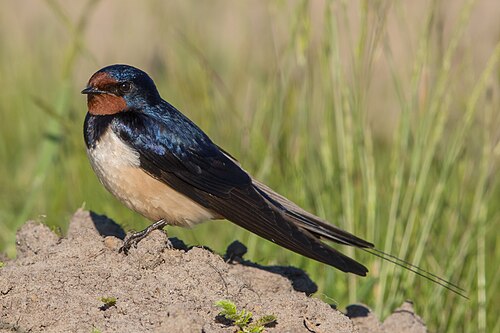
Barn Swallow
Hirundo rustica
A graceful, blue-backed swallow with a rusty throat and a deeply forked tail, often seen skimming over fields and nesting under bridges.
- Small
- Grasslands
- Wetlands
Related guides
Sources
Sources are the pages consulted when this entry was written. How we choose and use sources: sources and identification criteria.
Further reading (not used as a source for this entry): All About Birds, Cornell Lab of Ornithology.