
Habitat guide
Coastlines Birdwatching
Beaches, salt marshes, bays, mudflats and rocky shores give birdwatchers some of the most dramatic viewing in the country. This guide explains how birds use the coast, how the tide and seasons shape what you see, and how to protect nesting shorebirds.
What the coast offers
The US coastline spans the Atlantic, Gulf, Pacific, Arctic and the Great Lakes shores. It includes sandy beaches, dunes, rocky headlands, estuaries, salt marshes, tidal flats and offshore islands. Each type supports different birds.
Tides are central. Mudflats and beaches expose food at low tide and cover it at high tide, so birds shift position throughout the day. Checking a tide chart before a visit often matters as much as choosing the day.
How birds use coastal habitats
Shorebirds probe mud and sand for small invertebrates, gulls and terns scavenge or dive for fish, and wading birds feed in the shallows. The Brown Pelican plunges for fish along warm coasts, while the Osprey hunts from the air over bays and estuaries.
Some species nest right on open beaches, laying camouflaged eggs in simple scrapes. Others nest on islands, in dunes or on marsh vegetation. Coastal wetlands also serve as vital stopover sites where migrants feed before long flights.
Wave and tide energy changes the menu. Sheltered bays and estuaries have soft mud that holds worms and shellfish, while open beaches have sand hoppers and small crustaceans in the wet sand. Rocky shores offer mussels, barnacles and other food for specialized foragers. Offshore, currents and wind can gather fish and draw seabirds. Many of the same birds that you watch at the beach also use inland lakes and fields, so some move between them.
Seasonal change
Spring and fall migration can bring large numbers of shorebirds to the same beaches and flats, though exact timing varies with location and weather. Summer is the nesting season for beach-nesting birds, and the time when human disturbance matters most.
Winter coasts hold waterfowl, loons, grebes, gulls and other birds that breed far to the north. Storms can move seabirds close to shore or push unusual birds into view, though conditions vary and no sighting is guaranteed.
What to look for
Learn to separate groups first: gulls, terns, plovers, sandpipers, pelicans, herons and ducks. A scope is especially useful on open water and distant flats. Watch feeding behavior, since the way a bird probes, runs or plunges is a strong clue.
Early morning and the hours around low tide are often productive, and the light is better too. Wind direction and sea conditions matter for seabirds. Our bird-finder tool can help narrow down candidates by size, color and habitat.
Weather and light play a large role. Fog and haze can hide distant birds, while a clear morning with the sun behind you makes plumage easy to read. Strong onshore wind can bring seabirds close to land, but it also makes scopes shake and conditions hard on you, so dress warmly. Always watch the water behind you on a rising tide and know your exit route.
Watching shorelines responsibly
Resting and nesting shorebirds are easily disturbed. A bird flushed repeatedly wastes energy it needs for migration, and parents driven from a nest leave eggs and chicks exposed to heat and predators. Give flocks plenty of room, walk along the wet sand below the high tide line, and obey posted closures around nesting areas.
Keep dogs leashed or away from beaches with nesting birds, avoid flying drones near birds, and never feed gulls or pelicans, which can make them dependent on people. Pick up fishing line and hooks, which can injure birds. See our guide on observing birds responsibly.
Regional variation across the US
The Atlantic and Gulf coasts have broad beaches, barrier islands and salt marshes, and are known for migration stopovers. The Pacific coast has rocky shores, kelp beds and estuaries, with seabirds close to shore in many places. The Great Lakes have beach and open-water birding of their own, especially in spring, fall and winter.
Alaska’s coasts host huge seasonal gatherings, and Hawaii’s shores have their own seabirds and shorebirds. Birds and timing vary by location, weather and migration. See the migration hub and regional guides for planning.
Frequently asked questions
How close can I get to shorebirds on a beach?
As far as possible. If a bird stops feeding, raises its head, runs or flies, you are too close. Stay well back from flocks and obey signs marking nesting areas. A scope or telephoto lens lets you watch without crowding them.
Does tide matter for birdwatching?
Yes. Many shorebirds feed on exposed flats and gather in tight flocks at high tide. Check a local tide chart, and plan around the hours just before and after low tide for feeding birds.
Why are some beaches closed in summer?
Many beaches are closed or fenced to protect birds that nest on open sand. Eggs and chicks blend in and are easily stepped on. Respecting closures helps species that have few safe nesting spots left.
Birds in our library that use this habitat
5 species in the library are commonly found here. Presence and timing vary by region and migration. Use the habitat and region explorer to narrow by region and season.
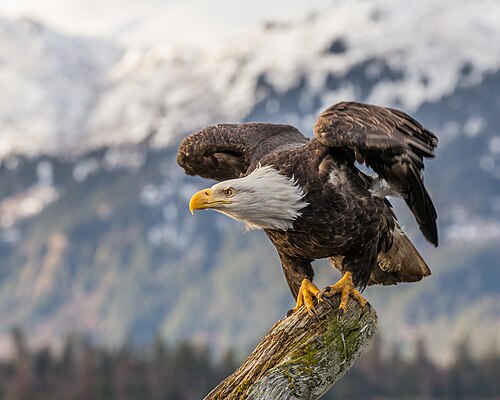
Bald Eagle
Haliaeetus leucocephalus
America’s national bird, a huge dark-brown raptor with a white head and tail that fishes along coasts, rivers and large lakes.
- Very large
- Wetlands
- Coastlines
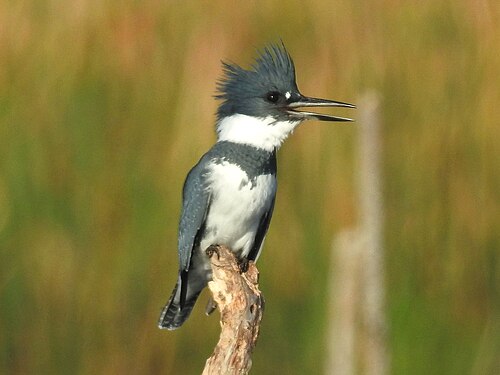
Belted Kingfisher
Megaceryle alcyon
A shaggy-crested, blue-gray waterside bird that rattles along rivers and plunges headfirst for fish.
- Medium
- Wetlands
- Coastlines
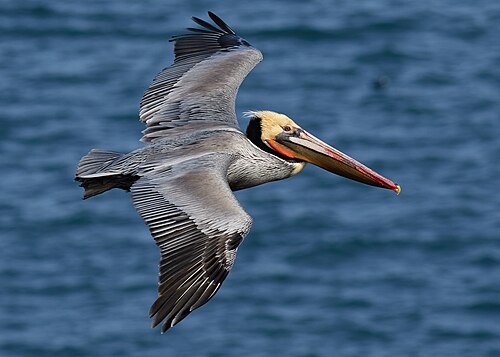
Brown Pelican
Pelecanus occidentalis
A big, dark coastal seabird that plunges headfirst for fish and glides low over the waves. Its recovery from pesticide losses is a conservation success.
- Very large
- Coastlines
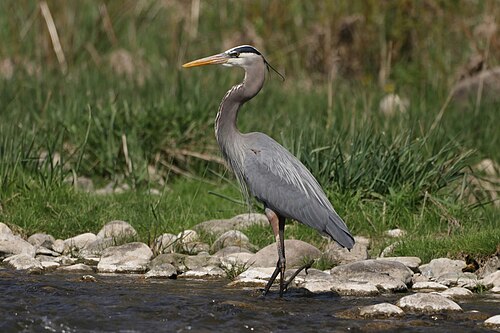
Great Blue Heron
Ardea herodias
North America’s largest heron, a tall gray-blue wader that stands motionless in shallows and strikes with a spear-like bill.
- Very large
- Wetlands
- Coastlines
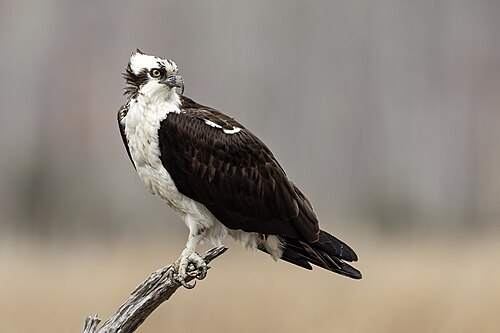
Osprey
Pandion haliaetus
A large fish-eating raptor that hovers over water and plunges feet-first for its catch. Look for its stick nests on poles and platforms.
- Large
- Wetlands
- Coastlines
Related guides
Sources
Sources are the pages consulted when this entry was written. How we choose and use sources: sources and identification criteria.