
Crows, Jays and Magpies · Corvidae
Blue Jay
Cyanocitta cristata
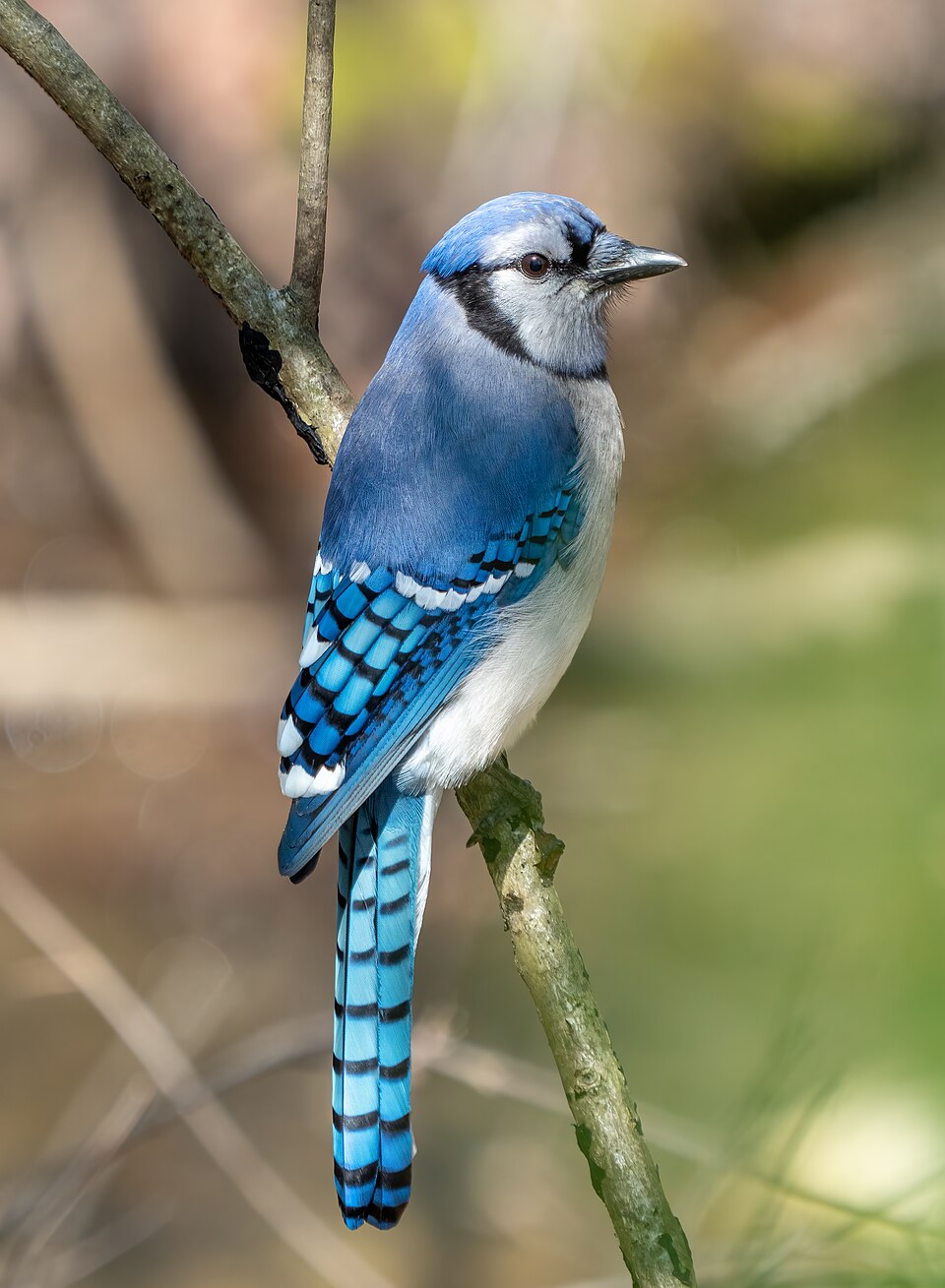
A loud, crested jay in blue, white and black. Common in eastern woods and yards, with some birds migrating in fall.
Presence varies. Bird presence and timing change with location, weather, habitat and migration. Treat this page as a starting point, then check recent local sightings (for example on eBird) before you go.
Identification features
- Bright blue crest, back, wings and tail, with bold white and black bars in the wings and tail.
- A black collar, like a necklace, wraps from the nape across the throat.
- The underparts are pale gray to white, and the face is pale.
- The crest rises when the bird is excited and lies flat when it feeds peacefully.
- Flight is steady and direct, and the tail shows a fan with white corners.
Size and appearance
The Blue Jay is a crow-family bird, about the size of a robin but heavier, with a broad tail and a sharp crest. The upperparts are blue, from cobalt to a softer purplish tone depending on the light, and the wings and tail are crossed by black bars with white tips. A black necklace outlines the pale face, and the underparts are pale gray. Males are slightly larger than females, but the sexes are hard to tell apart by plumage. The blue is a structural color, which means it comes from feather structure and not pigment, so it may look gray-brown in poor light. Young birds look like duller adults.
Bill: Black, strong and slightly hooked at the tip, suited to cracking nuts and seeds.
Habitat
Blue Jays are woodland birds that have adapted well to people. They breed in deciduous and mixed woods and generally avoid pure conifer forest, and they favor areas with oak and beech, whose nuts they eat and store. They are common in wooded suburbs, parks, cemeteries and yards with big trees. In winter they may move to feeders and into more open areas, but they are seldom far from tree cover. Finding them depends on locating mature trees that produce nuts, along with a few feeders or fruiting shrubs.
Geographic range
The Blue Jay is a bird of the eastern and central United States and southern Canada, from the Atlantic coast west to the Great Plains and the eastern edge of the Rockies. Its range is expanding toward the northwest. It is present year-round in most of this region. Strays and small populations turn up in the West, but the Blue Jay is not a regular bird across most of the Pacific states, where the Steller’s Jay, a close relative, takes its place. Some Blue Jays migrate in autumn, though none are known to go south of the United States. Where you live determines how many remain.
Seasonal presence
In much of the East, Blue Jays are there all year. Their activity changes though. Spring brings pairs and quiet nesting, since the birds become secretive around the nest. In late summer and fall, jays gather acorns and may move in loose groups. Fall is the notable migration period, when variable numbers move south, sometimes in daytime flights of hundreds or thousands over lake shores and ridges. Which jays go and which stay seems to differ between years and between individuals. Winter jays are often feeder regulars. All of this timing depends on weather, local food supply and location.
| Region | Spring | Summer | Fall | Winter |
|---|---|---|---|---|
| Northeast | Present | Present | Present | Present |
| Southeast | Present | Present | Present | Present |
| Midwest | Present | Present | Present | Present |
| Southwest | Present | Present | Present | Present |
A dot means the species is regularly present in that region in that season. Dates shift with latitude, elevation, weather and migration, and some regions are only partly covered by the species’ range.
Diet
Blue Jays eat both plant and animal food, with plants dominating the year and especially winter. Acorns, beechnuts and other nuts, seeds, grain and wild fruit are staples. Insects such as caterpillars, beetles and grasshoppers are eaten in warmer months, along with spiders and snails, and the species will sometimes take eggs or nestlings of other birds. At feeders, jays go for peanuts in the shell, black oil sunflower, cracked corn and suet. Offer unsalted peanuts and avoid bread or processed snacks. A tray feeder gives these big birds room.
Behavior
Blue Jays forage in trees and shrubs and on the ground, wedging a nut under a foot and hammering it open with the bill. They carry acorns and bury them in the soil, and this habit may help oak forests spread. Jays are intelligent, curious and social, living in small family groups and often mobbing hawks and owls with loud calls that alert other birds in the neighborhood. Despite their noise, they get quiet near the nest. Pairs build a bulky cup of twigs in a tree, and both parents care for the young. A jay may chase smaller birds from a feeder, but most are shy of people unless fed regularly. Watching from a window or a parked car lets you observe natural behavior.
Vocalizations
The best-known call is a loud, harsh jay! jay! that carries a long way. Blue Jays also make a musical, bell-like queedle-queedle, a soft rattling chatter, and a variety of clicks and whistles. They can imitate the scream of a Red-shouldered Hawk, probably when they are mobbing or hiding a nest. If you hear a hawk call and see only a jay, mimicry is likely. Jay calls grow louder when predators are around, which makes them a handy alarm for other birds and for birders trying to find owls and hawks.
Recordings are not hosted on this site. For audio, see the sources below. Please avoid playing recordings to attract birds in the field. See Learning Bird Songs and Calls.
Similar species
- Steller’s Jay. Steller’s Jay lives in western conifer forests and has a dark, nearly black head and crest with deeper blue body, with no white wing bars. Compare side by side
- Eastern Bluebird. Bluebirds are much smaller, with no crest, an orange chest and a thin bill. Compare side by side
- Belted Kingfisher. Kingfishers are blue-gray with a shaggy crest, a very large bill and a white collar, and they live near water. Compare side by side
Observation tips
- Listen for the jay call, then look at tree tops near oaks and beeches.
- Offer unsalted peanuts in the shell or black oil sunflower seed on a tray, and keep feeders clean.
- In fall, watch lake shores and ridges on clear mornings for passing flocks, but expect big differences between years.
- Notice mobbing calls. A group of angry jays often points to a hawk or owl, which you can then look for from a distance.
- Stay back from nests. Jays are quiet there, and disturbing them can cause nest failure.
Always keep your distance, stay on trails and leave nests alone. See How to Observe Birds Responsibly.
Conservation status
IUCN Red List: Least Concern. The IUCN lists the Blue Jay as Least Concern. Audubon gives a population of about 17 million and notes that the species may have declined when eastern forests were cleared but later adapted to cities and is now expanding. Status and trends change, so check the [IUCN Red List](https://www.iucnredlist.org) for the current assessment.
Status last checked 2026-11-03. Status and trends change, so check the linked sources for the latest. Search the IUCN Red List.
Questions and answers
Do Blue Jays migrate?
Some do, some do not. Many stay all year, while others fly south in fall, sometimes in daytime flocks. Which birds leave varies between years and individuals, and they do not go south of the United States.
Are Blue Jays bad for other birds?
Jays do occasionally eat eggs or nestlings, but plants are most of their diet. They are a natural part of woodland communities, and their alarm calls also help warn other birds of hawks.
Related entries
Related birds
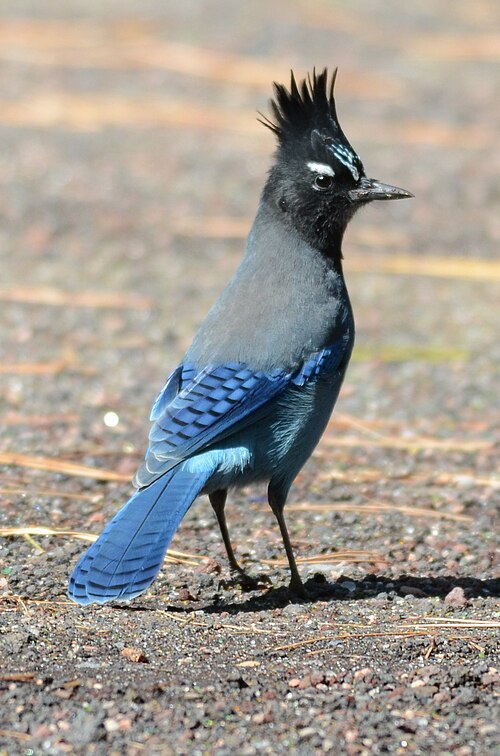
Steller’s Jay
Cyanocitta stelleri
A crested, sooty-black and deep-blue jay of western evergreen forests, and a noisy regular at mountain campgrounds and feeders.
- Medium
- Forests
- Backyards
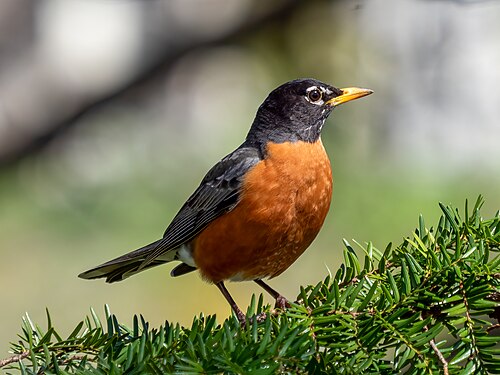
American Robin
Turdus migratorius
A gray-brown thrush with a rusty-orange breast, often seen sprinting and pausing across lawns while hunting worms.
- Medium
- Backyards
- Cities
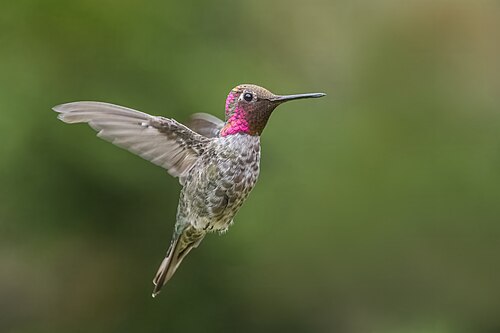
Anna’s Hummingbird
Calypte anna
A stocky Pacific Coast hummingbird with a rose-red head, now a year-round presence in many western yards and feeders.
- Tiny
- Backyards
- Cities
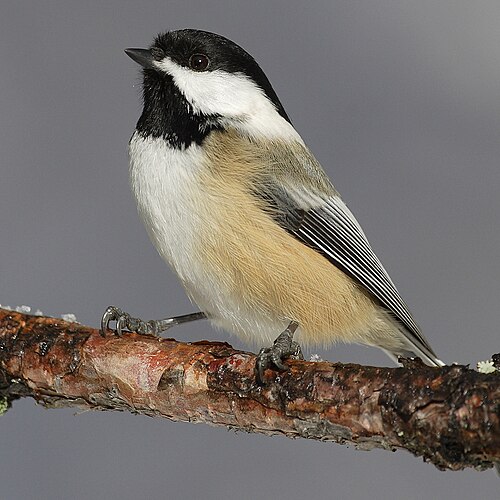
Black-capped Chickadee
Poecile atricapillus
A tiny, curious songbird with a black cap and bib, white cheeks and a clear fee-bee song. A resident across the northern states.
- Small
- Forests
- Backyards
Related guides
Sources
Sources are the pages consulted when this entry was written. How we choose and use sources: sources and identification criteria.
Further reading (not used as a source for this entry): All About Birds, Cornell Lab of Ornithology.