
Birding Basics · 8 min read
How to Observe Birds Responsibly
Birdwatching only works if the birds stay undisturbed. The good news is that the main rules are simple: stay back, stay quiet, and put the bird before the sighting or the photo. This guide covers the habits that protect wild birds, drawing on the American Birding Association’s Code of Birding Ethics and guidance from Audubon.
The code behind the habits
The American Birding Association publishes a Code of Birding Ethics with three principles: respect and promote birds and their environment, respect and promote the birding community, and respect and promote the law and the rights of others. Audubon’s ethics guidance for photographers and observers sits comfortably alongside it.
You do not need to memorize either document. What matters is the idea behind them. A sighting is never worth stressing a bird, and any single visit can look harmless while the total of many visits does damage. When in doubt, back off. Birding that feels calm for the bird is nearly always good birding for you too.
Distance: let the bird set the limit
No single number works for every species, place and season. Audubon’s guidance gives a better test: stay far enough away that the bird goes on acting naturally. If it stops feeding, freezes, flushes, stares at you, or shows a tense posture, you are too close, and you should back away slowly. Never approach a bird, or a flock, to make it fly.
The reason is energy. Audubon points out that flushing birds in breeding season can interfere with reproduction, and in winter it can drain energy reserves that birds need to survive cold nights. Binoculars and spotting scopes exist so you do not have to move closer.
Crowds make things worse. Audubon advises keeping extra distance in groups, since many people disturb birds more than one. If you are leading friends or kids, set the example and explain why you are staying put. Some places post required distances, such as 200 feet from a rookery in Audubon’s example. Follow those exactly.
Nests and breeding season
Nesting is when birds are most vulnerable, and it happens in different months in different parts of the country, so you cannot rely on the calendar. Treat any bird that carries food or nesting material, scolds you, or fakes an injury as a sign that a nest is close, and move on.
The ABA Code asks birders to be particularly cautious around active nests and nesting colonies, as well as roosts, display sites and feeding sites. Audubon’s nest photography advice adds specifics: do not touch eggs, chicks or nest structures. Do not cut or move branches or leaves around a nest, since that cover is camouflage. Do not walk up to a nest, because your scent and trail can lead predators there. Do not keep adults off the nest, because exposed eggs and chicks can overheat or chill quickly. Keep visits short, and avoid returning repeatedly, since cumulative disturbance can lead to abandonment. Never use a drone near a nest.
Audubon also notes that there is no hard rule for distance, because sensitivity differs by species and even by local population. A robin nesting on a porch may tolerate more than a heron colony on a riverbank. So watch the birds, not the tape measure.
On beaches, shorebirds and seabirds nest right on open sand. Audubon recommends staying at least 25 yards away, especially from chicks and from adults that are brooding, feeding or incubating. Respect roped-off areas, and avoid standing between a nest and the water, which can stop chicks from reaching the shoreline to feed.
No playback, and think hard about flash
Playing recorded songs or calls to pull a bird into view is called playback. It is tempting because it works. It also makes a bird believe a rival has moved into its territory. Audubon says not to use it, because a parent that leaves the nest to defend territory exposes eggs or chicks to predators and weather. The ABA Code asks birders to limit the use of recordings and other audio lures, especially in heavily birded areas, for locally rare species, and for threatened or endangered species. Some parks and refuges ban it outright, and the Code asks you to follow those rules.
A simple standard for a beginner: do not use playback at all. Be patient, learn the bird’s habits, and let it come to you or not.
Flash is a separate issue. Audubon says to use flash sparingly, only to add to natural light. It says never to use direct flash on owls, and to avoid flash on nocturnal birds at night, since it can impair hunting and navigation. An infrared-only filtered flash is described as acceptable. For most casual photography, turn flash off.
Ethical photography
Photography adds pressure to get close, and that pressure is the problem. Audubon’s approach is to use a long lens and, where possible, a blind, so you do not have to approach. A car can serve as a moving blind along a road or refuge drive. For nests, Audubon recommends a telephoto lens of at least 500 mm in its photography guide, and notes a 400 mm minimum elsewhere, which shows that more reach is better. Watch for signs of stress, such as an upright posture, head bobbing, wings flared to look larger, bill clacking and alarm calls, and retreat when you see them.
Do not bait birds. Audubon defines bait to include live animals, dead animals or parts, processed meat and fake decoys, and says never to bait hawks, owls, eagles, ospreys or roadrunners. Baiting can change how predators behave in harmful ways. Be honest in captions: if a bird was captive or baited, say so.
Finally, think before posting. Remove GPS data from photos of rare or sensitive species, and consider waiting to post a nest location until the chicks have fledged.
Feeding rules
Feeding birds in a yard is popular and can be done well. Audubon says to first ask whether a feeding practice could harm the birds, keep feeding stations clean, stock them with appropriate food, and place them with bird safety in mind. For more detail, see the backyard birding guide.
Do not offer bread, which gives little nutrition. For hummingbirds, Audubon’s nectar recipe is one-quarter cup of refined white sugar to one cup of boiling water, stirred until dissolved and cooled before filling the feeder. It says red dye is not necessary and could be harmful, and warns that honey can promote dangerous fungal growth. Feed wild birds sparingly and away from busy roads. Never leave food out to attract wild birds on public land, where rules may forbid it, and avoid feeding waterfowl at parks.
Food also draws crowds of other animals. Clean feeders regularly, and bring them in if you see signs of sick birds or if rules in your area advise it. Local wildlife agencies can advise on disease outbreaks, and conditions vary by region and season.
Pets, trespassing and leaving no trace
Cats and birds do not mix. American Bird Conservancy estimates that outdoor cats kill about 2.4 billion birds per year in the United States, and recommends keeping cats indoors or under supervision outdoors, with options such as catios, leashes and harnesses. If you walk a dog while birding, keep it leashed, and follow local rules on dogs in nesting areas, since dogs can flush ground-nesting birds and shorebirds.
On property, the ABA Code is blunt: never enter private land without the landowner’s permission, and follow all laws and regulations where you bird, including rules on protected nesting areas and on audio or food lures. Audubon agrees. On public land, follow local hours and closures, and if a landowner seems uncomfortable, leave. Treat neighbors with courtesy, because one rude birder can close a spot to everyone.
Leave no trace in the broader sense. Stay on trails, avoid trampling vegetation, take your trash with you, and do not break branches for a better view. The Code also mentions preserving snags and staying on trails to limit habitat disturbance.
Frequently asked questions
How close is too close to a bird?
There is no single distance. If a bird stops what it is doing, freezes, stares at you or flies off, you are too close, so back away slowly. Nests and beach-nesting birds need extra room. Audubon suggests at least 25 yards from beach nesters.
Is it okay to play bird calls to see a bird?
Audubon advises against it, and the ABA Code asks birders to limit recordings, especially for rare, threatened or heavily birded situations. A parent drawn away from a nest leaves eggs and chicks exposed. Some places ban playback, so the safest choice is to skip it.
Should I post the location of a rare bird?
Think first. Audubon suggests weighing the effect on the bird and its habitat, including the effect of many visitors. For owls, nesting birds and rare species, consider waiting, sharing a broad area, and removing GPS data from photos.
Birds mentioned in this guide
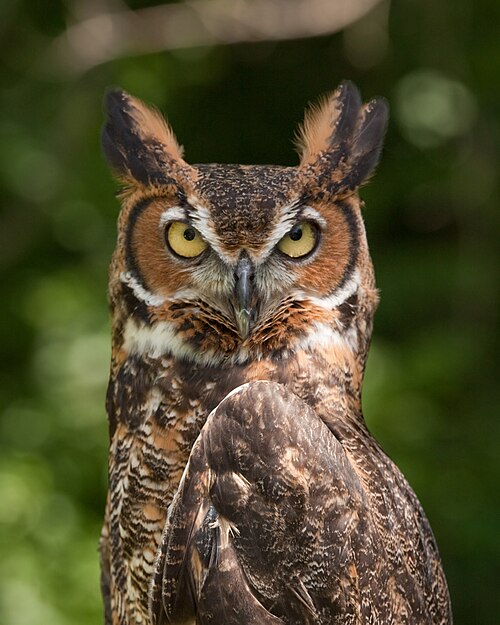
Great Horned Owl
Bubo virginianus
A big, heavy-bodied owl with feather tufts like horns and a deep, steady hoot. It lives in almost every kind of wooded or semi-open country.
- Large
- Forests
- Deserts
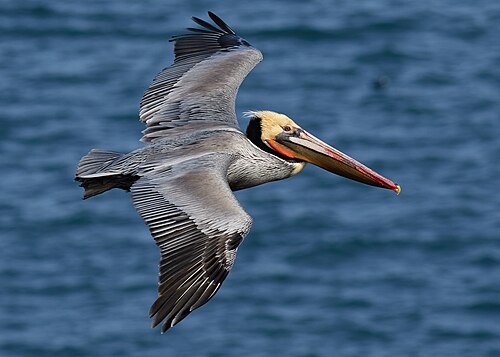
Brown Pelican
Pelecanus occidentalis
A big, dark coastal seabird that plunges headfirst for fish and glides low over the waves. Its recovery from pesticide losses is a conservation success.
- Very large
- Coastlines
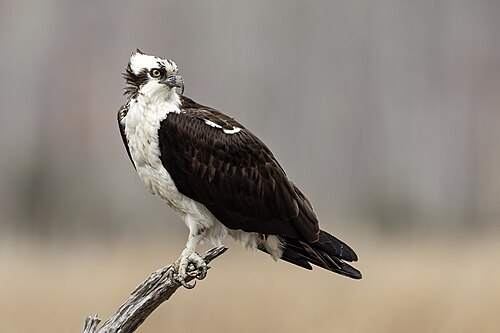
Osprey
Pandion haliaetus
A large fish-eating raptor that hovers over water and plunges feet-first for its catch. Look for its stick nests on poles and platforms.
- Large
- Wetlands
- Coastlines
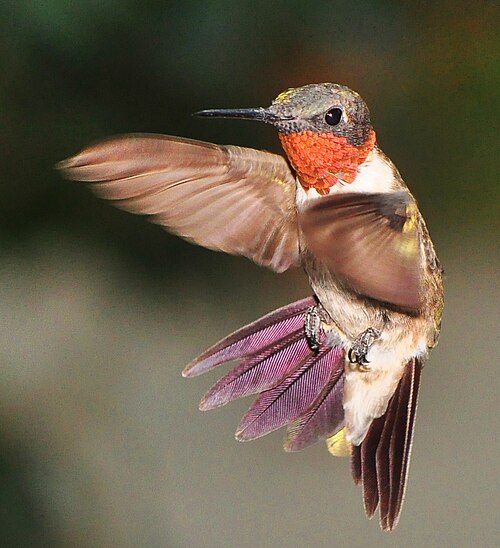
Ruby-throated Hummingbird
Archilochus colubris
The only hummingbird that breeds across eastern North America, a tiny summer visitor that migrates to Mexico and Central America.
- Tiny
- Backyards
- Forests
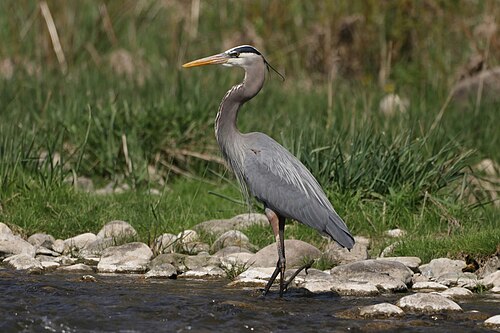
Great Blue Heron
Ardea herodias
North America’s largest heron, a tall gray-blue wader that stands motionless in shallows and strikes with a spear-like bill.
- Very large
- Wetlands
- Coastlines
Keep reading
Sources
- American Birding Association — Code of Birding Ethics
- Audubon — Guide to Ethical Bird Photography
- Audubon — Dos and Don’ts of Nest Photography
- Audubon — The Ethical Bird Photographer
- American Bird Conservancy — Keep Cats Indoors
Sources are the pages consulted when this entry was written. How we choose and use sources: sources and identification criteria.