
Seasonal Birdwatching · 8 min read
Birdwatching Through the Seasons
Birds do not stay put. Every season changes which species you can find, how they look, and how they act. This guide gives a general picture for the United States, with the caveat that your region, elevation, and the weather in a given year can shift everything.
One country, many calendars
The US stretches from subtropical Florida to Alaska and from coastal rainforest to desert. Spring reaches the Gulf Coast weeks before it reaches northern Minnesota, and mountain valleys run on their own schedules. When this guide says spring or fall, read it as a rough window that moves earlier in the South and later in the North.
Use the descriptions below as a starting point, then check local sources. The seasonal calendar on this site shows which of our species are usually found in which regions and seasons, and the regional guides go deeper by area. Never count on a particular bird being in a particular place on a particular day.
Spring: arrivals and song
Spring is when migrants head north and resident birds start singing, and in much of the country it is the busiest birding season. Winter visitors leave, summer breeders arrive, and many birds molt into brighter plumage. In many areas the trees leaf out as migrants peak, so mornings with calm weather and recent overnight movement can be rewarding.
Look for the first returning robins and blackbirds in the north, then waves of warblers, thrushes, and vireos passing through. Hummingbirds begin to appear in many regions as flowers open. Timing depends heavily on latitude and weather. A cold snap can pause a migration and a warm front can bring birds a week early.
Coasts, lakeshores, and wooded parks in migration corridors often concentrate tired birds. These stopover sites matter to them, so stay on trails and keep a respectful distance. You can read more in understanding migration.
Summer: breeding season etiquette
Summer is quieter than spring in sound, but busier in behavior. Most birds are nesting or raising young, and the main rule is to put them first. Many species are far more vulnerable to disturbance at this time of year.
Be especially careful around ground-nesting birds, shorebirds on beaches, and colonial nesters such as herons and terns. A parent that leaves because you got too close can expose eggs to heat, predators, or cold. If a bird is calling at you, dive-bombing, or acting injured, it likely has a nest or young nearby. Back away slowly and watch from a distance.
- Stay on trails and out of posted areas, including beach and dune closures.
- Do not touch, move, or photograph nests up close, and do not part vegetation to find them.
- Skip playback and pishing, which can pull parents away from their nests.
- Keep dogs leashed or away from nesting habitat.
- If you find a fledgling on the ground, remember that many young songbirds leave the nest before they can fly well and parents are usually still tending them. Leave them be unless they are in immediate danger, and contact a local wildlife rehabilitator for advice.
Fall: migration and hawk watches
Fall migration is longer and more spread out than spring. Birds are in duller plumage, many are young, and they do not sing much, so identification leans on calls, shape, and behavior. Peak timing is again regional, and the movement can run from late summer into early winter for different species.
A good way to see fall migration is a hawk watch. These are lookout sites, often on ridges, lakeshores, or peninsulas, where volunteers count migrating hawks, eagles, falcons, and vultures. Many of them report to HawkCount, run by the Hawk Migration Association of North America (HMANA). Broad-winged Hawks often move in large flights in mid-September at sites in the East, while species like the Red-tailed Hawk tend to peak later in fall. Dates differ by site and by year.
A raptor watch is a friendly, low-gear way to start. You can sit with a chair, scan the sky, and learn from regulars who count each bird. The Red-tailed Hawk and Osprey are among our species you may see on migration, depending on where you are.
Winter: gatherings, feeders, and irruptions
Winter birding favors patience. Fewer species are around in many northern areas, but they are easier to see among bare branches, and flocks can be impressive. Waterfowl gather on open water, mixed flocks of chickadees and nuthatches roam the woods, and feeders get busier. In the South and along the coasts, winter is often the peak season, when northern breeders arrive to spend the cold months.
Some winters bring an irruption, when northern birds move farther south than usual. Food is the main driver. When cone, seed, or berry crops fail in the boreal forest, birds such as redpolls, Pine Siskins, and Evening Grosbeaks may move south in larger numbers. Irruptions are irregular and hard to predict, and some years bring almost none. Forecasts are published each fall, and checking local bird reports is the best guide.
For feeders, use appropriate seed such as black oil sunflower or nyjer, keep feeders clean, and avoid bread. Read more in backyard birding. Watch for the American Goldfinch and Northern Cardinal in many areas, and expect different visitors depending on region.
Join a count: Christmas Bird Count and Great Backyard Bird Count
Two community counts fit neatly into winter. The Audubon Christmas Bird Count takes place each year between December 14 and January 5. Each local count circle chooses a single day in that window, and participation is free. You can join a field count with a group, or in some places count birds at your own feeder. Use the circle finder on Audubon’s site to find a nearby compiler, since details and contact methods can change from year to year.
The Great Backyard Bird Count is a four-day event in mid-February, run by the Cornell Lab of Ornithology, the National Audubon Society, and Birds Canada. In 2026 it ran February 13 to 16. You count birds for at least 15 minutes on one or more days, at any location, then submit your checklist at birdcount.org. Check the site for the exact dates of the next one.
Both projects turn ordinary sightings into long-term information about where birds are, and both welcome beginners. Do not worry about being fast or perfect. Careful counts of what you are sure about are valuable.
Seasonal plumage and molt basics
Birds replace their feathers through molt, and when it happens explains why the same bird can look different in different months. Most species have a complete molt once a year, usually after breeding, when worn feathers are replaced. Many also have a partial molt before breeding that changes some body feathers.
The American Goldfinch is a classic example. Males molt in spring into bright yellow with a black cap, and then later in the year turn duller, more olive-brown. Its spring molt covers body feathers, while flight feathers are replaced once a year. Many ducks look quite different in summer, when males go into a drab plumage called eclipse, than in fall and winter.
Young birds add another layer, since they often look like neither parent. If a bird does not match the field guide, ask yourself what season it is, and whether it could be a juvenile or a bird in molt. This is a good reason to check more than one field mark, as covered in bird identification basics.
Putting a year together
A simple yearly rhythm works well: song and arrivals in spring, nests and distance in summer, migration and hawk watches in fall, feeders and counts in winter. Keep a notebook or an eBird checklist so you can compare one year with the next. Even a short list of what you saw, where, and when becomes valuable after a few seasons. Always follow local rules, keep your distance from birds, and let the weather and the birds, not the calendar, set your expectations.
Frequently asked questions
What is the best season for birdwatching in the US?
It depends on where you live. Spring and fall migration are popular almost everywhere because so many species pass through. In the South and along the coasts, winter can be the richest season. Summer is best for watching nesting behavior, from a respectful distance.
When is the Christmas Bird Count?
It runs each year from December 14 to January 5. Every local count circle picks one day in that window, and joining is free. Find a circle near you through Audubon’s website, because local organizers set their own schedule and contact details.
What is a winter irruption?
An irruption is an unusually large southward movement of northern birds, such as redpolls, Pine Siskins, or Evening Grosbeaks, usually driven by poor seed, cone, or berry crops. It does not happen every year and is hard to predict, so check local reports and annual winter finch forecasts.
Birds mentioned in this guide
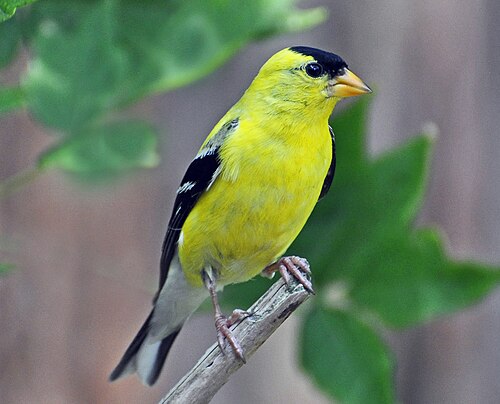
American Goldfinch
Spinus tristis
A small seed-eating finch. Breeding males are bright yellow with a black cap; winter birds turn a muted tan-olive.
- Tiny
- Grasslands
- Backyards
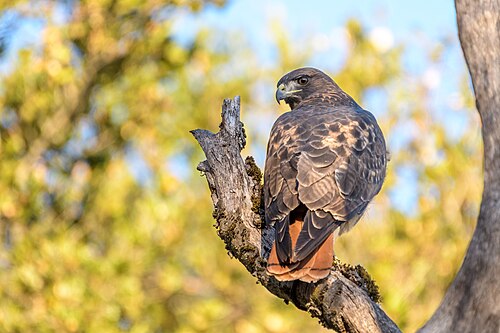
Red-tailed Hawk
Buteo jamaicensis
The most common large hawk in North America, often seen soaring over fields or perched on roadside poles, with a brick-red tail as an adult.
- Large
- Grasslands
- Forests
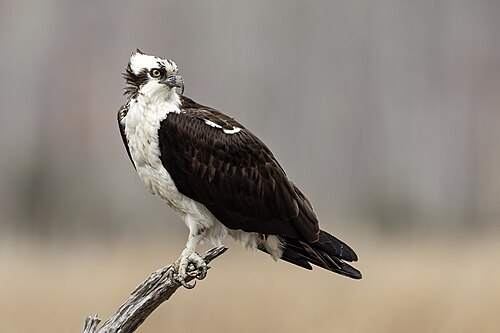
Osprey
Pandion haliaetus
A large fish-eating raptor that hovers over water and plunges feet-first for its catch. Look for its stick nests on poles and platforms.
- Large
- Wetlands
- Coastlines
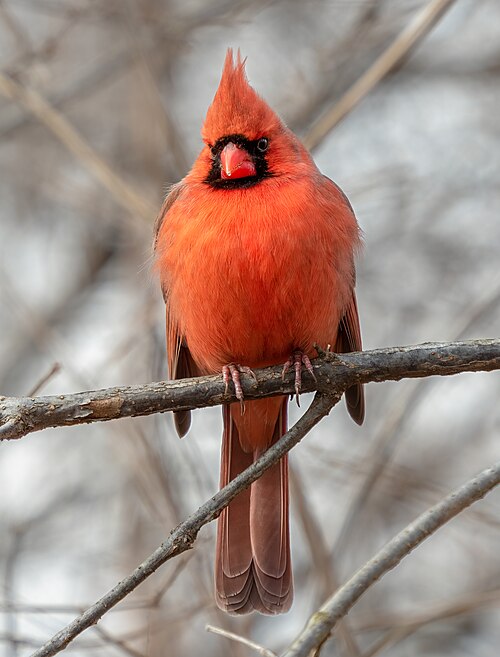
Northern Cardinal
Cardinalis cardinalis
A crested, year-round songbird. The male is brilliant red with a black face; the female is warm tan with red accents.
- Medium
- Backyards
- Forests
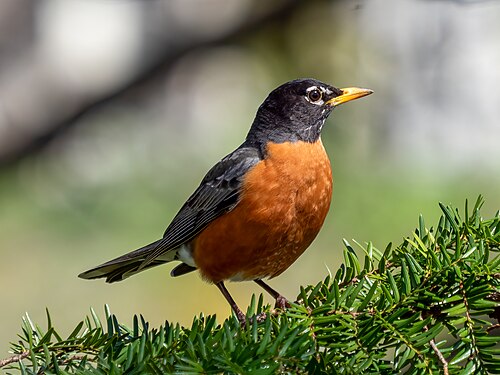
American Robin
Turdus migratorius
A gray-brown thrush with a rusty-orange breast, often seen sprinting and pausing across lawns while hunting worms.
- Medium
- Backyards
- Cities
Keep reading
Sources
- Audubon — Join the Christmas Bird Count
- EarthSky — Great Backyard Bird Count 2026
- Audubon — Buckle Up, Birders: This Winter Is Looking Finchy
- NYC Bird Alliance — Birding Law & Ethics
Sources are the pages consulted when this entry was written. How we choose and use sources: sources and identification criteria.