
Cardinals and Allies · Cardinalidae
Northern Cardinal
Cardinalis cardinalis
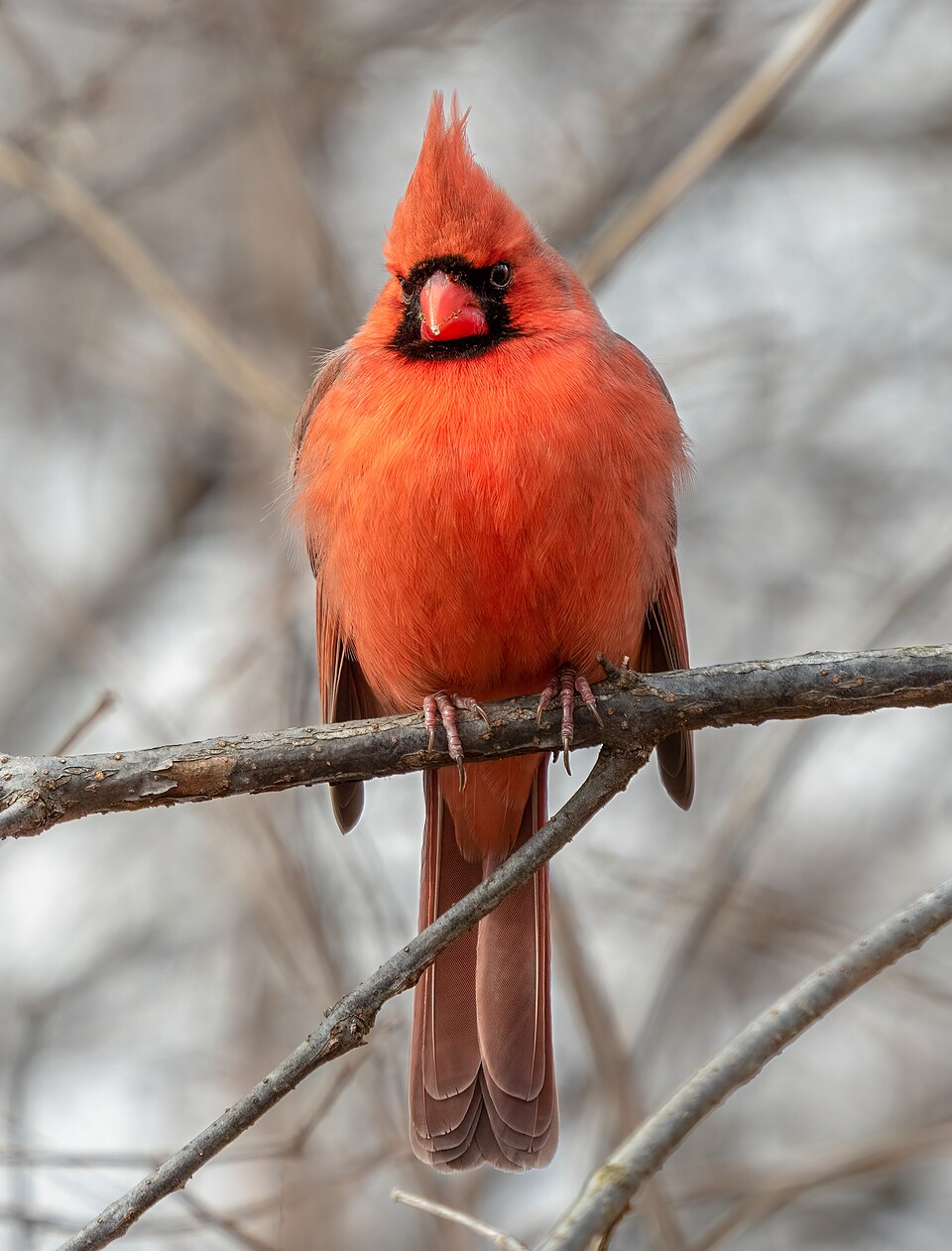
A crested, year-round songbird. The male is brilliant red with a black face; the female is warm tan with red accents.
Presence varies. Bird presence and timing change with location, weather, habitat and migration. Treat this page as a starting point, then check recent local sightings (for example on eBird) before you go.
Identification features
- A pointed crest on the head is unique among common backyard birds in most of the East.
- Males are red overall, with a black mask that surrounds the thick bill.
- Females are buffy brown with red tinges on the crest, wings and tail, and an orange-red bill.
- The tail is long, and the thick conical bill is built for cracking seeds.
- Young birds resemble females but have a dark bill that turns reddish over their first months.
Size and appearance
The Northern Cardinal is about robin-sized, with a long tail and a tall, pointed crest that it raises and lowers with mood. The adult male is bright red from head to tail apart from a black face patch that frames the bill. The female looks very different, tan and olive-brown below with warm red in the crest, wings and tail, so beginners often take her for another species. Both sexes carry a heavy orange-red bill. Juveniles look like females but have a blackish bill at first. A male can look dull or patchy in late summer during molt, and some individuals lose head feathers and appear bald for a short time.
Bill: Thick, cone-shaped and orange-red, with a black patch around the base on both sexes.
Habitat
Cardinals favor edges and thickets more than deep forest. Look for them along woodland borders, in overgrown fields, in swamp margins, in hedgerows and throughout suburban yards and city parks, where shrubs provide cover for nests and roosting. The species is also found in the Southwest, where its range is more patchy and tied to tall brush, streamside thickets and mesquite groves. The key ingredients are dense low vegetation for shelter, open ground or feeders for food, and some tall perches from which males can sing.
Geographic range
The Northern Cardinal lives from the eastern United States through the Southeast and the Gulf states and into Mexico, with scattered populations in southern Arizona, New Mexico and Texas. It is abundant in the Southeast and has spread north over the past century into southeastern Canada. It is largely absent west of the Great Plains except for the patchy desert Southwest, so cardinals are not a normal sight in the Pacific states or the northern Rockies. Birds keep to the same area through the year; they do not migrate. Local numbers can still fall after harsh winters at the northern limit of the range.
Seasonal presence
Cardinals are permanent residents across their range, so any season can work. Winter is easy because the bright male stands out against bare branches and snow, and feeders attract pairs and small loose groups. In spring, males sing from high perches and defend territories. Summer is a quieter time of nesting and then molt, when birds hide in thick foliage and are harder to spot. In fall, flocks of mixed ages form near feeders and food-rich thickets. Because cardinals do not migrate, local weather, food supply and habitat change matter more than the calendar. The edge of the range in the north and the desert Southwest is less dependable.
| Region | Spring | Summer | Fall | Winter |
|---|---|---|---|---|
| Northeast | Present | Present | Present | Present |
| Southeast | Present | Present | Present | Present |
| Midwest | Present | Present | Present | Present |
| Southwest | Present | Present | Present | Present |
A dot means the species is regularly present in that region in that season. Dates shift with latitude, elevation, weather and migration, and some regions are only partly covered by the species’ range.
Diet
Cardinals eat seeds, fruit and insects. Their thick bill cracks weed and grass seeds, waste grain and the contents of fruit pits, while spring and summer bring beetles, caterpillars, ants and spiders, and young birds are fed mostly insects. Wild berries and buds add variety. At feeders, black oil sunflower seed and safflower are favorites, and a platform or large hopper feeder is easier for them than a small perch. Cardinals often feed low or on the ground, so scatter a little seed under the feeder and clean up old hulls. Do not offer bread or salted foods.
Behavior
Cardinals hop on the ground and in low shrubs, usually alone or in pairs, and they often feed at dawn and dusk. Pairs tend to stay together through the year. In the breeding season males defend a territory with song and displays. They sometimes spend hours fighting their reflection in a window or car mirror, which looks alarming but is a territorial reaction. The female builds a loose cup nest in a dense shrub or small tree, and she incubates the eggs while the male brings food. The young leave the nest after about nine to eleven days, and pairs often raise two or three broods a year. In winter cardinals roost in thick evergreens or tangled cover and may join mixed flocks around feeders.
Vocalizations
The song is a clear, whistled series of slurred notes, commonly written as cheer-cheer-cheer or what-cheer, birdie-birdie-birdie, which may speed up or slow down. Unlike many songbirds, both the male and the female sing, and females often sing from the nest, so a singing female does not mean a second male. The common call is a sharp, metallic chip, used in alarm and as a contact sound between mates. Cardinals start singing before dawn in late winter and can be heard through much of the year, with a pause in the heat of late summer.
Recordings are not hosted on this site. For audio, see the sources below. Please avoid playing recordings to attract birds in the field. See Learning Bird Songs and Calls.
Similar species
- Pyrrhuloxia. A Southwest species with a gray body, a rosy-red face and a short, curved yellowish bill, not the cardinal’s heavy red bill.
- Summer Tanager. The male is rose-red all over with no crest or black mask, and it is a summer visitor in the East that leaves for the tropics.
- House Finch. House Finches are smaller and streaked, with a red face and chest only, a short tail and no crest. Compare side by side
Observation tips
- Check dense shrubs and hedges at dawn and dusk, when cardinals feed in the open.
- Offer black oil sunflower or safflower seed on a platform feeder and keep it clean.
- Listen for the whistled song before sunrise, then scan the tops of shrubs and small trees.
- A bird attacking a window is defending its territory. Reduce reflections by putting screens or decals outside the glass.
- Do not search for nests. Cardinals hide them in thick cover and can abandon a disturbed site.
Always keep your distance, stay on trails and leave nests alone. See How to Observe Birds Responsibly.
Conservation status
IUCN Red List: Least Concern. The IUCN lists the Northern Cardinal as Least Concern. Audubon describes it as widespread and abundant, with a population of roughly 130 million, and states that numbers are thought to be stable after a long expansion northward. Status and trends change over time, so check the [IUCN Red List](https://www.iucnredlist.org) for the latest assessment.
Status last checked 2026-11-03. Status and trends change, so check the linked sources for the latest. Search the IUCN Red List.
Questions and answers
Do female cardinals sing?
Yes. Female Northern Cardinals sing, often from the nest, and their songs can be as elaborate as the male’s. This is unusual among North American songbirds, so you may hear a song from a tan bird and not realize it is a female.
Why do cardinals stay in winter?
Cardinals do not migrate. They live on seeds, buds and fruit available in cold months and shelter in dense evergreens or tangles. Feeders can help, but the birds mainly depend on natural cover and food nearby.
Related entries
Related birds
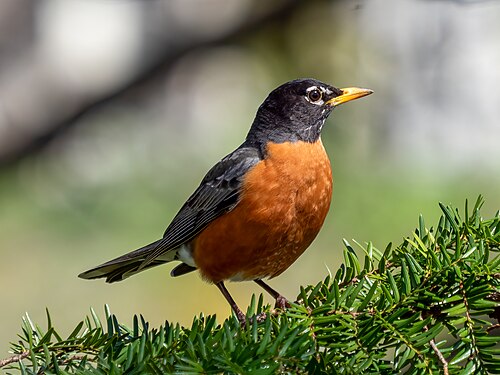
American Robin
Turdus migratorius
A gray-brown thrush with a rusty-orange breast, often seen sprinting and pausing across lawns while hunting worms.
- Medium
- Backyards
- Cities
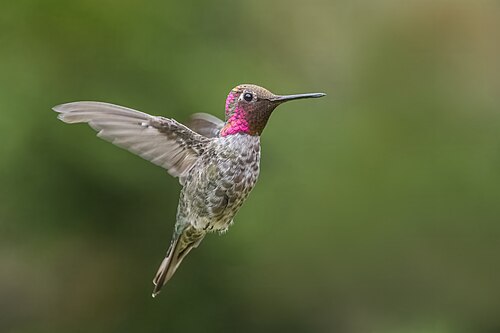
Anna’s Hummingbird
Calypte anna
A stocky Pacific Coast hummingbird with a rose-red head, now a year-round presence in many western yards and feeders.
- Tiny
- Backyards
- Cities
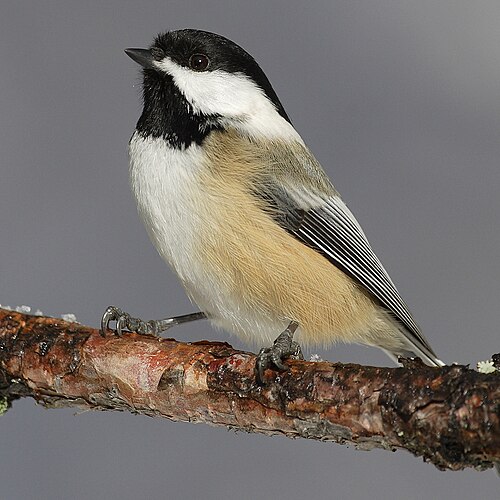
Black-capped Chickadee
Poecile atricapillus
A tiny, curious songbird with a black cap and bib, white cheeks and a clear fee-bee song. A resident across the northern states.
- Small
- Forests
- Backyards
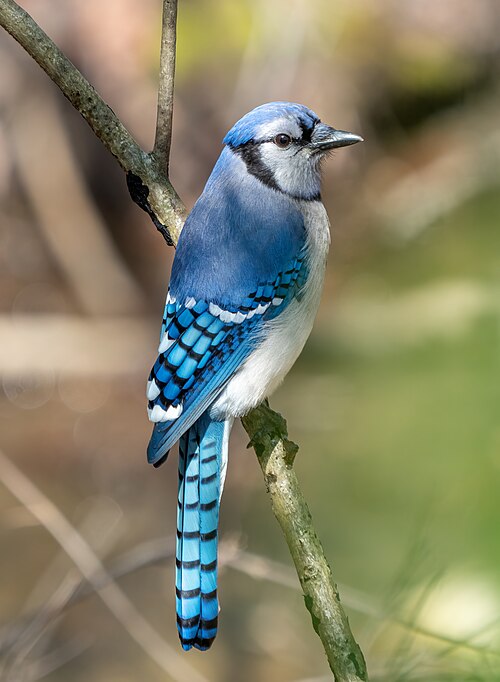
Blue Jay
Cyanocitta cristata
A loud, crested jay in blue, white and black. Common in eastern woods and yards, with some birds migrating in fall.
- Medium
- Forests
- Backyards
Related guides
Sources
- Audubon Field Guide — Northern Cardinal
- Wikipedia: Northern cardinal (secondary cross-check of the IUCN category)
Sources are the pages consulted when this entry was written. How we choose and use sources: sources and identification criteria.
Further reading (not used as a source for this entry): All About Birds, Cornell Lab of Ornithology.