
Habitat guide
Forests Birdwatching
Forests cover large parts of the eastern, northern and western United States, and they hold some of the most layered bird communities on the continent. This guide explains how birds use woodlands, how the seasons change what you hear, and how to watch quietly and responsibly.
What a forest is, from a bird’s point of view
To a bird, a forest is not one place but several stacked on top of each other. The ground layer holds leaf litter, logs and low plants. Above it sit shrubs and saplings, then the trunks and middle branches, and finally the canopy. Dead standing trees add yet another layer, with holes and loose bark that many species need.
Forests also differ widely across the country. Hardwood stands in the East, spruce and fir in the north, pine woods in the South, and conifer forests of the Pacific coast and Rockies all support different bird communities. Age matters too. Young regrowth, mature stands and old forest each attract their own set of species.
How birds use woodland
Birds divide a forest by feeding method and height. Downy Woodpeckers and White-breasted Nuthatches work trunks and branches, probing bark for insects. Chickadees and titmice glean small prey from twigs and leaves. Owls such as the Great Horned Owl hunt at night, while larger hawks use forest edges and openings.
Breeding adds more demands. Many forest birds nest in tree cavities, others build open cups on branches, and some nest on the ground under cover. A single patch with dead wood, a thick shrub layer and tall trees can serve many nesting styles at once, which is one reason varied forests tend to be so lively.
Forest birds also depend on what happens beneath the trees. Fallen logs, leaf litter and standing dead wood feed insects, and insects feed birds. Water matters too, so streams, seeps and small pools often draw more activity than dry slopes. Fruit and seed crops change from year to year, which is one reason bird numbers in the same woods can differ across seasons. A habitat that includes several tree ages and species usually supports more birds than a single uniform stand.
Seasonal change in the woods
Spring is the busiest time. Many songbirds that spent winter in the tropics or the southern states move north through forests, and resident birds begin to sing and defend territories. Exact timing depends on latitude, elevation and the weather that year, so the same woodlot can peak weeks apart in different regions.
Summer is quieter and harder to watch. Leaves are full, singing drops off after nesting begins, and many birds are busy with young. In fall, migrants pass through again, often in less colorful plumage and with less song. Winter forests are bare and still, but resident birds often travel in mixed flocks, which can make a quiet walk suddenly busy when one reaches you.
What to look and listen for
In a forest you will often hear a bird long before you see it. Learn a few common songs first, and use calls and rhythm to locate the source. The songs and calls hub and the guide on learning bird songs and calls are good starting points.
Watch for movement rather than color. Look for tapping, scraping on bark, flickering leaves or a sudden group of small birds moving through a tree. Check where the sun is, since birds against the sky look dark and shapes become more useful than field marks. Pause often. Standing still for a few minutes near a flowering or fruiting tree, a fallen log or a forest edge can show you more than miles of walking.
Time of day and weather change what you can find. Birds are often most active in the first hours after dawn, and a light breeze or drizzle can keep them low and quiet. After cold nights, birds may feed actively in sunny patches as the air warms. Try to visit the same trail several times through the year. Repeat visits teach you what is normal for a spot, and they make unusual birds easier to notice.
Watching forest birds responsibly
Stay on trails. Off-trail walking can trample nesting cover and compact the soil, and it can flush ground-nesting birds without you noticing. If a bird repeatedly calls in alarm, circles you or fakes an injury, you are probably near a nest or young. Back away and go another way.
Avoid playing recordings to draw birds into view. It can pull birds off their feeding or nesting and stress them, and it is especially harmful for nesting, rare or declining species. Keep dogs leashed where required, keep voices low, and never touch nests or handle fledglings. More on this in our guide to observing birds responsibly.
Regional variation across the US
Eastern deciduous forests are known for breeding warblers, thrushes and vireos in spring and summer. Northern boreal and mixed forests host species that are scarce farther south, and some of them move south in winter in numbers that change from year to year. Southern pine woods and bottomlands add birds tied to warm, humid country.
In the West, mountain conifer forests change quickly with elevation, so a short drive uphill can change what you hear. Pacific coast forests of the Northwest are damp and shaded, with birds such as Steller’s Jay. Species presence and timing vary by location, weather and migration, so check local sources before a trip. Our regional guides and the seasonal calendar can help you plan.
Frequently asked questions
Why are forest birds so hard to see?
Dense leaves, dim light and constant movement hide them. Many species also feed high in the canopy. Listening first, moving slowly and scanning edges, openings and flowing water often helps. Binoculars with a wide field of view make finding small, active birds easier.
What is the best time of day to bird in a forest?
Early morning is usually best, especially in spring, when many birds sing most actively just after dawn. Activity often drops by midday. Weather matters, so a calm, mild morning is typically better than a windy or heavy rain day.
Is it okay to play bird songs to attract birds in the woods?
It is best avoided. Playback can interrupt feeding and nesting and add stress, particularly for rare or nesting birds. Many parks and refuges restrict it. Patience, quiet and good listening skills usually give better and safer views.
Birds in our library that use this habitat
17 species in the library are commonly found here. Presence and timing vary by region and migration. Use the habitat and region explorer to narrow by region and season.
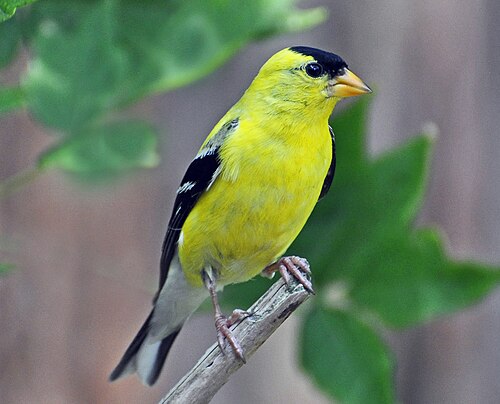
American Goldfinch
Spinus tristis
A small seed-eating finch. Breeding males are bright yellow with a black cap; winter birds turn a muted tan-olive.
- Tiny
- Grasslands
- Backyards
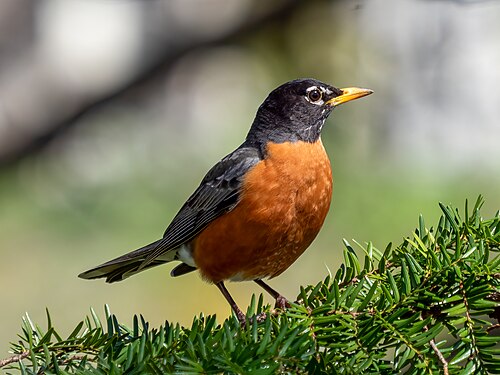
American Robin
Turdus migratorius
A gray-brown thrush with a rusty-orange breast, often seen sprinting and pausing across lawns while hunting worms.
- Medium
- Backyards
- Cities
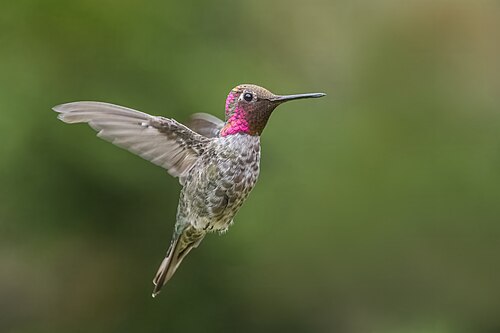
Anna’s Hummingbird
Calypte anna
A stocky Pacific Coast hummingbird with a rose-red head, now a year-round presence in many western yards and feeders.
- Tiny
- Backyards
- Cities
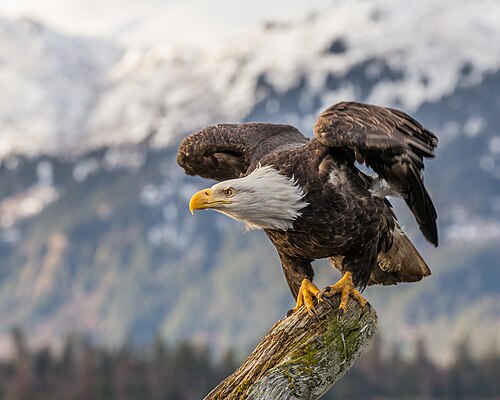
Bald Eagle
Haliaeetus leucocephalus
America’s national bird, a huge dark-brown raptor with a white head and tail that fishes along coasts, rivers and large lakes.
- Very large
- Wetlands
- Coastlines
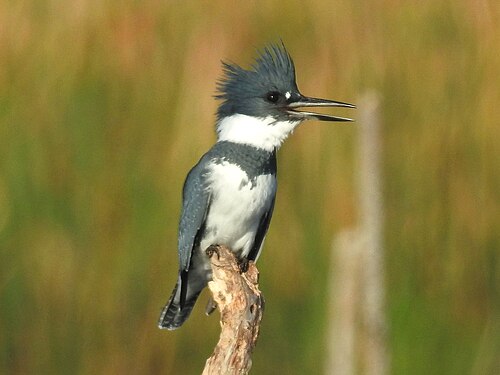
Belted Kingfisher
Megaceryle alcyon
A shaggy-crested, blue-gray waterside bird that rattles along rivers and plunges headfirst for fish.
- Medium
- Wetlands
- Coastlines
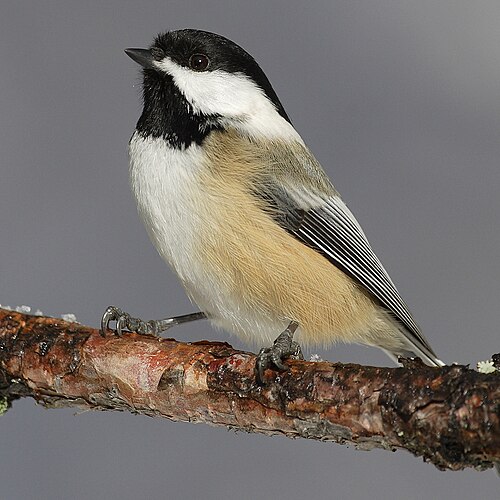
Black-capped Chickadee
Poecile atricapillus
A tiny, curious songbird with a black cap and bib, white cheeks and a clear fee-bee song. A resident across the northern states.
- Small
- Forests
- Backyards
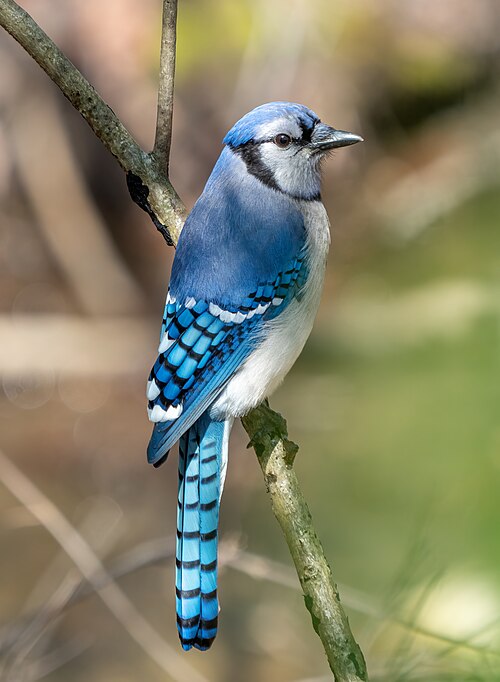
Blue Jay
Cyanocitta cristata
A loud, crested jay in blue, white and black. Common in eastern woods and yards, with some birds migrating in fall.
- Medium
- Forests
- Backyards
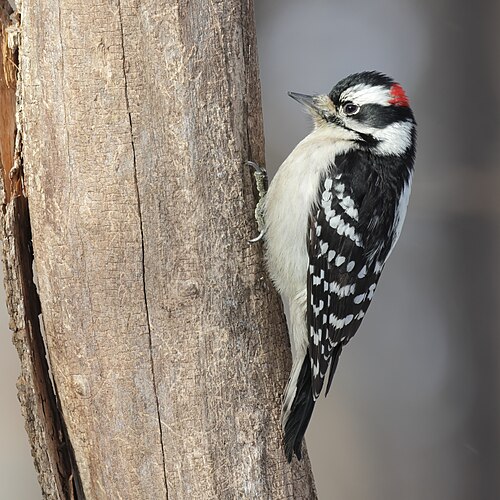
Downy Woodpecker
Dryobates pubescens
The smallest woodpecker in North America, a black-and-white bird with a short bill that visits suet feeders and tiny branches.
- Small
- Forests
- Backyards
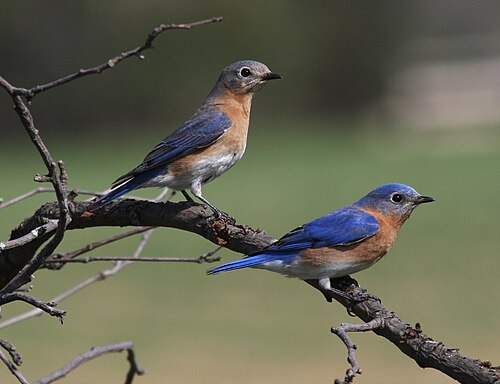
Eastern Bluebird
Sialia sialis
A small thrush of open country: the male is bright blue above with a rusty throat and chest, and a white belly.
- Small
- Grasslands
- Backyards
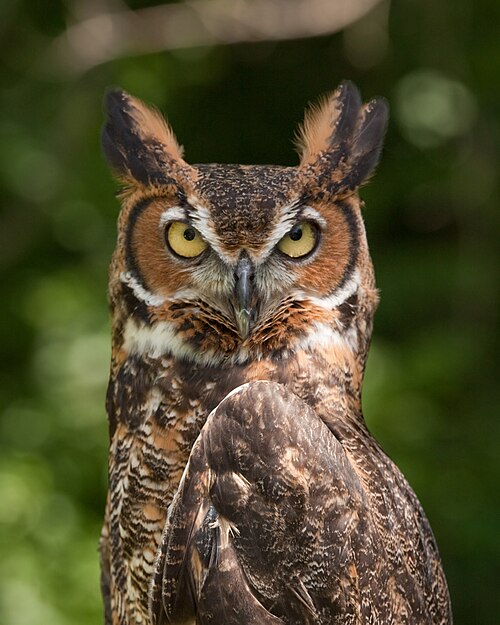
Great Horned Owl
Bubo virginianus
A big, heavy-bodied owl with feather tufts like horns and a deep, steady hoot. It lives in almost every kind of wooded or semi-open country.
- Large
- Forests
- Deserts
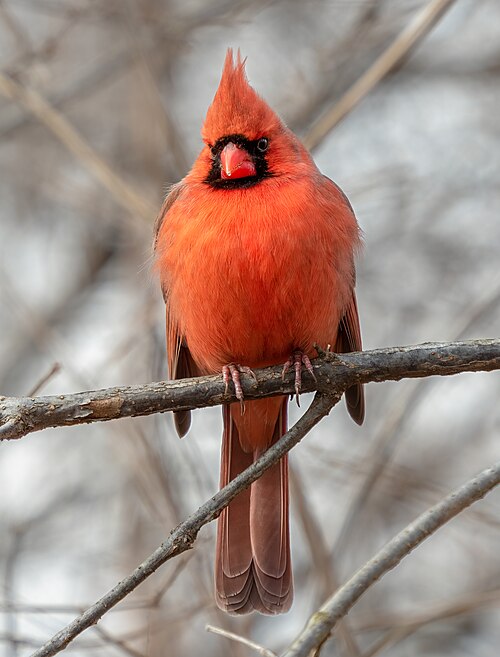
Northern Cardinal
Cardinalis cardinalis
A crested, year-round songbird. The male is brilliant red with a black face; the female is warm tan with red accents.
- Medium
- Backyards
- Forests
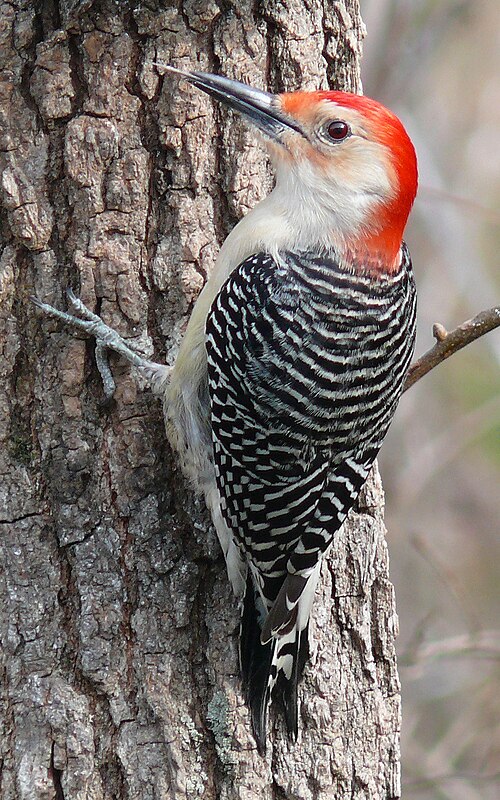
Red-bellied Woodpecker
Melanerpes carolinus
A medium woodpecker with a zebra-striped back and a red cap, familiar in eastern woods, suburbs and at suet feeders.
- Medium
- Forests
- Backyards
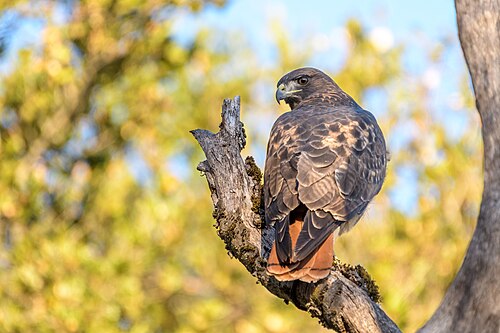
Red-tailed Hawk
Buteo jamaicensis
The most common large hawk in North America, often seen soaring over fields or perched on roadside poles, with a brick-red tail as an adult.
- Large
- Grasslands
- Forests
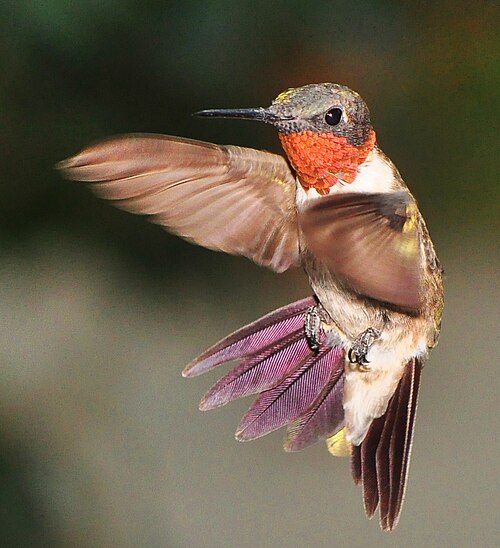
Ruby-throated Hummingbird
Archilochus colubris
The only hummingbird that breeds across eastern North America, a tiny summer visitor that migrates to Mexico and Central America.
- Tiny
- Backyards
- Forests
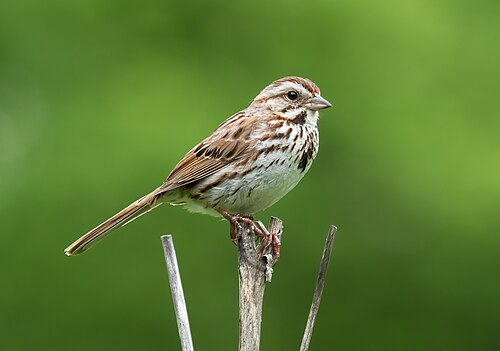
Song Sparrow
Melospiza melodia
A streaky, medium-sized sparrow with a central breast spot and a loud, varied song. It turns up in thickets, marsh edges and yards across the continent.
- Small
- Wetlands
- Backyards
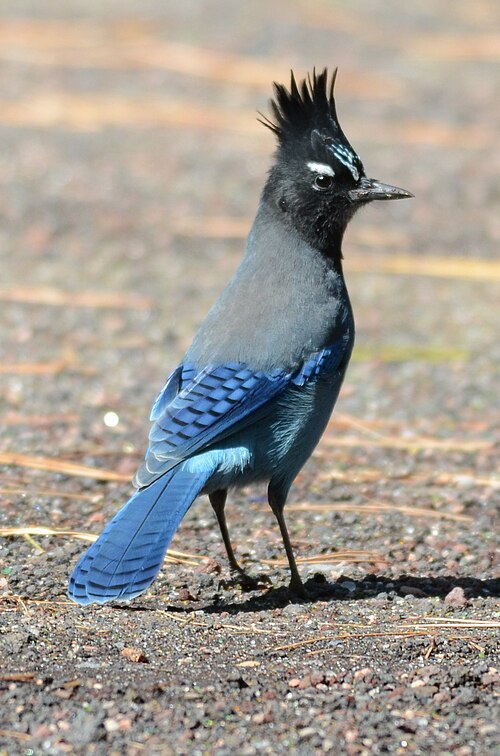
Steller’s Jay
Cyanocitta stelleri
A crested, sooty-black and deep-blue jay of western evergreen forests, and a noisy regular at mountain campgrounds and feeders.
- Medium
- Forests
- Backyards
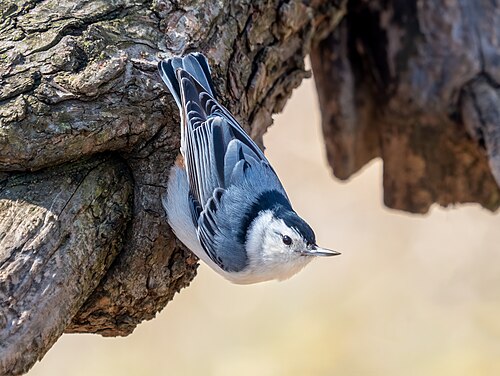
White-breasted Nuthatch
Sitta carolinensis
A compact, blue-gray bird that creeps headfirst down tree trunks and gives a nasal yank-yank. A regular at feeders with sunflower seeds and suet.
- Small
- Forests
- Backyards
Related guides
Sources
Sources are the pages consulted when this entry was written. How we choose and use sources: sources and identification criteria.