
Nuthatches · Sittidae
White-breasted Nuthatch
Sitta carolinensis
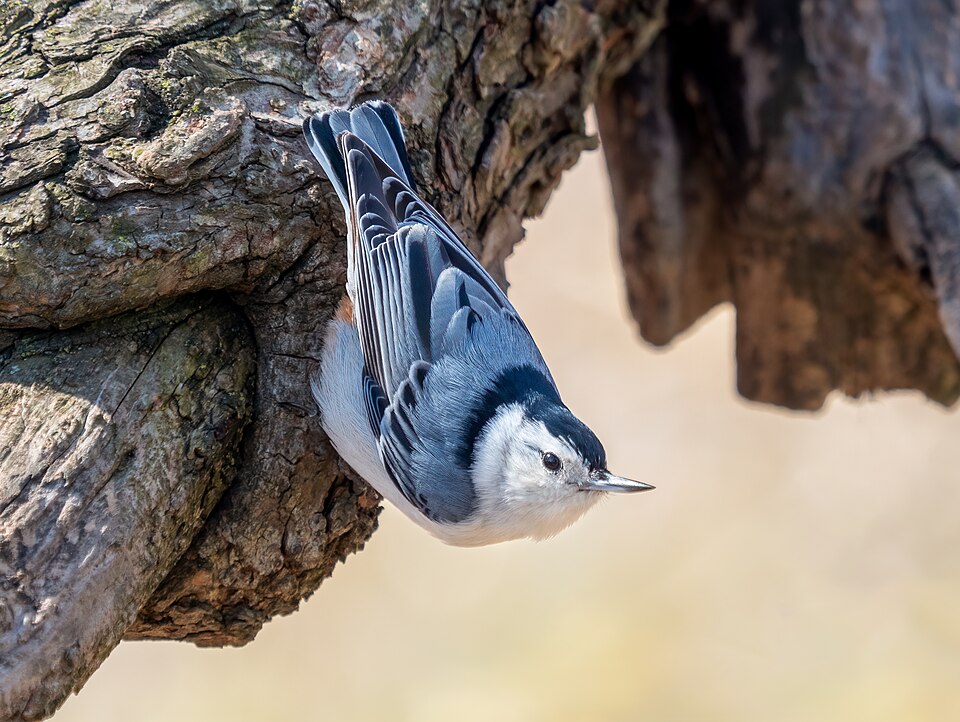
A compact, blue-gray bird that creeps headfirst down tree trunks and gives a nasal yank-yank. A regular at feeders with sunflower seeds and suet.
Presence varies. Bird presence and timing change with location, weather, habitat and migration. Treat this page as a starting point, then check recent local sightings (for example on eBird) before you go.
Identification features
- Look for a blue-gray back, white face and breast, and a black or dark gray cap that extends down the nape.
- It climbs down tree trunks headfirst, which few other birds do.
- The body is chunky and the tail is short, with a thin, slightly upturned bill.
- A black eye stands out against the white face.
- Some birds show a rusty or orange-brown wash on the lower belly.
- A repeated, nasal yank-yank is a very useful clue.
Size and appearance
This is a stocky, short-tailed songbird, the largest of the North American nuthatches. The upperparts are blue-gray, while the face and underparts are clean white, and a dark cap and nape contrast with the white. The cap is black in males and often grayer in females, although that difference can be hard to see. Some birds have a soft rusty patch near the vent. The thin bill is slightly upturned, and the eye looks dark against the white face. Western populations vary in size and bill shape, with Pacific forms differing from eastern and interior birds. Juveniles look similar but a bit duller.
Bill: A thin, slightly upturned bill, long enough to probe bark crevices.
Habitat
White-breasted Nuthatches prefer mature deciduous forests, especially edges, clearings and areas along rivers and roads. They also use mixed forests with some conifers, and they readily live in parks, suburbs and wooded neighborhoods that have large old trees. They are rarely found in pure conifer forest. Nest sites are natural cavities or old woodpecker holes in living or dead trees. In winter they stay in much the same woods, often joining mixed flocks. Large trees with rough bark offer both food and hiding places for stored seeds and insects.
Geographic range
This nuthatch lives across much of the US and southern Canada, with the largest part of its range in the East and the Midwest, across the Rockies and through the Pacific states, and also into Mexico. It is typically a permanent resident wherever it occurs. In some years, birds from the northern and western parts of the range move south irregularly, though far less dramatically or regularly than the Red-breasted Nuthatch does. Regional forms exist, including several Pacific ones, and numbers have been reported as rising in the Northeast as forests have regrown and falling in parts of the Southeast and Washington.
Seasonal presence
White-breasted Nuthatches generally stay in the same territories all year, so they are present in every season in most of their range. Fall and winter are often the easiest times to see them at feeders, because natural foods get scarce, and bare branches reveal them as they move along trunks. Pairs stay together on their territory throughout the year and may mate for life. In some years birds from the northern and western parts of the range shift south, which can produce a brief jump in numbers at a feeder. These movements vary by year and region, so no yard is guaranteed.
| Region | Spring | Summer | Fall | Winter |
|---|---|---|---|---|
| Northeast | Present | Present | Present | Present |
| Southeast | Present | Present | Present | Present |
| Midwest | Present | Present | Present | Present |
| Southwest | Present | Present | Present | Present |
| Pacific West | Present | Present | Present | Present |
A dot means the species is regularly present in that region in that season. Dates shift with latitude, elevation, weather and migration, and some regions are only partly covered by the species’ range.
Diet
In summer the White-breasted Nuthatch lives mainly on insects and spiders, picking them from bark and branches, and its young are fed only insects and spiders. In fall and winter seeds and nuts become a much larger share of the diet. The bird often hides food in bark crevices and returns to it later. At feeders it comes for black oil sunflower seeds, suet and peanut-butter mixtures. It usually takes one seed at a time, flies to a tree and wedges it in the bark to hammer it open. Fresh, clean feeders and unsalted foods suit it best, and bread or sugary foods should be avoided.
Behavior
This is a trunk specialist. It works along bark and larger limbs, moving over all surfaces including upside-down underneath branches, and often heads down a trunk where other birds go up. Its movement is a flitting, bouncing motion, and it sometimes forages on the ground. Pairs stay on their territories year-round and defend them, calling back and forth. In fall and winter it caches seeds in bark crevices throughout the territory. It often joins chickadee and titmouse flocks in winter and nests in a cavity in a tree. Nest sites should not be disturbed. Watch from a distance and keep dogs and people away from the base of the tree during spring.
Vocalizations
The best-known call is a nasal, repeated yank-yank, often rapid and slightly rough. A related series of fast whistled notes, low-pitched and steady, functions as a song. Pairs also use soft, quiet calls near the nest, and Pacific birds are described as having a more nasal call, rendered as a drawn-out beeerf. Calls carry well through winter woods, and the sound often reveals a bird before it is seen. Playing recordings to bring one closer is best avoided, especially during nesting.
Recordings are not hosted on this site. For audio, see the sources below. Please avoid playing recordings to attract birds in the field. See Learning Bird Songs and Calls.
Similar species
- Red-breasted Nuthatch. The Red-breasted Nuthatch is smaller, with a rusty belly, a black eye stripe and a white eyebrow. Its call is a higher tin-horn toot.
- Brown-headed Nuthatch. A small pine-woods bird of the Southeast with a brown cap and a pale spot on the nape rather than a dark cap.
- Downy Woodpecker. Downy Woodpeckers climb upward, brace on a stiff tail, and have a checkered black-and-white back, rather than creeping headfirst down the trunk. Compare side by side
Observation tips
- Watch large tree trunks and look for a bird working headfirst downward, and listen for the nasal yank-yank.
- Offer black oil sunflower seeds or plain suet in a feeder placed near mature trees, and keep the feeder clean.
- Avoid bread, salted foods and sugary mixes. Stick with plain seeds and suet.
- Watch winter mixed flocks of chickadees and titmice, since nuthatches often tag along.
- If you find a nest cavity, do not peek inside or tap the tree. Observe from a distance and keep pets away.
Always keep your distance, stay on trails and leave nests alone. See How to Observe Birds Responsibly.
Conservation status
IUCN Red List: Least Concern. The IUCN lists the White-breasted Nuthatch as Least Concern. Audubon describes it as widespread and common, with stable or possibly increasing numbers, though local changes are reported, such as increases in the Northeast and declines in parts of the Southeast. Status and trends change over time, so check the IUCN Red List for the current assessment. This guide did not verify specific US legal protections.
Status last checked 2026-11-03. Status and trends change, so check the linked sources for the latest. Search the IUCN Red List.
Questions and answers
Why does the White-breasted Nuthatch walk down trees headfirst?
Moving downward lets it look at bark from a different angle than birds that climb up, so it can spot insects and spiders they miss. Its strong feet and toes hold it on the bark while it works.
What should I feed White-breasted Nuthatches?
Black oil sunflower seeds, plain suet and peanut-butter mixes made for birds are good choices. The birds often carry a seed to a nearby tree to hammer it open. Keep feeders clean and don't offer bread or sugary foods.
Related entries
Related birds
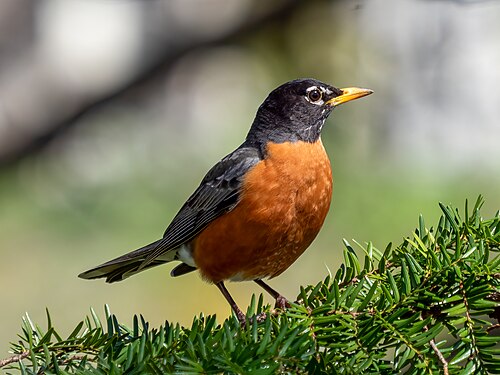
American Robin
Turdus migratorius
A gray-brown thrush with a rusty-orange breast, often seen sprinting and pausing across lawns while hunting worms.
- Medium
- Backyards
- Cities
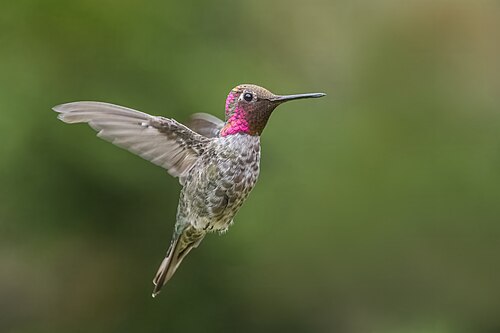
Anna’s Hummingbird
Calypte anna
A stocky Pacific Coast hummingbird with a rose-red head, now a year-round presence in many western yards and feeders.
- Tiny
- Backyards
- Cities
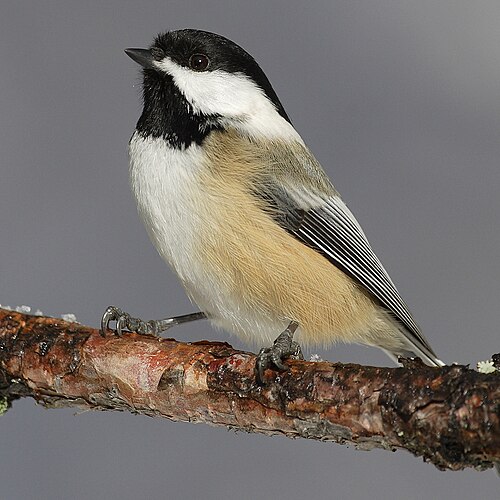
Black-capped Chickadee
Poecile atricapillus
A tiny, curious songbird with a black cap and bib, white cheeks and a clear fee-bee song. A resident across the northern states.
- Small
- Forests
- Backyards
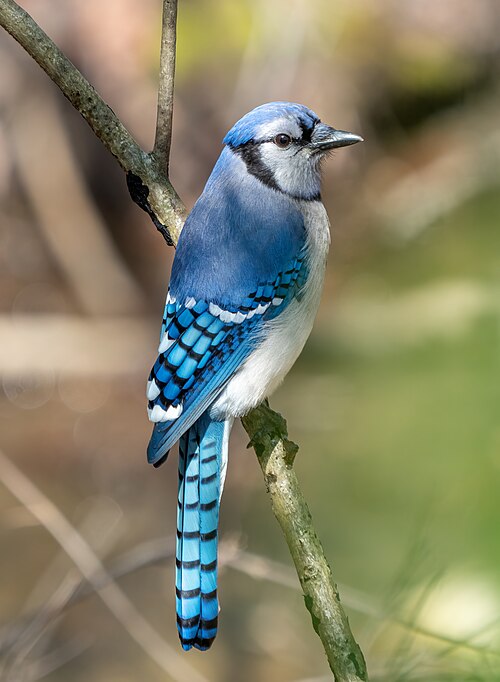
Blue Jay
Cyanocitta cristata
A loud, crested jay in blue, white and black. Common in eastern woods and yards, with some birds migrating in fall.
- Medium
- Forests
- Backyards
Related guides
Sources
- Audubon Field Guide — White-breasted Nuthatch
- Wikipedia — White-breasted nuthatch (secondary cross-check)
Sources are the pages consulted when this entry was written. How we choose and use sources: sources and identification criteria.
Further reading (not used as a source for this entry): All About Birds, Cornell Lab of Ornithology.