
Swallows · Hirundinidae
Barn Swallow
Hirundo rustica
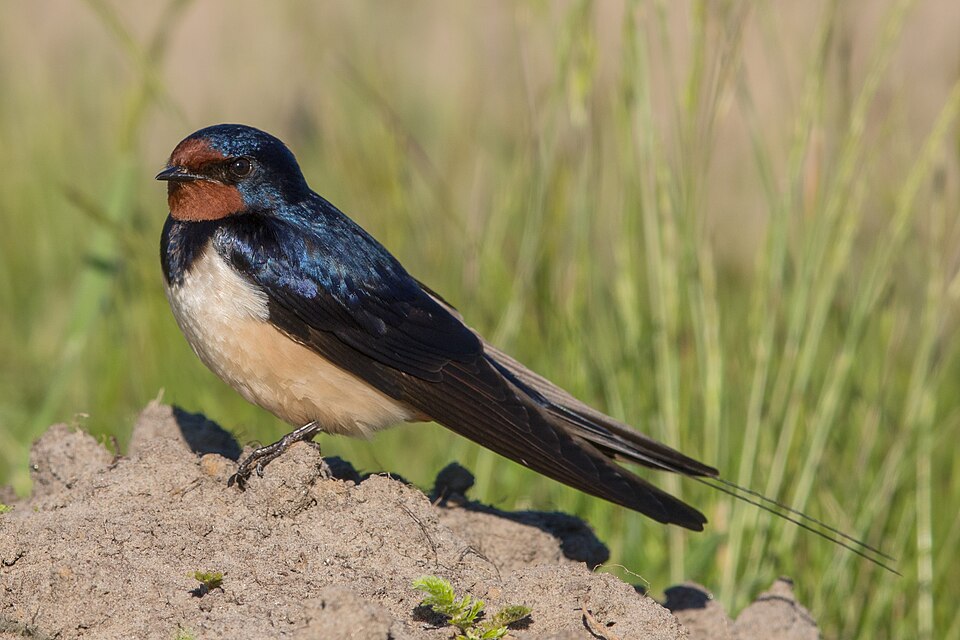
A graceful, blue-backed swallow with a rusty throat and a deeply forked tail, often seen skimming over fields and nesting under bridges.
Presence varies. Bird presence and timing change with location, weather, habitat and migration. Treat this page as a starting point, then check recent local sightings (for example on eBird) before you go.
Identification features
- Deeply forked tail with long outer feathers, the clearest mark among North American swallows.
- Steel-blue back and wings, a rusty-orange forehead and throat, and a dark band across the upper chest.
- Underparts range from pale buff to rich cinnamon, and the tail shows white spots when spread.
- Flies low and fast over fields and water with smooth, swooping turns while catching insects.
- Builds a cup of mud and grass on barns, bridges, eaves and other structures.
Size and appearance
The Barn Swallow is a slim, long-winged songbird with a streamlined body. Adults have a shiny, steel-blue head, back and wings, a chestnut forehead and throat, and a blue-black band across the chest. The belly runs from a pale buff to a deep cinnamon, depending on the bird. The tail is long and deeply forked, with white spots that show when it spreads. Males tend to have longer tail streamers and richer color than females. Young birds have shorter tails and a paler throat. Seen in good light, the blue glints like metal.
Bill: A tiny, flat, dark bill with a wide gape, built for scooping insects from the air.
Habitat
Barn Swallows live in open or semi-open land: farms, fields, marshes, lakes and the edges of towns. They favor areas near water and generally avoid very dry country and unbroken forest. Their nest is a cup of mud pellets and dried grass lined with feathers, and today nearly all are placed on man-made structures such as barns, garages, porches, under bridges and docks, and in culverts. Because they feed on flying insects, the best places to look are over pastures, ponds, rivers and mowed fields where insects rise in the sun.
Geographic range
Barn Swallows breed across most of North America, from Alaska and Canada south to central Mexico, and the same species also breeds in Europe and Asia. In the US they are found in every region during the warm months. North American birds spend winter in Central America and South America, including Panama and Costa Rica, and the Lesser Antilles, with a few possibly lingering in the far south of the breeding range. Alaska’s breeding birds reach the state in spring and head south again in late summer. Exact locations of nests depend on where suitable structures and mud are available.
Northeast Southeast Midwest Southwest Pacific West Alaska & Hawaii
Seasonal presence
Barn Swallows are summer birds in nearly all of the US. They arrive from the south in spring, earlier in the South and Southwest and later in the north and in Alaska, and then spend weeks building nests and raising young. Fall migration begins early. Southward movement is well underway by mid-August in many places, with flocks lining up on wires before departing. Few remain by winter, except for the odd straggler in the far south. Timing shifts with weather, insect supply and latitude, so the dates for your area can differ from these.
| Region | Spring | Summer | Fall | Winter |
|---|---|---|---|---|
| Northeast | Present | Present | Present | Not typical |
| Southeast | Present | Present | Present | Not typical |
| Midwest | Present | Present | Present | Not typical |
| Southwest | Present | Present | Present | Not typical |
| Pacific West | Present | Present | Present | Not typical |
| Alaska & Hawaii | Present | Present | Not typical | Not typical |
A dot means the species is regularly present in that region in that season. Dates shift with latitude, elevation, weather and migration, and some regions are only partly covered by the species’ range.
Diet
Barn Swallows eat flying insects, almost all of them caught in the air. Flies, including house flies and horse flies, are a big part of the diet, along with beetles, wasps, wild bees, winged ants, true bugs, moths and damselflies. They sometimes take grasshoppers, spiders or snails, and now and then a few berries or seeds. In cold or wet weather, when insects are scarce, they may feed on the ground or skim low over water. They do not use seed feeders, and nothing needs to be put out for them. Leaving mosquito-rich ponds and insect habitat intact helps more than anything.
Behavior
Barn Swallows fly with a smooth, flowing style, often skimming low across fields and water. They feed mostly while flying, and they migrate in flocks, mostly by day. Courtship involves aerial chases, and mated pairs often perch side by side, touch bills and preen each other. Several pairs may nest in the same building, though they do not form dense colonies. Both sexes build the nest and incubate the four to five eggs, and both feed the young, which fledge about three weeks after hatching. Many pairs raise one or two broods. If you find a nest on your porch, enjoy it from a distance and avoid disturbing it.
Vocalizations
The song is a long, bubbly twitter of liquid notes, chatters and rattles, often ending in a dry, buzzy trill or a rising “zhzhzh.” Common calls are a sharp “kvick-kvick” and short chirps given in flight, and an alarm call when a cat or a hawk is near. A group of swallows produces a constant twittering as they feed and perch. Birds often sing from wires and from the nest site in the early morning. The voice is lighter and more musical than a sparrow’s.
Recordings are not hosted on this site. For audio, see the sources below. Please avoid playing recordings to attract birds in the field. See Learning Bird Songs and Calls.
Similar species
- Cliff Swallow. Has a square tail, a pale rump and a buff patch on the forehead. Nests are gourd-shaped mud jugs, often in colonies.
- Tree Swallow. Iridescent blue-green above and bright white below with a barely notched tail. No rusty throat.
- Purple Martin. Larger and bulkier, with a short, shallow-forked tail. Males are all dark glossy blue.
Observation tips
- Scan telephone wires and fence lines on mowed fields and ponds in the early morning, when swallows perch and sing.
- Look under bridges and the eaves of barns or garages for nests in spring and summer, and stay well away from the nest.
- Do not knock down or block active nests, and avoid disturbing adults and young. Swallows and their nests are legally protected in the US, so check local rules.
- Watch the tail: the deep fork and long outer streamers are visible even on a fast pass overhead.
- In late summer, look for gatherings on wires as birds prepare to migrate, and enjoy them with binoculars from a safe distance.
Always keep your distance, stay on trails and leave nests alone. See How to Observe Birds Responsibly.
Conservation status
IUCN Red List: Least Concern. The IUCN lists the Barn Swallow as Least Concern, and Audubon describes it as widespread and abundant, with local declines in a few areas. Status and trends change, so check the IUCN Red List and your state wildlife agency for current information.
Status last checked 2026-11-03. Status and trends change, so check the linked sources for the latest. Search the IUCN Red List.
Questions and answers
When do Barn Swallows leave?
Most start heading south in late summer, and by mid-August the move is underway in many places. Northern birds leave earlier than southern ones. By winter nearly all have gone to Central and South America.
Can I remove a Barn Swallow nest from my porch?
It is best not to disturb an active nest. Barn Swallows are protected in the US, and removing a nest with eggs or young can cause real harm. Wait until the birds have left, then ask your state wildlife agency for advice.
Related entries
Related birds
Canada Goose
Branta canadensis
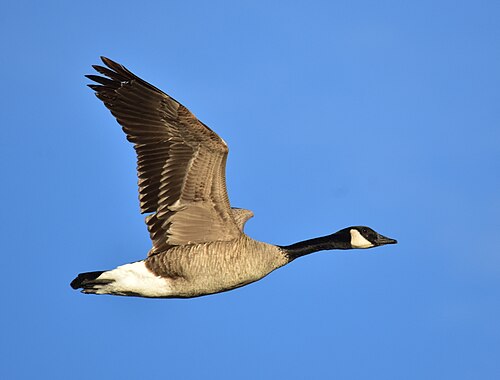
A big brown goose with a black head and neck and a white chinstrap, now common on lakes, golf courses and fields across the US.
- Very large
- Wetlands
- Cities
Mallard
Anas platyrhynchos
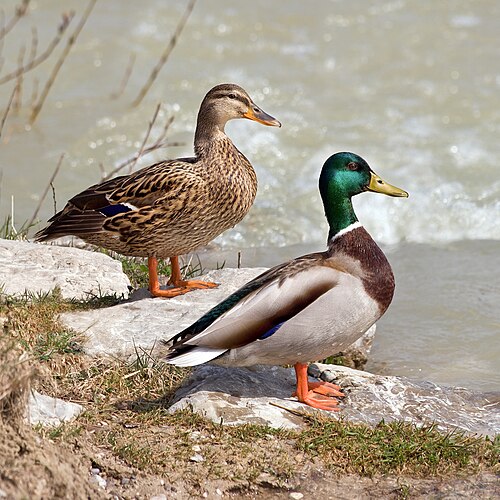
The familiar dabbling duck of ponds and park lakes. Males have a glossy green head; females are mottled brown with an orange bill.
- Large
- Wetlands
- Cities
Great Blue Heron
Ardea herodias
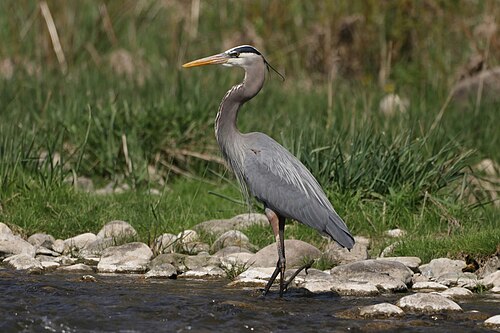
North America’s largest heron, a tall gray-blue wader that stands motionless in shallows and strikes with a spear-like bill.
- Very large
- Wetlands
- Coastlines
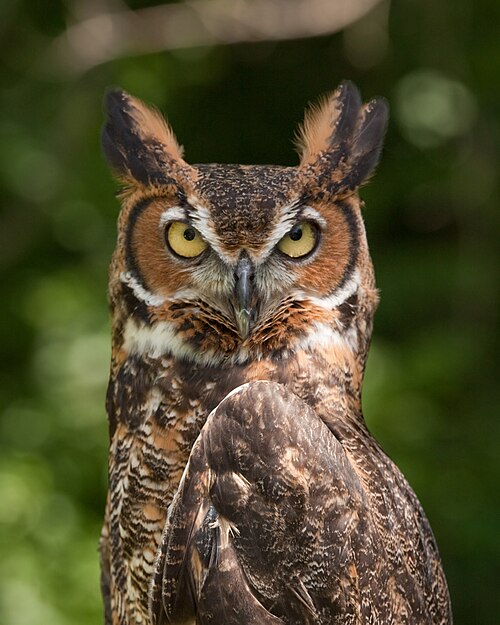
Great Horned Owl
Bubo virginianus
A big, heavy-bodied owl with feather tufts like horns and a deep, steady hoot. It lives in almost every kind of wooded or semi-open country.
- Large
- Forests
- Deserts
Related guides
Sources
Sources are the pages consulted when this entry was written. How we choose and use sources: sources and identification criteria.
Further reading (not used as a source for this entry): All About Birds, Cornell Lab of Ornithology.