
Chickadees and Titmice · Paridae
Black-capped Chickadee
Poecile atricapillus
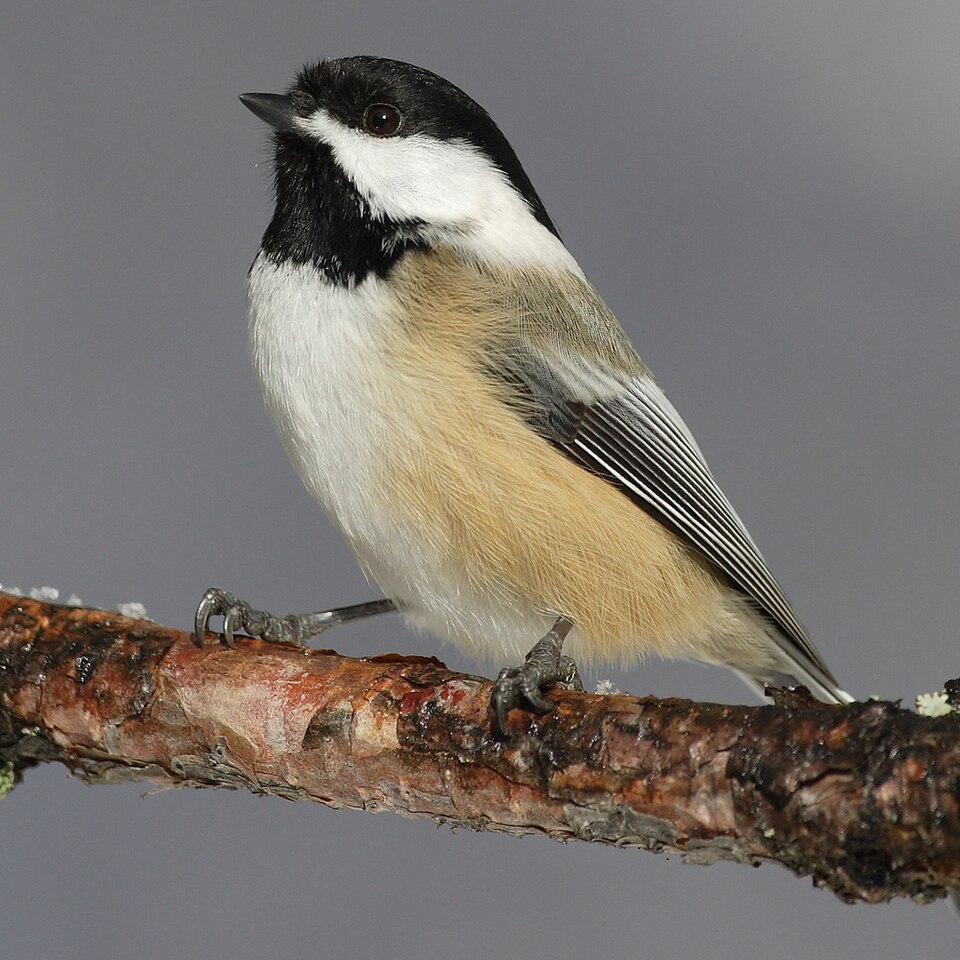
A tiny, curious songbird with a black cap and bib, white cheeks and a clear fee-bee song. A resident across the northern states.
Presence varies. Bird presence and timing change with location, weather, habitat and migration. Treat this page as a starting point, then check recent local sightings (for example on eBird) before you go.
Identification features
- Black cap and black bib frame bright white cheeks.
- The back is soft gray, the belly is whitish, and the sides are buffy.
- The wing edges show pale gray, and the tail is fairly long for a small bird.
- The bird often hangs upside down while it searches twigs.
- A chick-a-dee-dee-dee call is the easiest clue, especially when a flock is moving through.
Size and appearance
This is a small, round, large-headed songbird, about the size of a sparrow but lighter. The black cap and bib contrast with clean white cheeks, a gray back and wings, and a pale underside with warm buff along the flanks. The sexes look alike. Compared with its southern cousin, the Carolina Chickadee, the Black-capped usually shows more white on the wing edges and a ragged-edged bib, though hybrids exist where their ranges meet, and identification there can be difficult by sight alone. Young birds in fall look much like adults. The tiny size, the tilted posture and the quick, restless movements are as helpful as the colors.
Bill: Short, small and dark, strong enough to open seeds held under a foot.
Habitat
Black-capped Chickadees use mixed and deciduous woods, willow thickets, groves and shade trees. They are most common in open woods and forest edges, especially with birch or alder, and generally avoid pure conifer stands. They readily live in suburbs and parks if there are trees and nest holes available. Winter flocks often move through woodlots, hedgerows and yards, and visit feeders along the way. A habitat with dead trees or stumps is helpful, since they excavate or reuse cavities for nesting.
Geographic range
The species lives across the northern United States and much of Canada, including Alaska. It is mostly a permanent resident, remaining near its breeding area through the winter. Audubon lists it for regions from New England, the Mid-Atlantic and the Great Lakes through the Plains, the Rocky Mountains and the Northwest, as well as Alaska. Southward, its range meets that of the Carolina Chickadee, with a narrow contact zone across the middle latitudes of the East, and in the mountains it overlaps with the Mountain Chickadee. In some years, many chickadees move south in what birders call an irruption, mainly in the northeast, but they seldom travel far past the southern edge of the usual range.
Seasonal presence
Chickadees are among the most dependable birds of cold months. In winter they join small mixed flocks with nuthatches, creepers and kinglets, and feeders are busy. As spring arrives, flocks break up into pairs and the two-note whistled song begins, even on cold days. Summer is a quiet time when pairs raise young in tree cavities. By late summer and fall, family groups merge, and in some autumns a wave of birds moves south. Because these birds mostly stay put, you can expect them in suitable northern areas all year, though location, weather and food supply affect where you see them.
| Region | Spring | Summer | Fall | Winter |
|---|---|---|---|---|
| Northeast | Present | Present | Present | Present |
| Midwest | Present | Present | Present | Present |
| Pacific West | Present | Present | Present | Present |
| Alaska & Hawaii | Present | Present | Present | Present |
A dot means the species is regularly present in that region in that season. Dates shift with latitude, elevation, weather and migration, and some regions are only partly covered by the species’ range.
Diet
The diet shifts with the season. In summer chickadees take caterpillars and other insects, spiders and a few berries, and they feed these protein-rich foods to nestlings. In cold weather they rely more on seeds, insect eggs and pupae, and fruit. Seeds can supply up to about half of the winter diet. They store food in bark crevices and other hiding places and come back to it later. At feeders they take black oil sunflower seeds and suet, and often grab one seed and fly off to eat it elsewhere. Unsalted nuts are also good. Avoid bread or salty scraps.
Behavior
Chickadees are acrobatic foragers, hopping along twigs and branches, hanging upside down and sometimes hovering briefly to pick insects off leaves. They carry seeds to a perch, hold them with their feet and hammer them open. They hide caches of food for later. In winter they form flocks, and each flock keeps a loose social order. Chickadees are also curious and often approach quiet observers, but a good observer lets them come on their own and never tries to hand-feed or trap them. They nest in tree cavities, using a natural hole or excavating soft, rotten wood, lining it with moss and fur. Nesting happens in spring, and adults are wary of anyone near the entrance.
Vocalizations
The name describes the call: a buzzy chick-a-dee-dee-dee, with more dee notes added when the bird is excited or alarmed. The song is a clear, whistled fee-bee, with the second note lower, and sometimes the first note is doubled. It is often one of the first spring songs. Where the Carolina Chickadee also lives, the song can be unreliable for identification because the two species can sound alike in contact zones. Calls and song are heard throughout the year, with fewer songs in late summer.
Recordings are not hosted on this site. For audio, see the sources below. Please avoid playing recordings to attract birds in the field. See Learning Bird Songs and Calls.
Similar species
- Carolina Chickadee. It is a southern look-alike, slightly smaller, with a sharper-edged bib and less white in the wing. Where the ranges meet, even experts rely on voice and location.
- Mountain Chickadee. A western bird that has a white stripe over each eye, which the Black-capped lacks.
- White-breasted Nuthatch. Nuthatches are larger with a white face, a blue-gray back and a longer bill, and they walk down trunks head first. Compare side by side
Observation tips
- Stand quietly near a feeder or wooded edge and listen for the chick-a-dee call, then look for the flock.
- In winter, look at the other small birds in the group. Nuthatches and kinglets often travel with chickadees.
- Use black oil sunflower seed or suet, and keep feeders clean to protect the birds.
- Do not use recordings to attract chickadees. It can stress breeding birds.
- If you live where Carolina and Black-capped overlap, note the location in your records and be cautious with the ID.
Always keep your distance, stay on trails and leave nests alone. See How to Observe Birds Responsibly.
Conservation status
IUCN Red List: Least Concern. The IUCN lists the Black-capped Chickadee as Least Concern. Audubon describes it as widespread and common, with numbers that appear stable and may be increasing in some areas, and gives a population of about 43 million. Status and trends change, so check the [IUCN Red List](https://www.iucnredlist.org) for current information.
Status last checked 2026-11-03. Status and trends change, so check the linked sources for the latest. Search the IUCN Red List.
Questions and answers
Do chickadees leave in winter?
Mostly no. They are year-round residents across the northern states and Canada. In some autumns a number of birds move south in an irruption, but they rarely go far beyond the usual range.
How can I tell a Black-capped from a Carolina Chickadee?
Look at the range first. The Black-capped lives farther north and shows more white in the wings. Where they overlap, they are very similar, and song alone may not settle it.
Related entries
Related birds
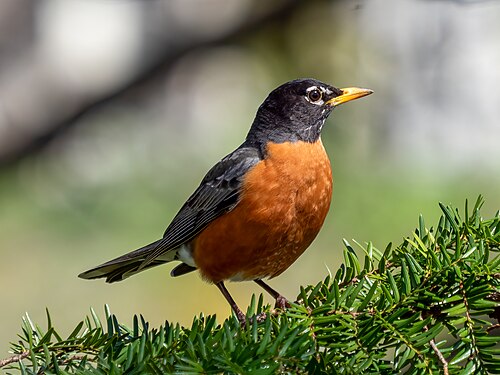
American Robin
Turdus migratorius
A gray-brown thrush with a rusty-orange breast, often seen sprinting and pausing across lawns while hunting worms.
- Medium
- Backyards
- Cities
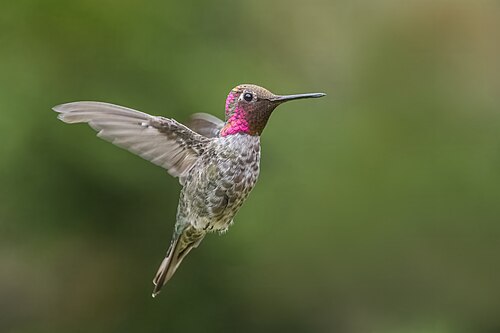
Anna’s Hummingbird
Calypte anna
A stocky Pacific Coast hummingbird with a rose-red head, now a year-round presence in many western yards and feeders.
- Tiny
- Backyards
- Cities
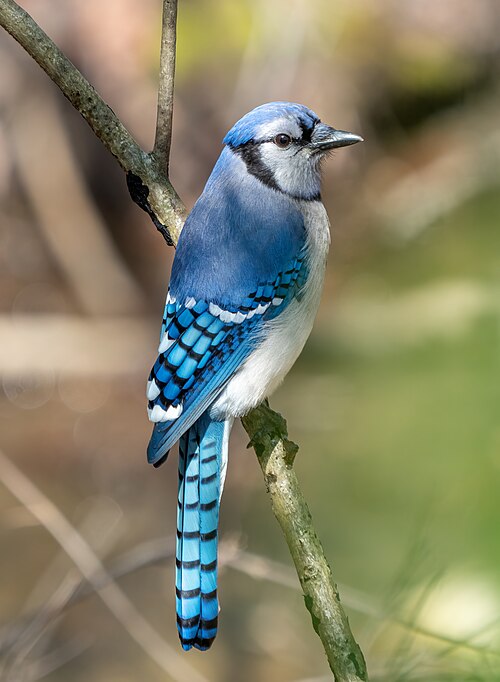
Blue Jay
Cyanocitta cristata
A loud, crested jay in blue, white and black. Common in eastern woods and yards, with some birds migrating in fall.
- Medium
- Forests
- Backyards
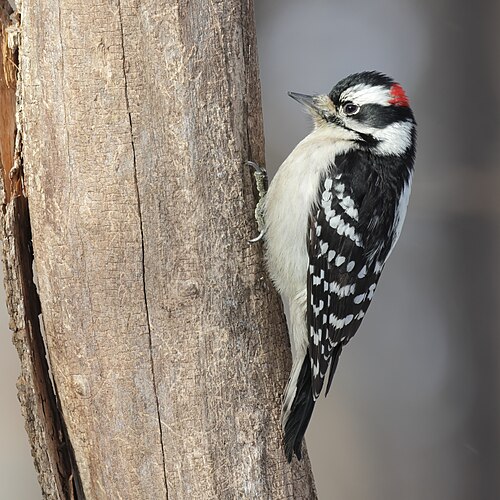
Downy Woodpecker
Dryobates pubescens
The smallest woodpecker in North America, a black-and-white bird with a short bill that visits suet feeders and tiny branches.
- Small
- Forests
- Backyards
Related guides
Sources
- Audubon Field Guide — Black-capped Chickadee
- Wikipedia: Black-capped chickadee (secondary cross-check of the IUCN category)
Sources are the pages consulted when this entry was written. How we choose and use sources: sources and identification criteria.
Further reading (not used as a source for this entry): All About Birds, Cornell Lab of Ornithology.