
Regional bird guide
Pacific West Bird Guide
The Pacific West here means California, Oregon and Washington, with mountain and interior states considered case by case. It spans rocky coast, rainforest, valleys, mountains and dry interior. Bird presence and timing vary by location, weather and migration.
Landscape and habitats
Habitats include cool, damp coastal forest, oak woodland, chaparral, farm valleys, snow-capped mountains and dry sagebrush east of the Cascades. The coast has rocky shores, estuaries and bays; see our coastlines and forests guides.
Familiar birds include Steller’s Jay in conifer forests and Anna’s Hummingbird in gardens along much of the coast. The Brown Pelican is a common sight on parts of the coast, though presence varies.
Elevation and rain shadow divide the region sharply. West of the Cascades and Sierra Nevada the climate is mild and often wet, with big conifers and mossy forests. East of those ranges lies a much drier landscape of sagebrush, juniper and farmland. California adds oak woodland, chaparral, deserts, wetlands and a long coastline, so a single state can include several of the main habitat types described on this site.
Migration and flyway context
The region falls in the Pacific Flyway, one of the four administrative flyways defined by the U.S. Fish and Wildlife Service. Valleys, bays and wetlands, such as the Central Valley in California, are important wintering and stopover areas for waterfowl and shorebirds.
The mild climate lets many birds stay all year. Coastal fog, storms and mountain snow influence where birds are. For more, see the migration hub.
Birding highlights by season
Spring brings migrants and nesting activity, with shorebirds along the coast. Summer sends birdwatchers to cooler coasts and mountains, where breeding birds are active.
Fall shorebird and seabird migration can be rich on the coast, and winter is a high point: large numbers of ducks, geese and other waterbirds use wetlands, bays and farmland. Check local reports before going, since conditions change.
Offshore and coastal birding is a major draw. Seabirds pass the coast in large numbers at certain times, and boat trips with licensed operators reach deeper water. Estuaries and bays attract shorebirds and waterfowl, while sheltered coves have loons, grebes and sea ducks in winter. Inland, large wildlife refuges protect wetlands used by huge numbers of waterbirds, and autumn and winter are often their peak times.
Regional hazards and etiquette
Earthquakes are rare for visitors, but cold surf, sneaker waves, rip currents and slippery rocks are real coastal hazards. Never turn your back on the ocean. Wildfire smoke can affect air quality and close trails in summer and fall. Mountain weather changes fast.
Many beaches and islands have closures to protect nesting seabirds, shorebirds and marine mammals. Stay back, keep dogs leashed and never approach nests or roosts. Avoid playback, and see our responsible birding guide.
Planning tips
Pick a mix of coast, valley and mountain sites, and check tides and fire or snow conditions. Rain gear is useful in the Northwest in all seasons. A scope helps on bays and offshore.
Use the seasonal calendar and explore tool to plan, and check refuge and park sites for closures before you travel.
Mind the tides and fog. Coastal fog can hide birds well into the morning in summer, while inland valleys may be clear. Tidal changes affect when mudflats are exposed and when shorebirds are feeding or roosting. A little planning and a tide table can turn a quiet visit into a lively one. Check weather and road conditions in the mountains before going.
Frequently asked questions
Which flyway covers the Pacific West?
The Pacific Flyway, an administrative division defined by the U.S. Fish and Wildlife Service. Birds do not follow it exactly, and routes vary by species.
Is winter a good time for birding on the Pacific coast?
Often, because many waterbirds spend the season in wetlands and bays. What you see depends on location, weather and the year.
How do I stay safe at the coast?
Keep watch on waves, avoid slippery rocks, check tide charts, and never turn your back on the ocean. Follow posted warnings and closures.
Season by season
Presence varies. Bird presence and timing change with location, weather, habitat and migration. Treat this page as a starting point, then check recent local sightings (for example on eBird) before you go.
Spring
Migrants and nesting begin along the coast, valleys and mountains. Timing varies by elevation and weather.
From our library (25): American Goldfinch, American Robin, Anna’s Hummingbird, Bald Eagle, Barn Swallow, Belted Kingfisher, Black-capped Chickadee, Brown Pelican, Canada Goose, Downy Woodpecker, Great Blue Heron, Great Horned Owl, Greater Roadrunner, House Finch, Mallard, Mourning Dove, Northern Mockingbird, Osprey, Red-tailed Hawk, Red-winged Blackbird, Sandhill Crane, Song Sparrow, Steller’s Jay, Western Meadowlark, White-breasted Nuthatch
Summer
Cooler coasts and mountains are the best bets. Seabirds nest on protected shores and islands.
From our library (25): American Goldfinch, American Robin, Anna’s Hummingbird, Bald Eagle, Barn Swallow, Belted Kingfisher, Black-capped Chickadee, Brown Pelican, Canada Goose, Downy Woodpecker, Great Blue Heron, Great Horned Owl, Greater Roadrunner, House Finch, Mallard, Mourning Dove, Northern Mockingbird, Osprey, Red-tailed Hawk, Red-winged Blackbird, Sandhill Crane, Song Sparrow, Steller’s Jay, Western Meadowlark, White-breasted Nuthatch
Fall
Shorebird and seabird movement along the coast, with songbirds in cover. Timing varies.
From our library (25): American Goldfinch, American Robin, Anna’s Hummingbird, Bald Eagle, Barn Swallow, Belted Kingfisher, Black-capped Chickadee, Brown Pelican, Canada Goose, Downy Woodpecker, Great Blue Heron, Great Horned Owl, Greater Roadrunner, House Finch, Mallard, Mourning Dove, Northern Mockingbird, Osprey, Red-tailed Hawk, Red-winged Blackbird, Sandhill Crane, Song Sparrow, Steller’s Jay, Western Meadowlark, White-breasted Nuthatch
Winter
A major season for waterfowl in wetlands, bays and farmland, with many resident birds at feeders.
From our library (23): American Goldfinch, American Robin, Anna’s Hummingbird, Bald Eagle, Belted Kingfisher, Black-capped Chickadee, Brown Pelican, Canada Goose, Downy Woodpecker, Great Blue Heron, Great Horned Owl, Greater Roadrunner, House Finch, Mallard, Mourning Dove, Northern Mockingbird, Red-tailed Hawk, Red-winged Blackbird, Sandhill Crane, Song Sparrow, Steller’s Jay, Western Meadowlark, White-breasted Nuthatch
Birds in our library for this region
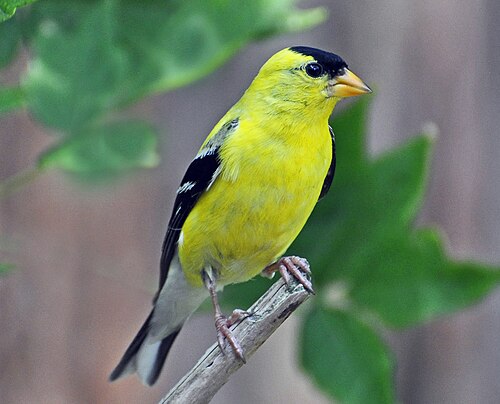
American Goldfinch
Spinus tristis
A small seed-eating finch. Breeding males are bright yellow with a black cap; winter birds turn a muted tan-olive.
- Tiny
- Grasslands
- Backyards
Year-round
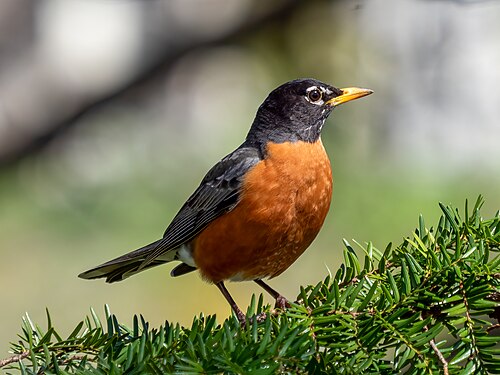
American Robin
Turdus migratorius
A gray-brown thrush with a rusty-orange breast, often seen sprinting and pausing across lawns while hunting worms.
- Medium
- Backyards
- Cities
Year-round
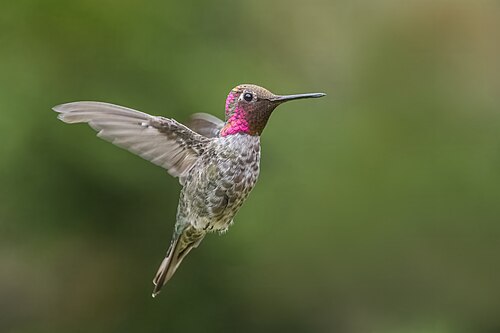
Anna’s Hummingbird
Calypte anna
A stocky Pacific Coast hummingbird with a rose-red head, now a year-round presence in many western yards and feeders.
- Tiny
- Backyards
- Cities
Year-round
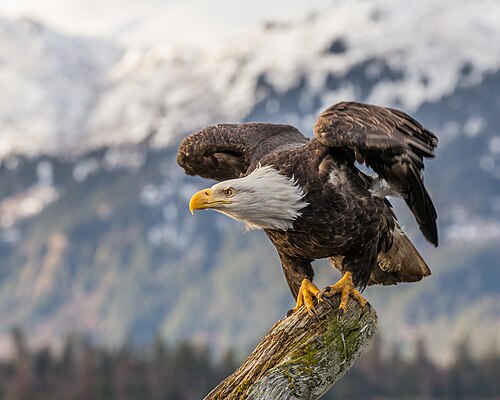
Bald Eagle
Haliaeetus leucocephalus
America’s national bird, a huge dark-brown raptor with a white head and tail that fishes along coasts, rivers and large lakes.
- Very large
- Wetlands
- Coastlines
Year-round
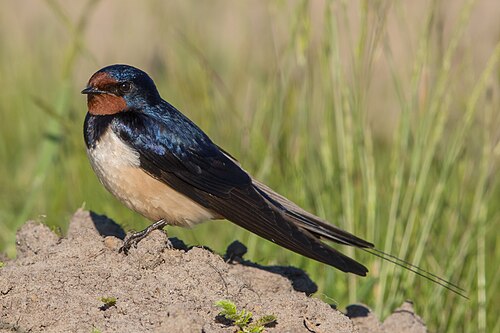
Barn Swallow
Hirundo rustica
A graceful, blue-backed swallow with a rusty throat and a deeply forked tail, often seen skimming over fields and nesting under bridges.
- Small
- Grasslands
- Wetlands
Spring, Summer, Fall
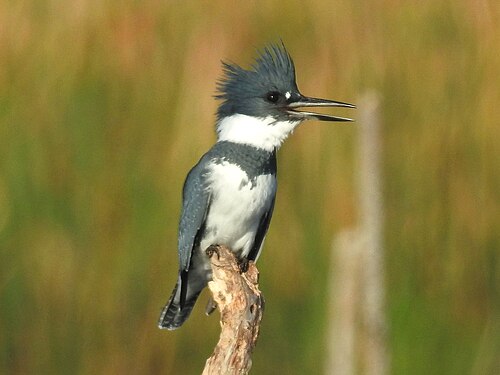
Belted Kingfisher
Megaceryle alcyon
A shaggy-crested, blue-gray waterside bird that rattles along rivers and plunges headfirst for fish.
- Medium
- Wetlands
- Coastlines
Year-round
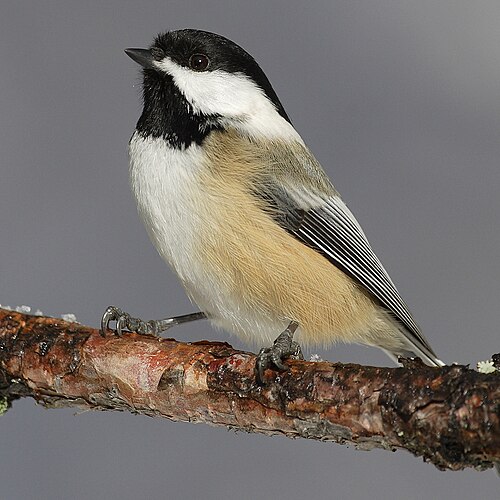
Black-capped Chickadee
Poecile atricapillus
A tiny, curious songbird with a black cap and bib, white cheeks and a clear fee-bee song. A resident across the northern states.
- Small
- Forests
- Backyards
Year-round
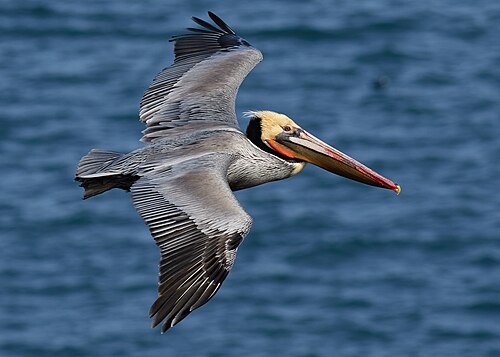
Brown Pelican
Pelecanus occidentalis
A big, dark coastal seabird that plunges headfirst for fish and glides low over the waves. Its recovery from pesticide losses is a conservation success.
- Very large
- Coastlines
Year-round
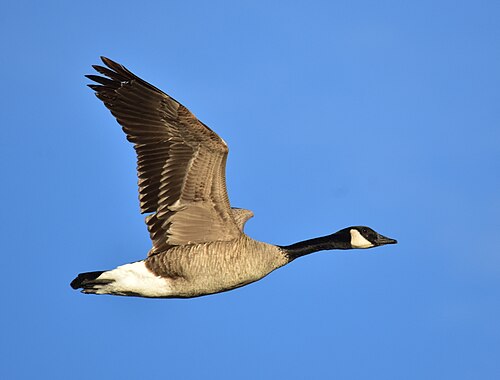
Canada Goose
Branta canadensis
A big brown goose with a black head and neck and a white chinstrap, now common on lakes, golf courses and fields across the US.
- Very large
- Wetlands
- Cities
Year-round
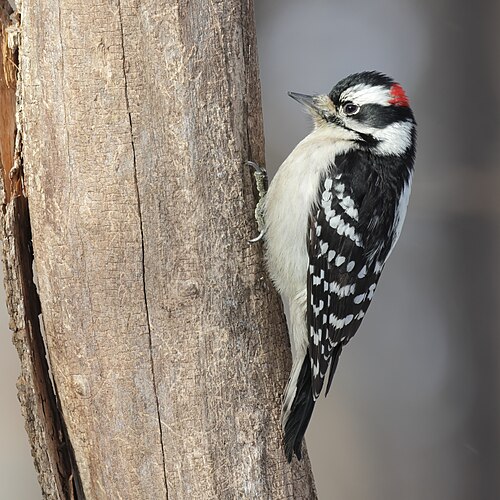
Downy Woodpecker
Dryobates pubescens
The smallest woodpecker in North America, a black-and-white bird with a short bill that visits suet feeders and tiny branches.
- Small
- Forests
- Backyards
Year-round
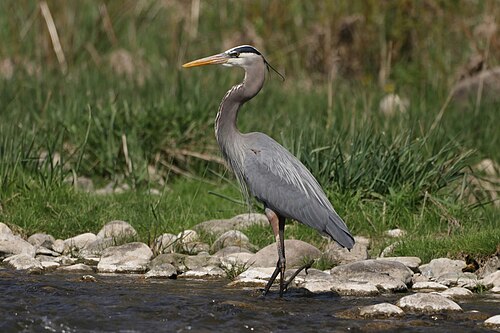
Great Blue Heron
Ardea herodias
North America’s largest heron, a tall gray-blue wader that stands motionless in shallows and strikes with a spear-like bill.
- Very large
- Wetlands
- Coastlines
Year-round
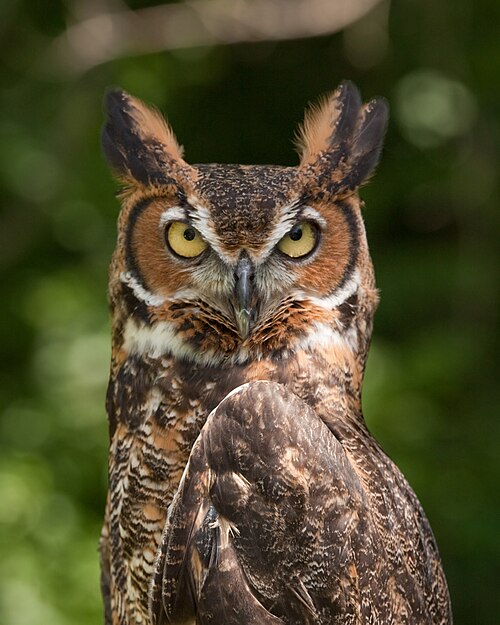
Great Horned Owl
Bubo virginianus
A big, heavy-bodied owl with feather tufts like horns and a deep, steady hoot. It lives in almost every kind of wooded or semi-open country.
- Large
- Forests
- Deserts
Year-round
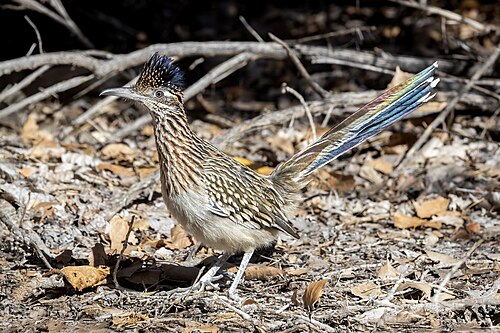
Greater Roadrunner
Geococcyx californianus
A long-tailed, ground-running cuckoo of the dry Southwest that hunts lizards, snakes, and big insects on foot.
- Large
- Deserts
- Grasslands
Year-round
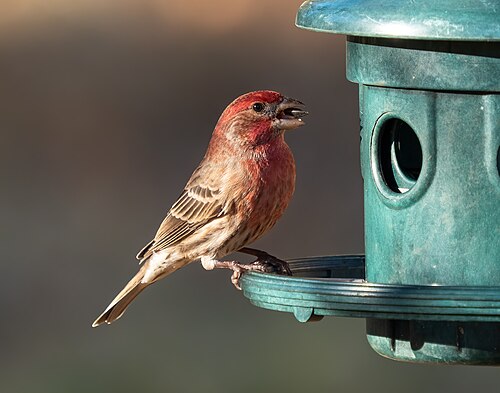
House Finch
Haemorhous mexicanus
A streaky brown finch. Males have a red head and chest. Native to the Southwest and now widespread in cities across the US.
- Small
- Cities
- Backyards
Year-round
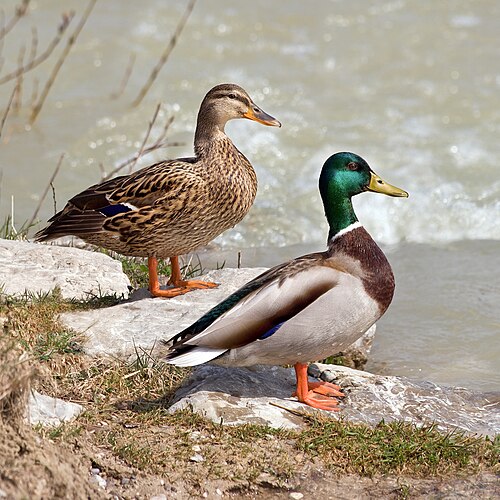
Mallard
Anas platyrhynchos
The familiar dabbling duck of ponds and park lakes. Males have a glossy green head; females are mottled brown with an orange bill.
- Large
- Wetlands
- Cities
Year-round
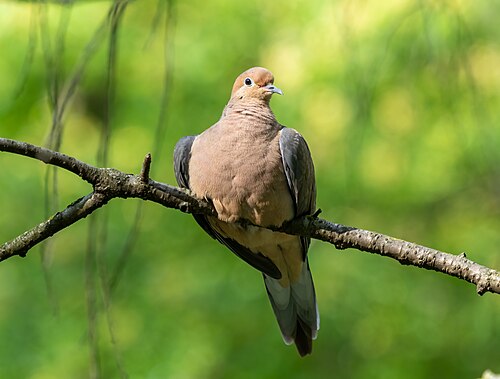
Mourning Dove
Zenaida macroura
A slim, soft gray-tan dove with a long pointed tail and a low, owl-like coo, common on wires, lawns and under feeders.
- Medium
- Backyards
- Grasslands
Year-round
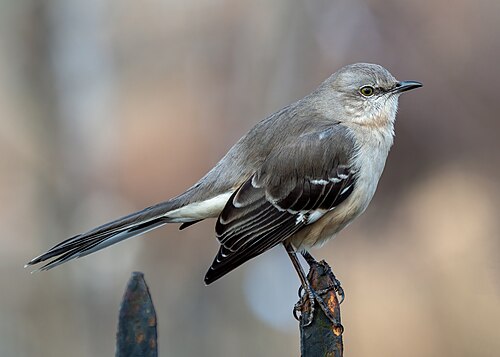
Northern Mockingbird
Mimus polyglottos
A slim gray songbird that sings from rooftops and wires, repeats borrowed phrases, and flashes white wing patches when it hops across a lawn.
- Medium
- Backyards
- Cities
Year-round
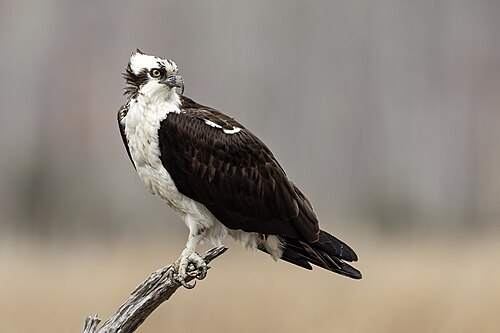
Osprey
Pandion haliaetus
A large fish-eating raptor that hovers over water and plunges feet-first for its catch. Look for its stick nests on poles and platforms.
- Large
- Wetlands
- Coastlines
Spring, Summer, Fall
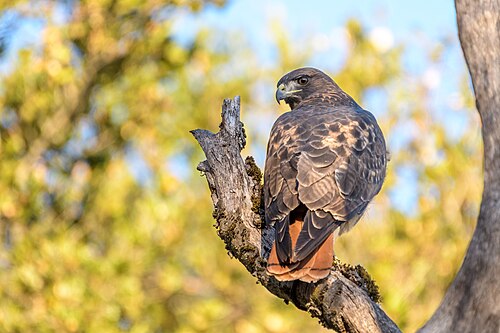
Red-tailed Hawk
Buteo jamaicensis
The most common large hawk in North America, often seen soaring over fields or perched on roadside poles, with a brick-red tail as an adult.
- Large
- Grasslands
- Forests
Year-round
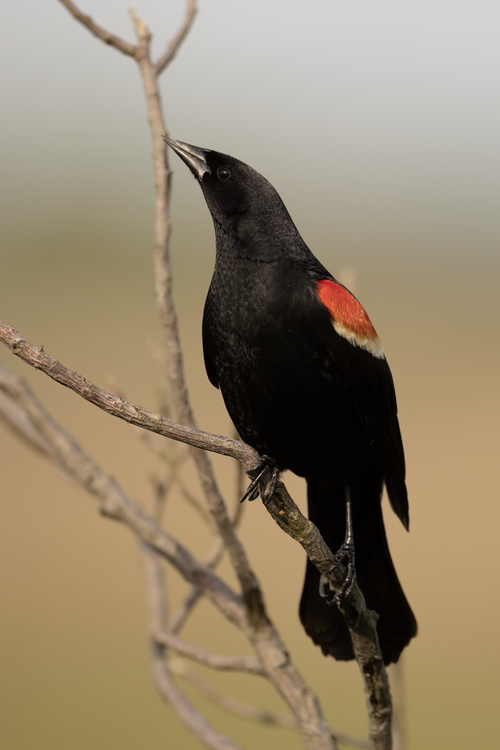
Red-winged Blackbird
Agelaius phoeniceus
A marsh-edge blackbird: males are glossy black with red-and-yellow shoulder patches, females are heavily streaked brown.
- Small
- Wetlands
- Grasslands
Year-round
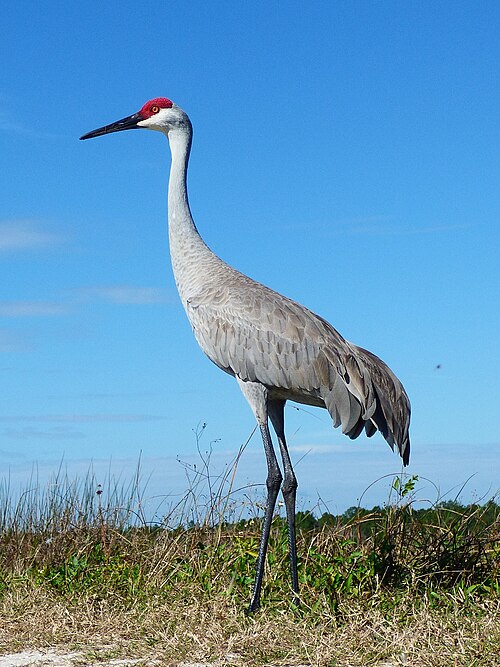
Sandhill Crane
Antigone canadensis
A tall gray crane with a red forehead, a bugling rattle, and migrations that fill Great Plains skies with hundreds of thousands of birds.
- Very large
- Wetlands
- Grasslands
Year-round
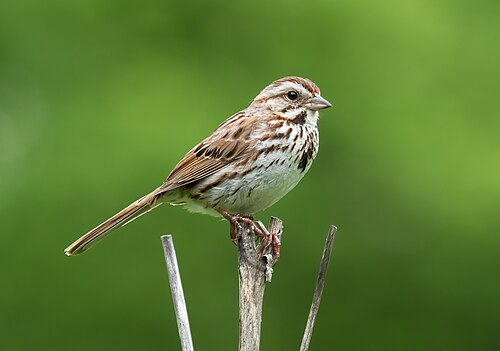
Song Sparrow
Melospiza melodia
A streaky, medium-sized sparrow with a central breast spot and a loud, varied song. It turns up in thickets, marsh edges and yards across the continent.
- Small
- Wetlands
- Backyards
Year-round
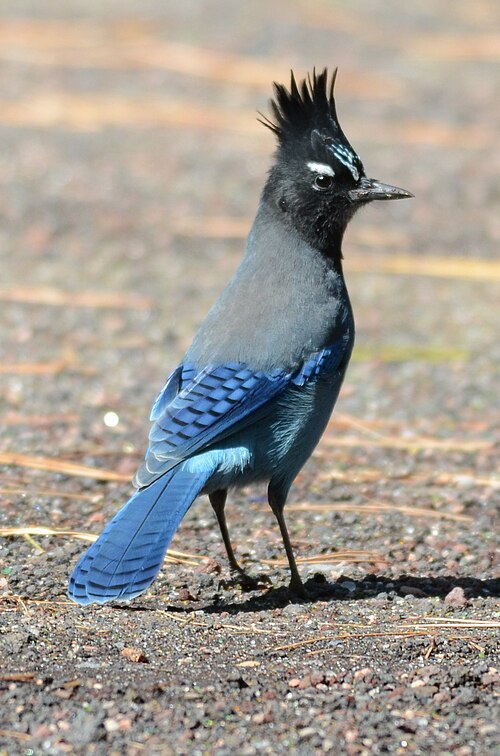
Steller’s Jay
Cyanocitta stelleri
A crested, sooty-black and deep-blue jay of western evergreen forests, and a noisy regular at mountain campgrounds and feeders.
- Medium
- Forests
- Backyards
Year-round
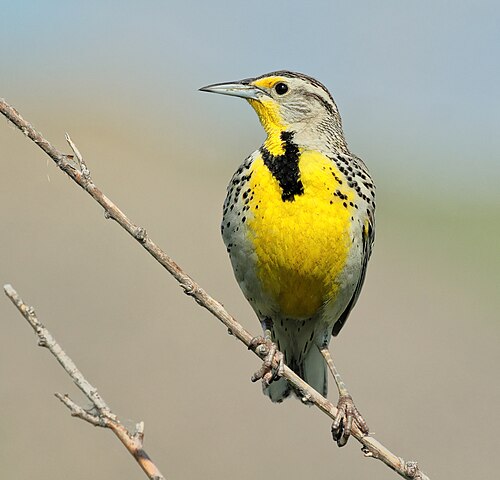
Western Meadowlark
Sturnella neglecta
A streaky brown grassland bird with a bright yellow chest and black V, best known for its flute-like, gurgling song from a fence post.
- Medium
- Grasslands
Year-round
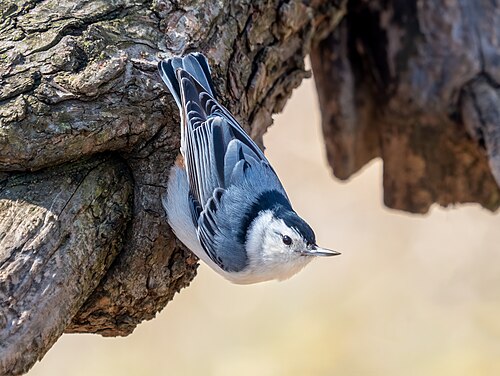
White-breasted Nuthatch
Sitta carolinensis
A compact, blue-gray bird that creeps headfirst down tree trunks and gives a nasal yank-yank. A regular at feeders with sunflower seeds and suet.
- Small
- Forests
- Backyards
Year-round
Related guides
Sources
- U.S. Fish & Wildlife Service: Administrative Flyways
- All About Birds (Cornell Lab of Ornithology)
- Audubon
Sources are the pages consulted when this entry was written. How we choose and use sources: sources and identification criteria.