
Cranes · Gruidae
Sandhill Crane
Antigone canadensis
A tall gray crane with a red forehead, a bugling rattle, and migrations that fill Great Plains skies with hundreds of thousands of birds.
Presence varies. Bird presence and timing change with location, weather, habitat and migration. Treat this page as a starting point, then check recent local sightings (for example on eBird) before you go.
Identification features
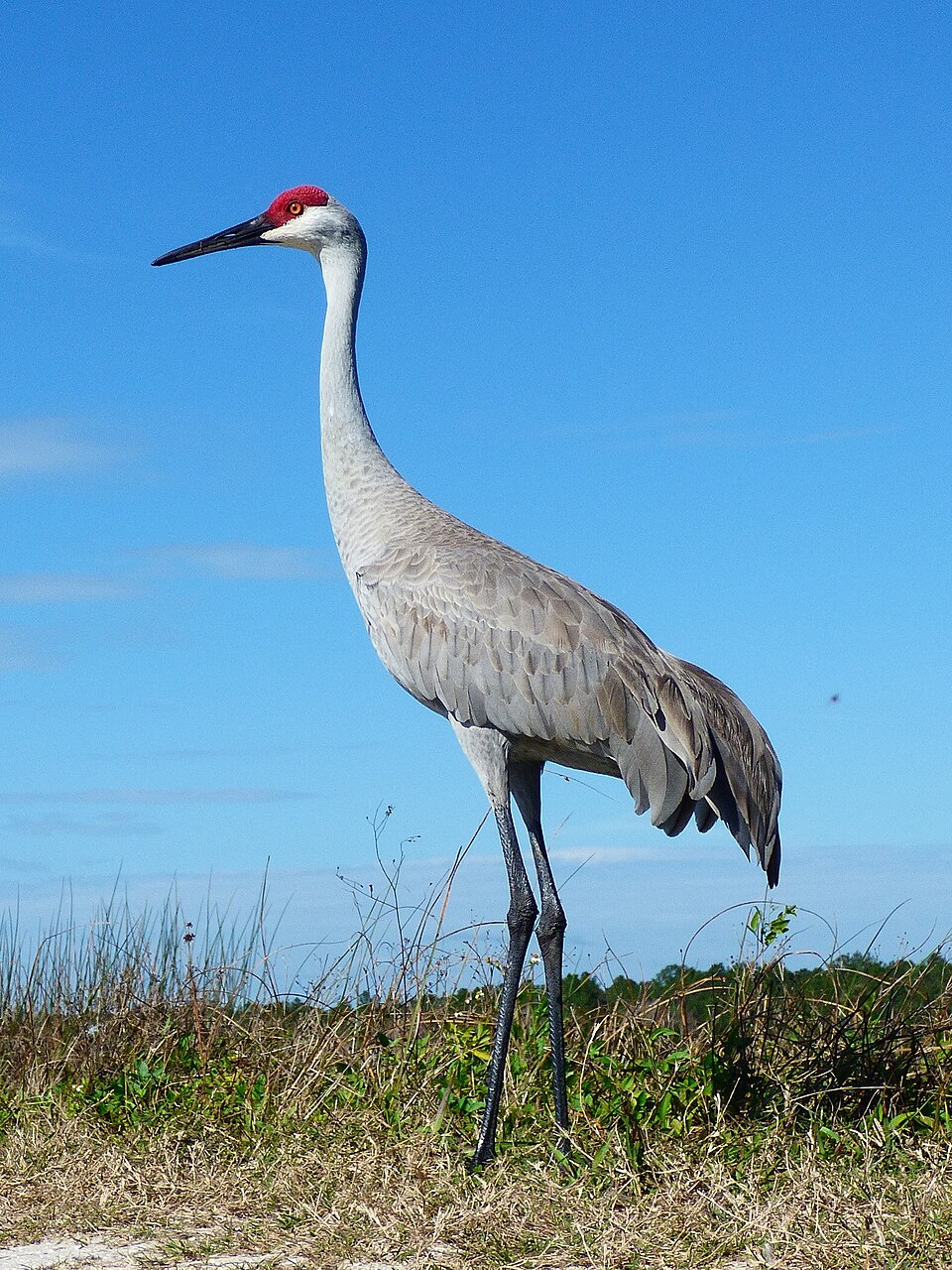
- A tall, long-necked, long-legged gray bird about the height of a person’s chest, with a bare red patch on the forehead and crown.
- Many birds show brownish staining on the body feathers, which can make them look rusty.
- A bushy tuft of drooping feathers over the rump, which looks like a bustle.
- In flight the neck is held straight out, and the wings flap with a distinctive quick upstroke.
- A loud, rolling, rattling call carries for a long distance and often reveals the birds before they appear.
Size and appearance
A Sandhill Crane stands roughly three to four feet tall, with a wingspan around six and a half feet and a weight near seven pounds. Adults are mostly gray, with a pale cheek and a red bare-skin patch on the crown. Some birds show brownish staining on the body.Males are slightly larger than females. Juveniles have a brownish head and body, without the red patch. Compared with a Great Blue Heron, a crane has a shorter bill, a straight neck in flight, and the bushy rear tuft. Herons fly with the neck folded in an S shape, which is the quickest way to tell the two apart at a distance.
Bill: A fairly long, straight, dark bill, shorter than a heron’s.
Habitat
Sandhill Cranes use prairies, fields, marshes, and tundra. Most nest in or beside marshes or bogs, either in open grassland or surrounded by forest. The northernmost birds nest on marshy tundra. During migration and winter they often use open prairie, farm fields, and river valleys, where they forage for waste grain and roost at night in shallow water that offers protection from predators. Wide-open views and quiet are important to them, so the best viewing sites often have few buildings and little traffic.
Geographic range
The species is spread widely across North America, in scattered populations. Numbers peak at stopover places on the Great Plains: the spring gathering along Nebraska’s Platte River is one of the continent’s major wildlife events, with more than 250,000 birds there at once. Breeding birds range across Alaska, Canada, the upper Midwest, the Rocky Mountains and parts of the Pacific states, and some northern birds fly as far as Siberia. Other populations live year-round in Florida and Mississippi. Wintering areas include the Southwest, Texas, the Gulf coast, and Florida, plus parts of California’s Central Valley and Mexico.
Seasonal presence
Sandhill Cranes are best known for migration. Northern breeders make long trips, and some cross the Bering Strait between Siberia and their winter areas. Birds nesting in the southern part of the range travel shorter distances. In the upper Midwest, cranes arrive in spring and nest in summer, then fly southeast toward Florida for winter, so winter sightings there are rare. Resident populations in Florida and Mississippi do not migrate. Recent trends show cranes leaving later in fall, returning earlier in spring, and sometimes wintering farther north than before. Timing varies by year, weather, and location, so check local reports before traveling to see a gathering.
| Region | Spring | Summer | Fall | Winter |
|---|---|---|---|---|
| Southeast | Present | Present | Present | Present |
| Midwest | Present | Present | Present | Not typical |
| Southwest | Present | Not typical | Present | Present |
| Pacific West | Present | Present | Present | Present |
| Alaska & Hawaii | Present | Present | Present | Not typical |
A dot means the species is regularly present in that region in that season. Dates shift with latitude, elevation, weather and migration, and some regions are only partly covered by the species’ range.
Diet
Sandhill Cranes eat a mix of plant and animal foods that changes by place and season. Insects and the roots of aquatic plants are important, and the birds also eat snails, frogs, lizards, snakes, rodents, nestling birds, berries, and seeds. When it is available, they eat large amounts of cultivated grain such as corn, so they are often seen in harvested fields. They gather food from the ground and probe wet soil with the bill. They are not feeder birds, and feeding wild cranes can draw them to roads and people, which is bad for them. Enjoy them as they forage on their own.
Behavior
Outside the breeding season, cranes forage and travel in flocks and are social birds. Their courtship is an elaborate dance in which birds leap into the air with spread wings and call. Pairs build nest mounds of plant material in shallow marsh water or on damp ground, and some nests float. Both adults incubate, with the female doing most of it. The chicks leave the nest within about a day of hatching and follow their parents through the marsh. Young birds stay with their parents for 9 to 10 months, including on migration, so groups flying together often include families. Because breeding cranes are shy, keep far back from marshes and nests and watch with binoculars or a scope.
Vocalizations
The Sandhill Crane’s call is a loud, rattling, rolling trumpet, often written as a long "karr-r-r-r-o-o-o." It sounds like a wooden rattle and carries for miles. Groups call together in flight and in the morning, and the sound builds as more birds join in. Pairs also call in duets while dancing. Because the sound carries so far, it often alerts you to cranes high overhead long before you spot them against the sky.
Recordings are not hosted on this site. For audio, see the sources below. Please avoid playing recordings to attract birds in the field. See Learning Bird Songs and Calls.
Similar species
- Great Blue Heron. A heron flies with its neck folded back and has a long dagger bill. A crane keeps its neck straight, has a shorter bill, and shows a red crown. Compare side by side
- Whooping Crane. Whooping Cranes are much rarer, taller, and mostly white, with black wingtips. Treat any white crane report with care and check local alerts.
- Canada Goose. Distant flocks of geese fly in V-shapes with honking calls. Cranes have longer legs and necks and a rattling call. Compare side by side
Observation tips
- Visit a well-known stopover or refuge in the right season, and check current local reports for peak dates since timing shifts year to year.
- Watch from public viewing areas, blinds, or a parked vehicle. Cranes spook easily, and flushing a flock wastes energy they need for migration.
- Arrive near dawn or dusk when birds leave or return to their roosts, and keep quiet.
- Use binoculars or a scope rather than approaching a nest or family group.
- Do not play crane calls to draw birds closer, especially near nesting or roosting sites.
Always keep your distance, stay on trails and leave nests alone. See How to Observe Birds Responsibly.
Conservation status
IUCN Red List: Least Concern. The IUCN lists the Sandhill Crane as Least Concern. Audubon calls it very common overall and describes most populations as stable or increasing, with a population estimate of about 560,000. The species depends on key stopover sites, so habitat loss there is a concern, and the isolated Mississippi population is classified as endangered. Status and trends change over time, so check the IUCN Red List and Cornell Lab pages for current information.
Status last checked 2026-11-03. Status and trends change, so check the linked sources for the latest. Search the IUCN Red List.
Questions and answers
Why do some Sandhill Cranes look rusty?
Some adults have brownish staining on their body feathers, which makes them look rusty instead of plain gray. It is a feather coloring, not a different species, and it varies from bird to bird. Juveniles have a brownish head and no red crown.
Where can I see large crane gatherings?
The best known is Nebraska’s Platte River in early spring, where more than 250,000 birds gather. Other stopover and wintering sites exist in other states. Dates change with weather, so check refuge or local bird alerts first.
Related entries
Related birds
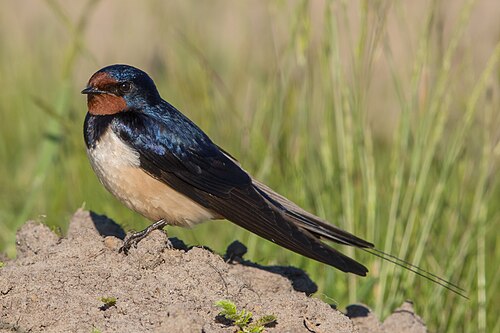
Barn Swallow
Hirundo rustica
A graceful, blue-backed swallow with a rusty throat and a deeply forked tail, often seen skimming over fields and nesting under bridges.
- Small
- Grasslands
- Wetlands
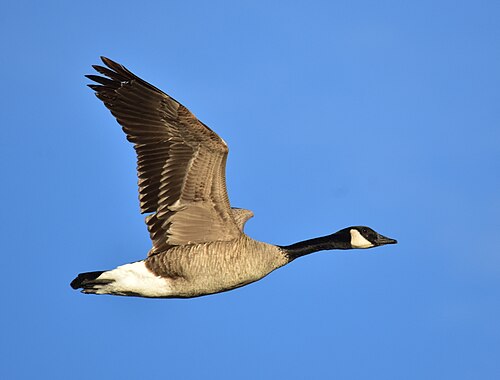
Canada Goose
Branta canadensis
A big brown goose with a black head and neck and a white chinstrap, now common on lakes, golf courses and fields across the US.
- Very large
- Wetlands
- Cities
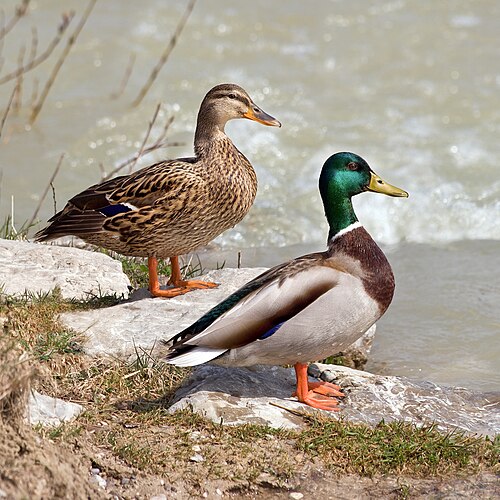
Mallard
Anas platyrhynchos
The familiar dabbling duck of ponds and park lakes. Males have a glossy green head; females are mottled brown with an orange bill.
- Large
- Wetlands
- Cities
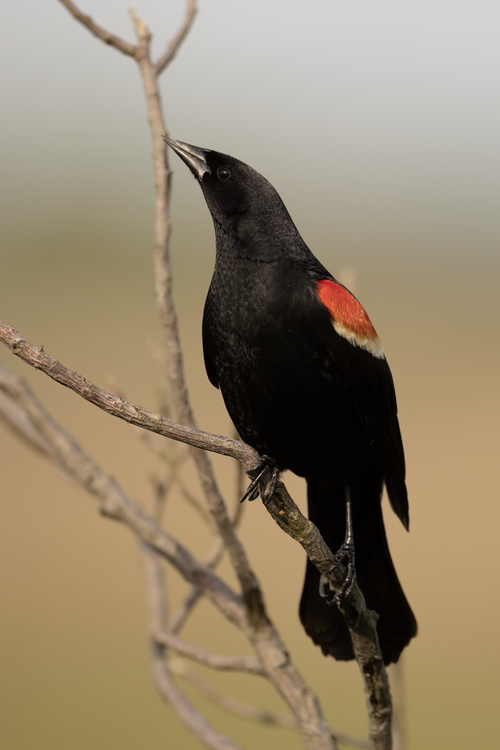
Red-winged Blackbird
Agelaius phoeniceus
A marsh-edge blackbird: males are glossy black with red-and-yellow shoulder patches, females are heavily streaked brown.
- Small
- Wetlands
- Grasslands
Related guides
Sources
- Audubon Field Guide — Sandhill Crane
- Wikipedia: Sandhill crane (secondary cross-check of the IUCN category)
Sources are the pages consulted when this entry was written. How we choose and use sources: sources and identification criteria.
Further reading (not used as a source for this entry): All About Birds, Cornell Lab of Ornithology.