
Cuckoos · Cuculidae
Greater Roadrunner
Geococcyx californianus
A long-tailed, ground-running cuckoo of the dry Southwest that hunts lizards, snakes, and big insects on foot.
Presence varies. Bird presence and timing change with location, weather, habitat and migration. Treat this page as a starting point, then check recent local sightings (for example on eBird) before you go.
Identification features
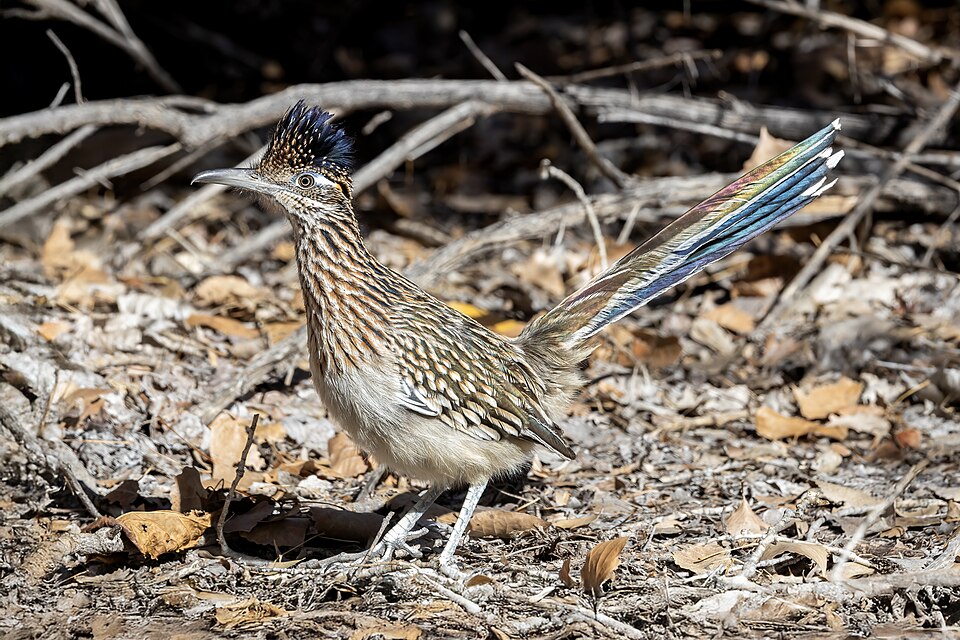
- A large, slim bird about two feet long, mostly tail, with a shaggy crest on the head.
- Streaky brown and white feathers and a long, rounded tail marked with white spots.
- Strong legs and a stride that is far more often a run than a flight.
- A heavy bill that is longer than that of most songbirds.
- The wings are short and round, and the bird flies only when it must, usually just a short glide.
Size and appearance
The Greater Roadrunner looks like no other bird in the dry Southwest. It is a long, thin-bodied cuckoo about 24 inches from bill tip to tail tip, and much of that length is the long, wedge-shaped tail. The plumage is streaked and mottled in brown, tan, and white, with touches of blue and red. A crest of shaggy feathers on the head can be raised or lowered, and the legs are strong. The source does not describe differences between the sexes or by season. The wings are broad and rounded, which suits short bursts of flight rather than sustained travel.
Bill: A long, heavy, slightly hooked bill that works like a pair of pliers for grabbing lizards and insects.
Habitat
Roadrunners live in deserts and open country with scattered brush. They are most common in the Sonoran Desert and other brushy habitats such as chaparral and Texas brushlands, where open ground gives room to run and dense low cover offers shelter. At the edges of their range they use dry grassland, forest edges, and limestone hills dotted with junipers. They tend to avoid dense forest and wet climates. In suburban areas at the desert edge, yards with open ground, low brush, and rock walls can attract them, particularly if there are lizards to hunt.
Geographic range
The Greater Roadrunner lives in the southern and southwestern United States and northern Mexico. In the US it is regular in the Southwest, Texas, and southern California, and extends onto parts of the southern Plains and the western edge of the Southeast. The edges of the range are not fixed: the species periodically expands north and east, then pulls back after hard winters. California birds are a regional concern, since the species may be in long-term decline there. Because the range varies at its margins, a roadrunner north of the main range is worth reporting carefully to eBird and checking against local records.
Seasonal presence
Roadrunners are permanent residents, so within their range they are present in every season rather than being a spring or fall migrant. Some birds, possibly young ones, may wander considerable distances. Time of day and weather can affect how easy they are to spot, so patience on a quiet morning often helps. Severe cold snaps can reduce numbers at the northern edge of the range, so sightings there can change from year to year.
| Region | Spring | Summer | Fall | Winter |
|---|---|---|---|---|
| Southeast | Present | Present | Present | Present |
| Southwest | Present | Present | Present | Present |
| Pacific West | Present | Present | Present | Present |
A dot means the species is regularly present in that region in that season. Dates shift with latitude, elevation, weather and migration, and some regions are only partly covered by the species’ range.
Diet
A roadrunner eats mostly animal prey. Large insects, spiders, scorpions, tarantulas, and centipedes make up much of the diet. It also takes lizards, snakes, and rodents such as mice and young ground squirrels, along with the eggs or young of other birds and sometimes small adult birds. Cactus fruit and seeds are also eaten, and an occasional snail. The bird walks quickly until it spots prey, then dashes and grabs it in its bill. It can leap straight up to catch insects or birds in flight, including hummingbirds. In yards, roadrunners are not seed eaters, so feeding them is not appropriate, and offering raw meat or pet food only draws unwanted visitors.
Behavior
Roadrunners spend most of their time on the ground, walking, running, and pausing to look around. They can run about 15 miles per hour and reach higher speeds in a short chase. Pairs may mate for life and often defend a territory throughout the year. In courtship the male chases the female and may offer her sticks or grass, and he sometimes performs a display with raised tail and wings, or wags his tail from side to side. The nest is a platform of sticks lined with grass, leaves, or feathers, placed in dense brush, a low tree, or a cactus, usually 2 to 12 feet up. Both parents incubate the three to five eggs, and the male takes more of the work. If you find a nest, back off quietly and keep pets away from it.
Vocalizations
Roadrunners are not loud singers, but they make a surprising range of sounds. The most recognized is a set of soft, dove-like coos. The bird also gives clucks, crowing sounds, dog-like whines, rattles, and hoarse guttural notes. Audubon describes the calls as falling and flat in pattern.
Recordings are not hosted on this site. For audio, see the sources below. Please avoid playing recordings to attract birds in the field. See Learning Bird Songs and Calls.
Similar species
- Northern Mockingbird. A mockingbird is far smaller, mostly gray, and does not have a long tail with white spots or a shaggy crest. Compare side by side
- Wild Turkey. Turkeys are much larger and stockier with a bare head and dark body feathers.
Observation tips
- Scan open ground and low fence lines early in the morning, then listen for the soft coo.
- Walk slowly and use binoculars. A roadrunner will usually run rather than fly if you come too close.
- Keep roadside stops brief and safe. Roadrunners cross roads, so avoid blocking traffic when you stop to look.
- Do not feed roadrunners or leave out pet food, which can attract other wildlife and can create dependence.
- Avoid playing recordings of calls. The birds defend territories year-round, and playback can pull them away from feeding.
Always keep your distance, stay on trails and leave nests alone. See How to Observe Birds Responsibly.
Conservation status
IUCN Red List: Least Concern. The IUCN lists the Greater Roadrunner as Least Concern, and Audubon gives an estimated population of about 1.4 million. Audubon notes that severe winters can reduce numbers and that the species may be in long-term decline in California. Status and trends change over time, so check the IUCN Red List and Cornell Lab pages for current information.
Status last checked 2026-11-03. Status and trends change, so check the linked sources for the latest. Search the IUCN Red List.
Questions and answers
Can a roadrunner actually fly?
Yes, but it prefers to run. Its wings are short and rounded, and it usually flies only for a short glide, for example up to a perch or over an obstacle. It can run about 15 miles per hour.
Do roadrunners really eat snakes?
Yes. Reptiles, including lizards and snakes, are part of the diet along with large insects, scorpions, rodents, and sometimes small birds. What it eats varies by place and season, and most of the prey is much smaller than a snake.
Related entries
Related birds
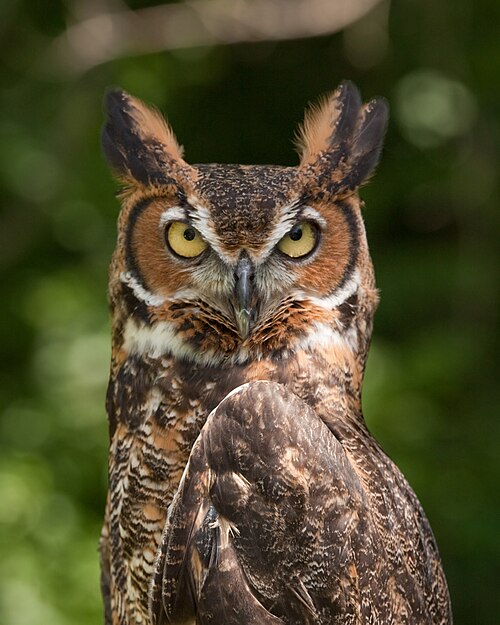
Great Horned Owl
Bubo virginianus
A big, heavy-bodied owl with feather tufts like horns and a deep, steady hoot. It lives in almost every kind of wooded or semi-open country.
- Large
- Forests
- Deserts
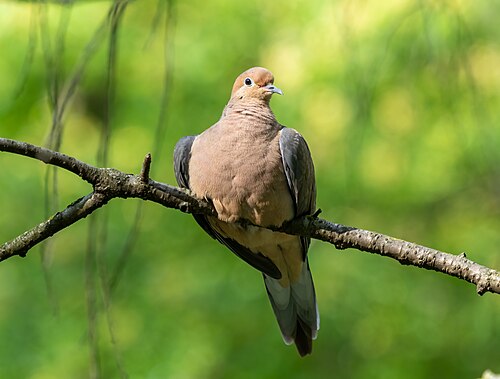
Mourning Dove
Zenaida macroura
A slim, soft gray-tan dove with a long pointed tail and a low, owl-like coo, common on wires, lawns and under feeders.
- Medium
- Backyards
- Grasslands
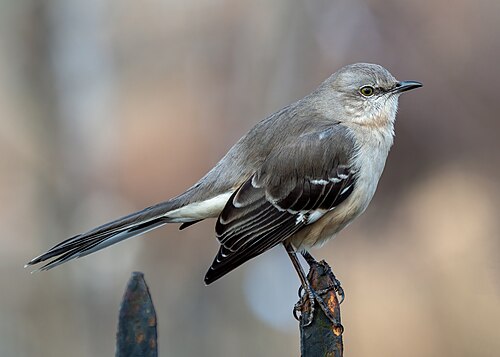
Northern Mockingbird
Mimus polyglottos
A slim gray songbird that sings from rooftops and wires, repeats borrowed phrases, and flashes white wing patches when it hops across a lawn.
- Medium
- Backyards
- Cities
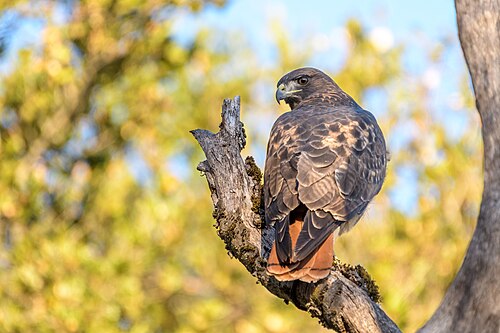
Red-tailed Hawk
Buteo jamaicensis
The most common large hawk in North America, often seen soaring over fields or perched on roadside poles, with a brick-red tail as an adult.
- Large
- Grasslands
- Forests
Related guides
Sources
- Audubon Field Guide — Greater Roadrunner
- Wikipedia: Greater roadrunner (secondary cross-check of the IUCN category)
Sources are the pages consulted when this entry was written. How we choose and use sources: sources and identification criteria.
Further reading (not used as a source for this entry): All About Birds, Cornell Lab of Ornithology.