
Crows and Jays · Corvidae
Steller’s Jay
Cyanocitta stelleri
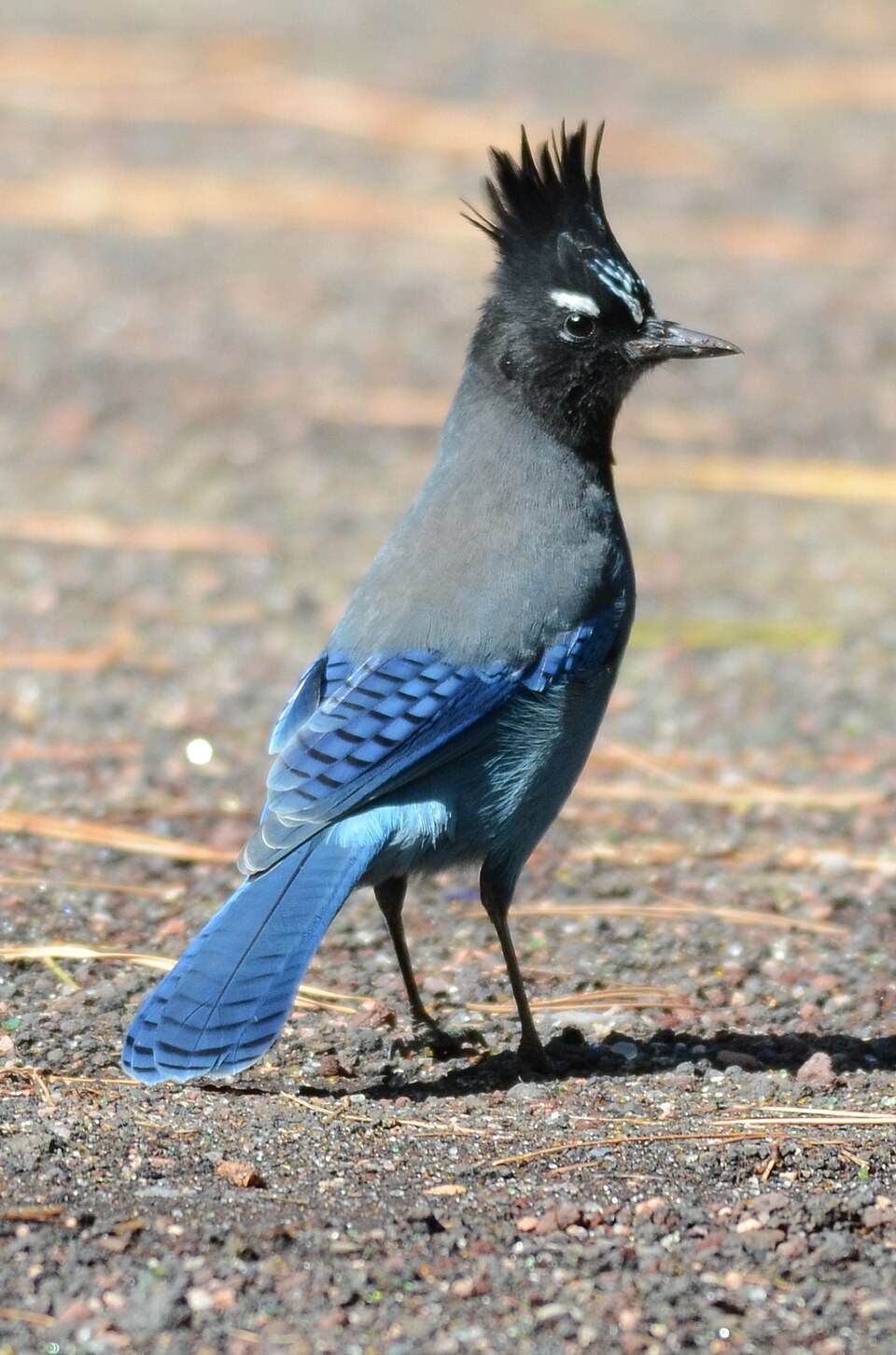
A crested, sooty-black and deep-blue jay of western evergreen forests, and a noisy regular at mountain campgrounds and feeders.
Presence varies. Bird presence and timing change with location, weather, habitat and migration. Treat this page as a starting point, then check recent local sightings (for example on eBird) before you go.
Identification features
- A tall, pointed crest and a dark head and chest that fade from sooty black into deep blue on the back, wings, and belly.
- It is the only crested jay in most of the West; no white-and-blue Blue Jay pattern shows on the wings or tail.
- Small streaks or spots above the eye can be white in inland birds and bluer in coastal birds.
- Flocks cross open ground one bird at a time in single file, and flight looks broad-winged and floppy.
- A harsh, scolding "shack-shack-shack" is often the first clue that jays are nearby.
Size and appearance
Steller’s Jay is a bulky, crow-like songbird about a foot long with a tall crest that gives its head a peaked outline. The front half of the bird, including the crest, is dark and sooty. Behind that the plumage turns rich blue, with fine darker barring on the wings and tail. Males and females look alike. The markings around the face vary by region: inland birds often show small white streaks over the eye, while coastal birds show bluish ones. Juveniles are duller. Where the western range touches the range of the Blue Jay in the eastern Rockies, the two species sometimes interbreed and produce birds with mixed features, so a puzzling jay there may be a hybrid.
Bill: A strong, straight, dark bill that the jay uses to hammer open nuts and seeds.
Habitat
This is a bird of evergreen mountains and northern coastal forests, most numerous where pine, spruce, and fir dominate. It also uses pine-oak woods and riverside groves of oaks and other broadleaf trees. In the nonbreeding season it ranges more widely, into other woodlands, orchards, and well-wooded suburbs. Campgrounds, picnic areas, and cabins at the edge of the woods are good places to find one because jays keep a close eye on food that people leave behind. Deep in unbroken forest it can be less conspicuous, especially in the nesting season, when it becomes quiet.
Geographic range
Steller’s Jay is a western species. It lives from southern Alaska and the Pacific coast of Canada down through the Pacific states, through the Rocky Mountains, and into mountain ranges of the Southwest and Mexico. In the US it is regular in Washington, Oregon, California, and the interior mountain states. It is not a bird of the Great Plains, the Midwest, or the East. If you are east of the Rockies and see a crested blue jay, it is almost certainly a Blue Jay. The dividing zone in the eastern Rockies is where the two species meet and sometimes mix.
Seasonal presence
Steller’s Jays are often year-round residents, so a given forest may hold them in every season. Many shift to lower elevations in winter, and mountain campgrounds that are busy with jays in summer can be quieter once snow arrives. In some years large numbers move into lowlands, possibly when mountain food crops fail, which can put jays in towns and valleys where they are rarely seen. These movements are irregular, so timing varies with weather and food. Spring and early summer are the nesting season, when the birds are quieter and less visible near the nest.
| Region | Spring | Summer | Fall | Winter |
|---|---|---|---|---|
| Southwest | Present | Present | Present | Present |
| Pacific West | Present | Present | Present | Present |
| Alaska & Hawaii | Present | Present | Present | Present |
A dot means the species is regularly present in that region in that season. Dates shift with latitude, elevation, weather and migration, and some regions are only partly covered by the species’ range.
Diet
The jay is an omnivore, with roughly two-thirds plant food and one-third animal food. Pine seeds, acorns, and other nuts are staples in fall and winter, and it also eats berries and fruit. In summer it adds beetles, wasps, wild bees, and spiders, and it takes eggs or small animals when it can. It uses its bill to hammer hard seeds and acorns open. At backyard feeders, raw unsalted peanuts in the shell, sunflower seeds, and suet are good choices. Avoid bread, chips, and other human snack food, which is common at campgrounds but not good for wild birds.
Behavior
Outside the nesting season, Steller’s Jays travel in loose groups and often move across clearings one after another in single file. They forage in tall trees as well as near the ground, and they cache nuts and seeds. They are bold around food and are often the first birds to notice a hawk or other danger; their calls then bring other birds to attention. In courtship the male feeds the female. Pairs build a bulky, ragged cup of twigs, moss, and similar material, usually in a conifer. While nesting they stay quiet and secretive, which makes active nests very hard to see; if you find one by chance, leave quickly. They become noisy and aggressive only when the nest is threatened, so do not linger near a site where a jay seems upset.
Vocalizations
The most common sound is a harsh, falling series, usually written as "shack-shack-shack" or "chook-chook-chook." It also gives softer, lower "shook-shook" calls, and it can mimic the scream of a hawk well enough to fool people on the trail. The overall pattern of the calls is flat and falling. The bird is much quieter when it nests, so a silent forest in spring does not mean none are around.
Recordings are not hosted on this site. For audio, see the sources below. Please avoid playing recordings to attract birds in the field. See Learning Bird Songs and Calls.
Similar species
- Blue Jay. A Blue Jay is bright blue and white with a black necklace and no dark hood, and it lives mainly east of the Rockies. Compare side by side
- California Scrub-Jay. Scrub-jays have no crest, a pale gray-brown back, and a white throat; Steller’s has a tall dark crest.
- Pinyon Jay. A Pinyon Jay is a uniformly blue-gray, crestless bird that travels in large noisy flocks.
Observation tips
- Look for it in tall conifers and at forest-edge picnic areas, and listen for the scratchy calls before you scan.
- Do not toss food to jays at trailheads or campgrounds. Wild jays do better when they forage naturally, and human food teaches them to follow crowds.
- At a feeder, offer unsalted peanuts in the shell or black-oil sunflower seeds, and keep the area clean.
- Count the crest, the dark hood, and the blue back before calling it a Blue Jay in the West.
- Stay back from a nesting jay that is calling hard or flying close, and give the area a wide berth.
Always keep your distance, stay on trails and leave nests alone. See How to Observe Birds Responsibly.
Conservation status
IUCN Red List: Least Concern. Audubon describes the Steller’s Jay as widespread and common, with an estimated population of around 3 million, and the IUCN lists it as Least Concern. The source did not state a clear population direction in the text I could read. Status and trends change over time, so check the IUCN Red List and Cornell Lab pages for current information.
Status last checked 2026-11-03. Status and trends change, so check the linked sources for the latest. Search the IUCN Red List.
Questions and answers
Is a Steller’s Jay the same as a Blue Jay?
No. They are separate species. The Steller’s Jay lives in the West and has a dark, sooty head and chest. The Blue Jay lives mainly in the East. The two overlap in the eastern Rockies, where they can occasionally interbreed.
Will I see Steller’s Jays in winter?
In many areas, yes, because the birds are often permanent residents. Some move to lower elevations in cold weather, and in some years many descend into valleys and towns, so numbers vary from place to place.
Related entries
Related birds
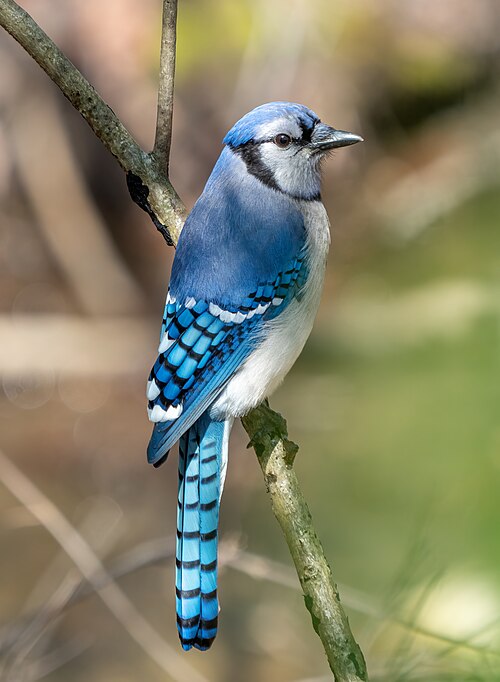
Blue Jay
Cyanocitta cristata
A loud, crested jay in blue, white and black. Common in eastern woods and yards, with some birds migrating in fall.
- Medium
- Forests
- Backyards
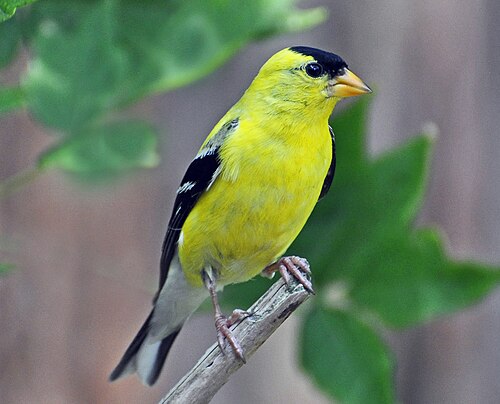
American Goldfinch
Spinus tristis
A small seed-eating finch. Breeding males are bright yellow with a black cap; winter birds turn a muted tan-olive.
- Tiny
- Grasslands
- Backyards
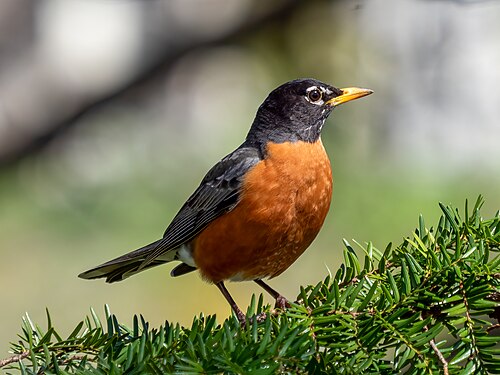
American Robin
Turdus migratorius
A gray-brown thrush with a rusty-orange breast, often seen sprinting and pausing across lawns while hunting worms.
- Medium
- Backyards
- Cities
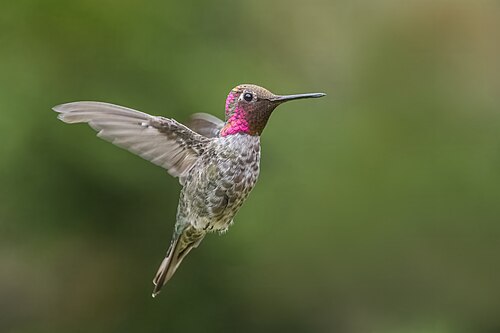
Anna’s Hummingbird
Calypte anna
A stocky Pacific Coast hummingbird with a rose-red head, now a year-round presence in many western yards and feeders.
- Tiny
- Backyards
- Cities
Related guides
Sources
- Audubon Field Guide — Steller’s Jay
- Wikipedia: Steller's jay (secondary cross-check of the IUCN category)
Sources are the pages consulted when this entry was written. How we choose and use sources: sources and identification criteria.
Further reading (not used as a source for this entry): All About Birds, Cornell Lab of Ornithology.