
Habitat guide
Urban Areas Birdwatching
You do not need a remote refuge to enjoy birds. Parks, rivers, cemeteries, rooftops and street trees in cities draw surprising numbers of birds, especially during migration. This guide shows how birds use built areas and how to watch them responsibly.
Cities as bird habitat
Cities are patchworks of buildings, pavement, parks, lawns, ponds, rivers and tree-lined streets. Some birds thrive in the mix, while others only use green patches. Large parks, cemeteries, golf courses, river corridors and botanical gardens act as islands of habitat.
Urban birds face unique pressures: window collisions, light at night, noise, cats, and fewer natural nesting sites. They also benefit from steady food and warm microclimates. How well a city serves birds depends on how much green space and native plant cover it keeps.
How birds use urban spaces
Some species adapt well. The Northern Mockingbird sings from rooftops and shrubs, the Mourning Dove forages on the ground in lots and lawns, and the American Robin hunts for worms in turf. Raptors may nest on tall buildings and bridges in some cities.
Parks and waterways work like highways and rest stops for migrants. Tired songbirds descend into any green space they find at dawn, which is why even small city parks can be productive in spring and fall.
Water, trees and quiet corners count for more than size. A small pond with shrubs on its edge, a cemetery with old trees or a stretch of river with a vegetated bank can hold more birds than a large manicured lawn. Rooftops and bridges can also serve as perches, roosts and nest sites for pigeons, swifts, swallows and raptors in some cities.
Seasonal change
Migration seasons are the highlight. Spring and fall can bring many species through the same park in a single morning, though the best dates depend on region, weather and the year. Overnight storms and shifts in wind sometimes cause noticeable arrivals.
Summer is the nesting season, when city birds are busy and noisy but often inconspicuous. Winter brings visiting ducks, gulls and other birds to rivers and lakes that stay open, plus northern songbirds in some areas. Local checklists show what has been seen recently.
What to look for
Start with the places most likely to hold birds: water, dense trees and shrubs, and edges between mowed lawn and untidy cover. Walk slowly and stop often. Look up at wires, rooftops and the tops of trees, and scan the ground beneath feeders and shrubs.
City birding is easy to fit into a daily routine. A short walk before work, a lunch break in a park or a stroll along a river path can teach you the common species well. Our guide on how to start birdwatching and the explore tool are a good way to begin.
Think about timing and light. City parks are often busiest early, before dog walkers and joggers arrive. Glass buildings can hide or reflect birds, so look near windows after storms for birds that are stunned or dead, and report such incidents to local groups that track them. Many cities have bird alliances and Audubon chapters that run walks, which are a good way to learn the local spots and get to know other birders.
Watching urban birds responsibly
Stay on paths in parks and respect closures around restoration areas and nesting sites. Keep your distance from nests on buildings and bridges, and never climb or enter restricted areas for a better view. Be aware of your surroundings, especially near traffic, and avoid blocking paths.
You can help city birds directly. Many birds die each year from window strikes, so treating glass with patterns or screens helps. Turning off unneeded lights at night during migration, keeping cats indoors, and planting native species also help. Do not feed pigeons or other birds bread or scraps.
Regional variation across the US
Urban birds follow the surrounding region. Northeastern cities see forest and coastal birds; southeastern cities mix in warm-climate species; midwestern parks along the Great Lakes can be excellent in migration. Desert cities have their own birds that use irrigated landscaping, and Pacific coast cities add species tied to mild winters.
Presence and timing vary by location, weather and migration. For regional context, browse the regional guides and the habitats hub.
Frequently asked questions
Can I really see good birds in a city?
Yes. Parks, waterfronts and cemeteries attract many species, especially during spring and fall migration. Even a small green space can host dozens of species over a season, so local checklists are worth reading.
How can I help birds in my city?
Make windows visible with patterns or screens, turn off unnecessary lights at night during migration, keep cats indoors and plant native shrubs and trees where you can. Small changes add up across a neighborhood.
Is it okay to feed pigeons and city birds?
Feeding bread or scraps is not recommended. It can harm birds and attract pests. If you want to feed birds, use appropriate foods at a clean feeder at home, and follow local rules.
Birds in our library that use this habitat
18 species in the library are commonly found here. Presence and timing vary by region and migration. Use the habitat and region explorer to narrow by region and season.
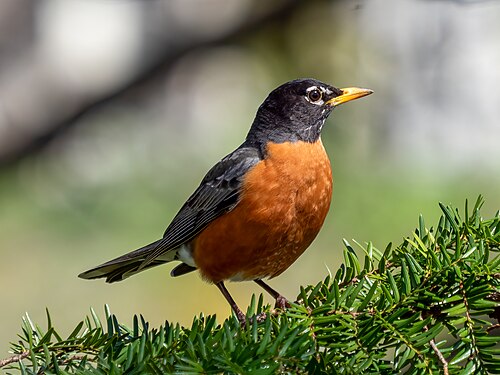
American Robin
Turdus migratorius
A gray-brown thrush with a rusty-orange breast, often seen sprinting and pausing across lawns while hunting worms.
- Medium
- Backyards
- Cities
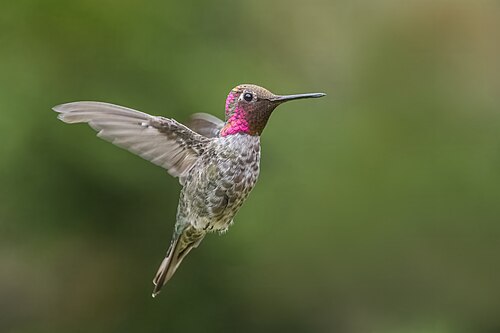
Anna’s Hummingbird
Calypte anna
A stocky Pacific Coast hummingbird with a rose-red head, now a year-round presence in many western yards and feeders.
- Tiny
- Backyards
- Cities
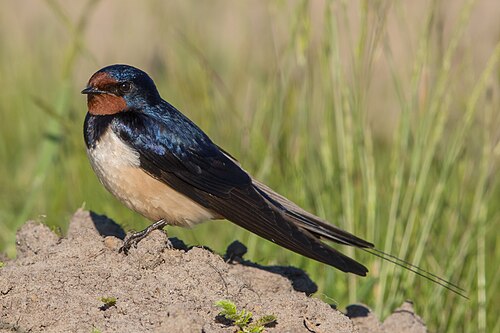
Barn Swallow
Hirundo rustica
A graceful, blue-backed swallow with a rusty throat and a deeply forked tail, often seen skimming over fields and nesting under bridges.
- Small
- Grasslands
- Wetlands
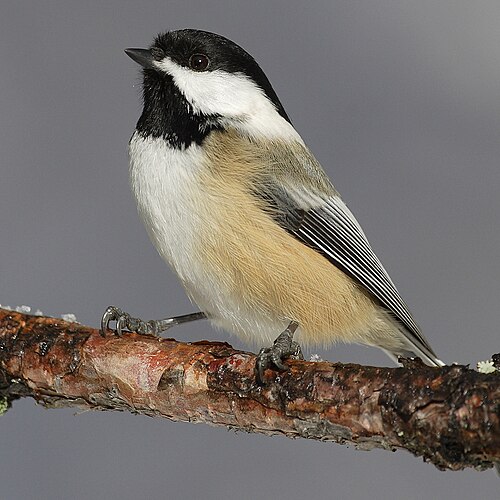
Black-capped Chickadee
Poecile atricapillus
A tiny, curious songbird with a black cap and bib, white cheeks and a clear fee-bee song. A resident across the northern states.
- Small
- Forests
- Backyards
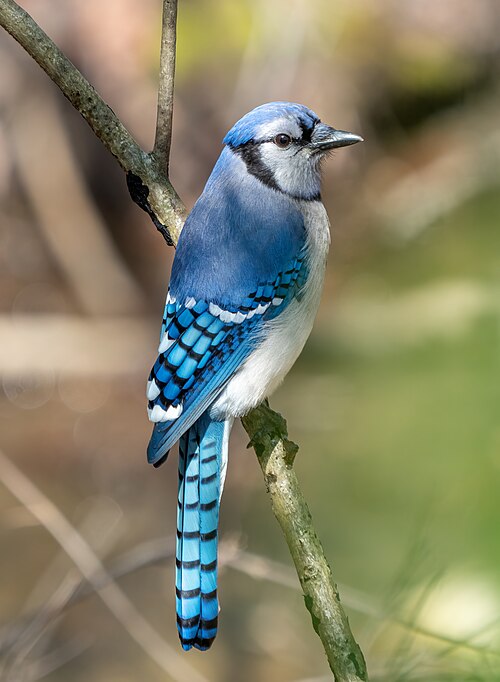
Blue Jay
Cyanocitta cristata
A loud, crested jay in blue, white and black. Common in eastern woods and yards, with some birds migrating in fall.
- Medium
- Forests
- Backyards
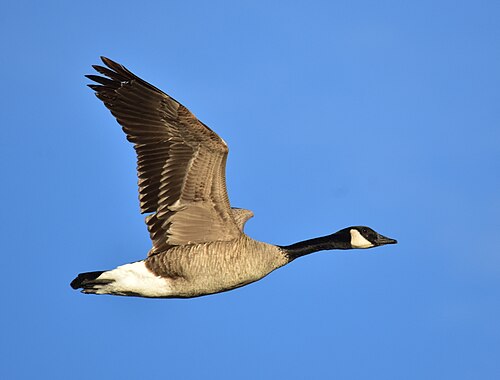
Canada Goose
Branta canadensis
A big brown goose with a black head and neck and a white chinstrap, now common on lakes, golf courses and fields across the US.
- Very large
- Wetlands
- Cities
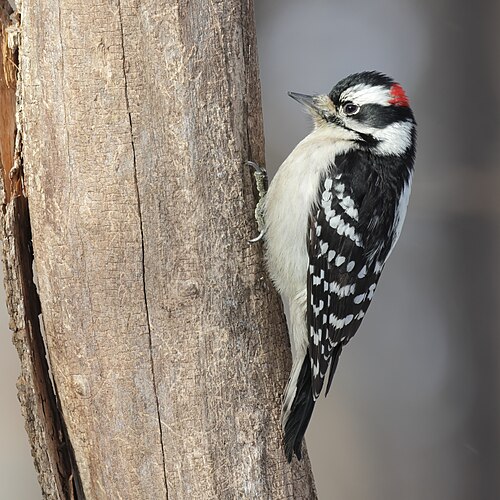
Downy Woodpecker
Dryobates pubescens
The smallest woodpecker in North America, a black-and-white bird with a short bill that visits suet feeders and tiny branches.
- Small
- Forests
- Backyards
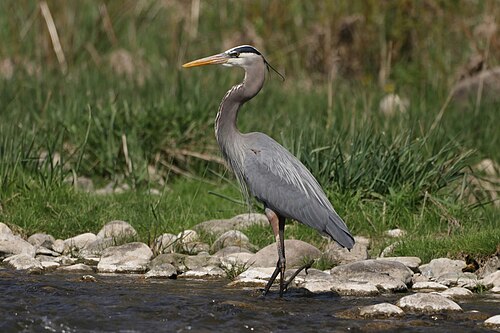
Great Blue Heron
Ardea herodias
North America’s largest heron, a tall gray-blue wader that stands motionless in shallows and strikes with a spear-like bill.
- Very large
- Wetlands
- Coastlines
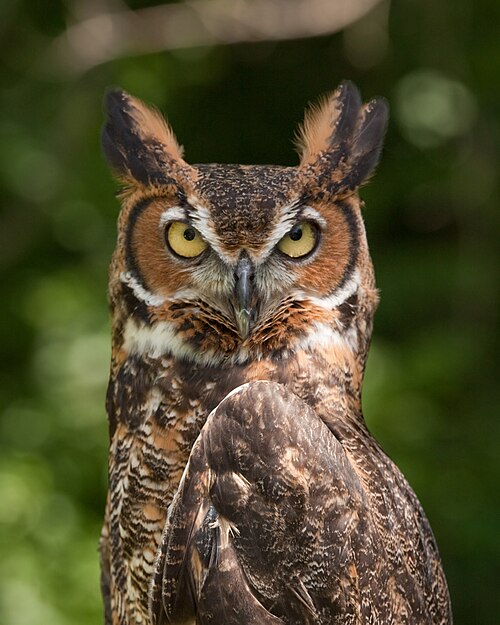
Great Horned Owl
Bubo virginianus
A big, heavy-bodied owl with feather tufts like horns and a deep, steady hoot. It lives in almost every kind of wooded or semi-open country.
- Large
- Forests
- Deserts
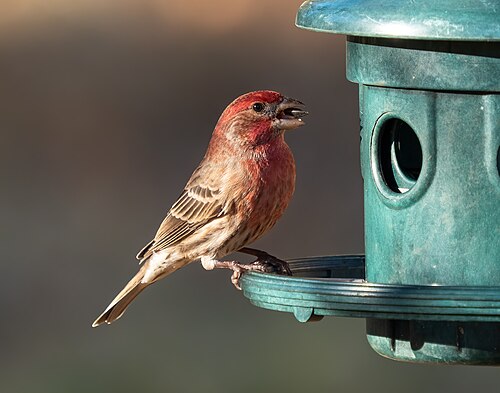
House Finch
Haemorhous mexicanus
A streaky brown finch. Males have a red head and chest. Native to the Southwest and now widespread in cities across the US.
- Small
- Cities
- Backyards
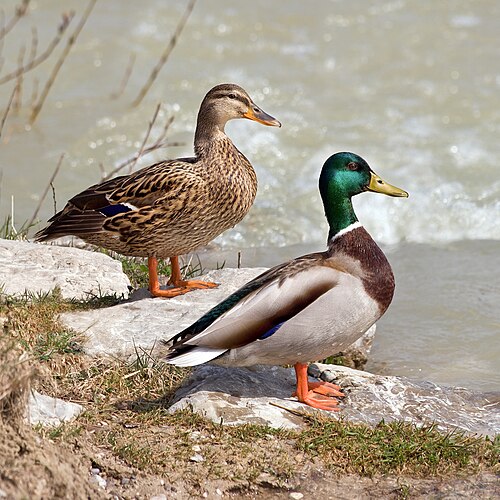
Mallard
Anas platyrhynchos
The familiar dabbling duck of ponds and park lakes. Males have a glossy green head; females are mottled brown with an orange bill.
- Large
- Wetlands
- Cities
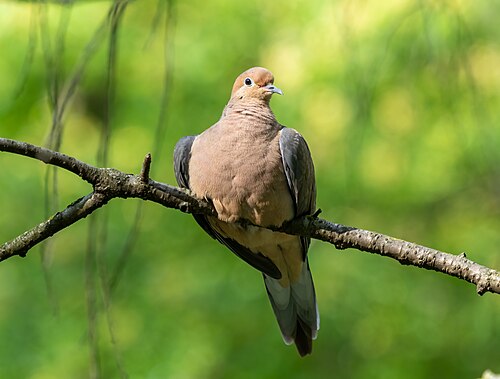
Mourning Dove
Zenaida macroura
A slim, soft gray-tan dove with a long pointed tail and a low, owl-like coo, common on wires, lawns and under feeders.
- Medium
- Backyards
- Grasslands
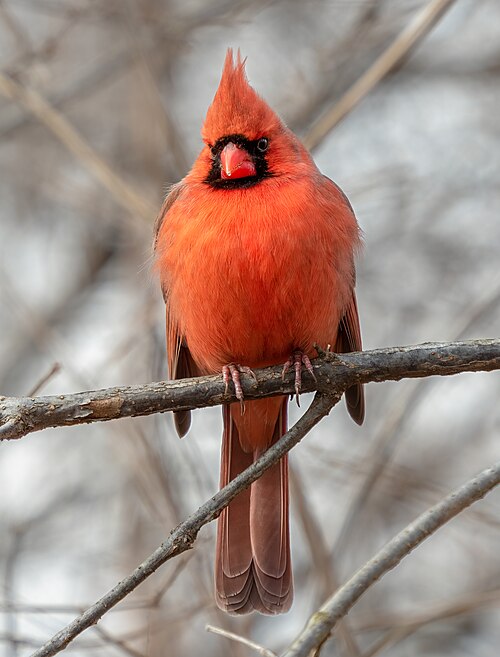
Northern Cardinal
Cardinalis cardinalis
A crested, year-round songbird. The male is brilliant red with a black face; the female is warm tan with red accents.
- Medium
- Backyards
- Forests
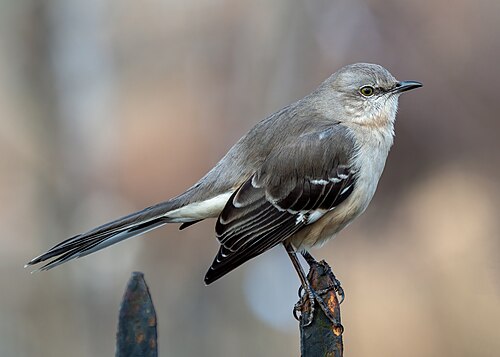
Northern Mockingbird
Mimus polyglottos
A slim gray songbird that sings from rooftops and wires, repeats borrowed phrases, and flashes white wing patches when it hops across a lawn.
- Medium
- Backyards
- Cities
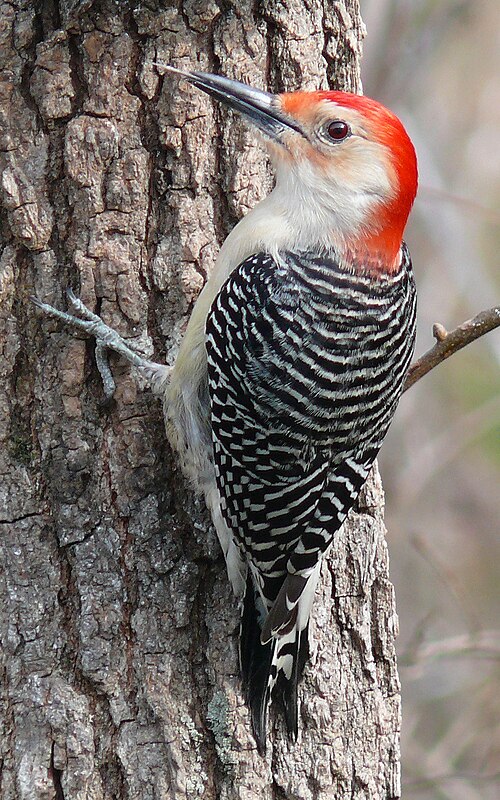
Red-bellied Woodpecker
Melanerpes carolinus
A medium woodpecker with a zebra-striped back and a red cap, familiar in eastern woods, suburbs and at suet feeders.
- Medium
- Forests
- Backyards
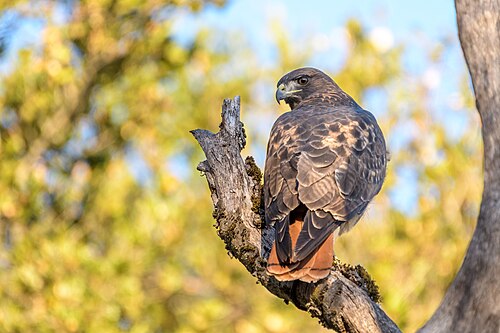
Red-tailed Hawk
Buteo jamaicensis
The most common large hawk in North America, often seen soaring over fields or perched on roadside poles, with a brick-red tail as an adult.
- Large
- Grasslands
- Forests
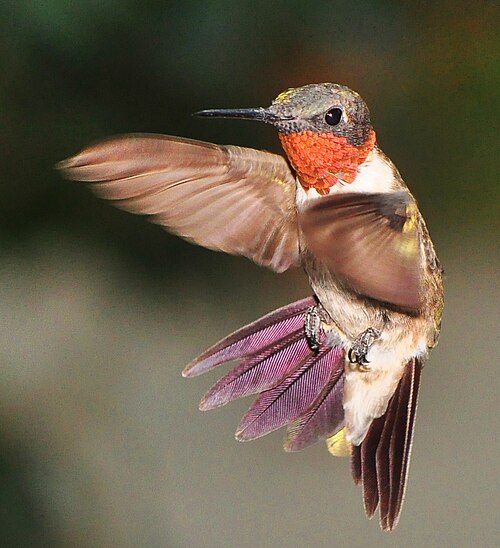
Ruby-throated Hummingbird
Archilochus colubris
The only hummingbird that breeds across eastern North America, a tiny summer visitor that migrates to Mexico and Central America.
- Tiny
- Backyards
- Forests
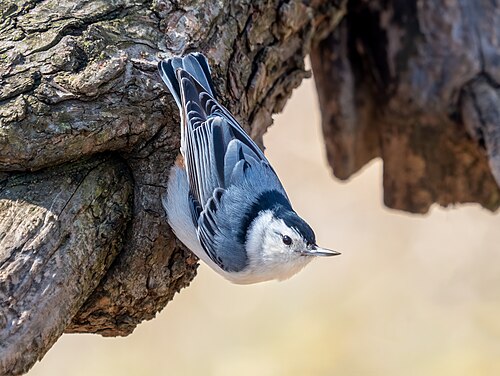
White-breasted Nuthatch
Sitta carolinensis
A compact, blue-gray bird that creeps headfirst down tree trunks and gives a nasal yank-yank. A regular at feeders with sunflower seeds and suet.
- Small
- Forests
- Backyards
Related guides
Sources
Sources are the pages consulted when this entry was written. How we choose and use sources: sources and identification criteria.