
Birding Basics · 8 min read
How to Start Birdwatching
You do not need a trip, a big budget, or a long list of Latin names to begin. You need a window, a sidewalk, or a park bench, and a willingness to look at the same patch of the world a little more slowly than usual. This guide walks through the first few weeks: where to start, what to bring, how to tell one bird from another, and how to build the habit.
Start with the birds you already have
The easiest first outing happens close to home. Birds live in yards, street trees, parking-lot hedges, school grounds and city parks, and the common species you see there are the best teachers. A bird that shows up every day gives you endless chances to study its shape, its habits and its voice.
Pick one spot and return to it. A single feeder, a pond edge, or a stretch of sidewalk with a few mature trees is plenty. Visiting the same place at different times of day shows you how much changes: who is singing at dawn, who feeds at midday, who only appears when the weather turns. If you want ideas for setting up a yard, the backyard birding guide covers the basics.
Do not worry about finding rare birds. Almost every experienced birder began by learning a short list of familiar species, such as the American Robin, the Mourning Dove and the Northern Cardinal in many parts of the country. Which birds are common depends on where you live and what time of year it is, so your own short list will look different from someone else’s.
What you actually need on day one
Birdwatching has a reputation as an equipment hobby, but the starting kit is small. Audubon’s beginner advice lists the essentials as a field guide, a waterproof notebook and an easy-to-use birding app. Binoculars are helpful but, in that same advice, optional at the beginning, and the article suggests saving toward a pair in roughly the $120 to $180 range, where the optics start to be worth the money.
That means your first outing can be free. Wear comfortable shoes and clothes in muted colors, bring water, and leave anything noisy at home. When you are ready to buy optics, read Choosing Binoculars and Field Gear for Birding before you spend anything.
- Something to write in: a small notebook or a notes app.
- A free bird app, such as Merlin Bird ID from the Cornell Lab or the Audubon Bird Guide app.
- A field guide you find easy to read, either printed or on your phone.
- Binoculars, when you are ready. A borrowed or library pair is a fine way to try them first, if your local library or nature center lends them.
Learn to look before you learn names
New birders often grab at color first: it was red, it was yellow. Color matters, but Audubon’s beginner guidance points out that experienced birders tend to use it last. Shape, size, behavior and sound usually narrow things down faster, because color changes with light, season, age and sex.
Try a simple routine whenever a bird lands in view. Ask yourself four questions in order, and say the answers out loud or jot them down.
Over time these questions become automatic. The bird identification basics guide goes deeper into each one, and the Bird Finder tool lets you filter by color, size and habitat when you are stuck.
- Size and shape: is it closer to a sparrow, a robin, a crow or a goose? Is the tail long or short, the body plump or slim?
- Bill: thick and cone-shaped for seeds, thin for insects, hooked for tearing meat, long and straight for spearing fish?
- Behavior: does it hop on the ground, climb a trunk, hover, swim, or sit upright on a wire and watch?
- Field marks: wing bars, an eye stripe, a patch of color, a pale belly, the pattern on the tail.
Use your ears as much as your eyes
Many birds are heard long before they are seen, and in leafy places you will hear far more species than you spot. Do not treat this as a handicap. Songs and calls are some of the most reliable identification clues, and learning even five or six local voices changes how a walk feels.
Start with the loudest and most repetitive singers near you. Listen for the rhythm first (fast or slow, rising or falling), then the tone (whistled, buzzy, chattering). Mnemonic phrases help some people and not others, so use whatever sticks. The songs and calls guide covers methods in detail.
Sound identification features in some apps, including Merlin Bird ID. These tools are useful for suggestions, but treat the result as a lead, not a verdict. Background noise, distant birds and mimics such as the Northern Mockingbird can fool software just as they fool people. Confirm by seeing the bird or listening again when you can.
Know where and when to look
Birds are tied to habitat. Open water draws ducks, geese and herons. Dense woods hold woodpeckers and songbirds. Grasslands hide sparrows and meadowlarks, and coastlines add gulls, pelicans and shorebirds. You can browse by landscape in the habitats section, then match it to the places you can reach.
Time of day matters too. In most places, activity peaks in the first few hours after sunrise, when many birds sing and feed, and it often picks up again before dusk. Midday can be quiet, especially in summer heat. Wind and heavy rain usually push birds into cover, so a calm morning after a storm can be rewarding.
Public places are easy starting points: city parks, nature centers, wildlife refuges, state parks and trails. Check opening hours and any seasonal closures posted for nesting areas, and stay on marked paths. Local Audubon chapters and nature centers often run free beginner walks, which are a gentle way to see how others scan for birds and to ask questions.
Keep a record, even a short one
A notebook turns a pleasant walk into a skill-building session. After each outing, write the date, the place, the weather and what you saw. Add a quick sketch or a note about anything you could not identify, such as a long pale eyebrow, a rusty tail, or a strange whistle. Describing a mystery bird before you open a book keeps you honest, because you record what you saw instead of what the guide told you to expect.
If you like the idea of contributing to science, consider eBird, run by the Cornell Lab of Ornithology. It is free, and you use a free Cornell Lab account that also works with other Cornell projects, including Merlin. A checklist records where and when you birded, how you birded, and the species and counts you found. eBird describes a checklist as complete when it reports every bird you could detect and identify by sight or sound, which is what makes the data most useful to researchers. The site also offers a free, self-paced course called eBird Essentials for new users.
Use caution about sharing the exact location of sensitive birds. Owls, nesting birds and rare species can be harmed by crowds. The responsible birding guide explains what to hold back and why.
Seasons change the cast of characters
Birding is never the same twice because the birds themselves move. Some species stay put all year. Others arrive to breed in spring and leave in fall, and others show up only in winter. Many travel at night, so a yard can look empty one evening and busy the next morning during migration.
That means a bird you see in July may not be there in January, and the same species can appear in different months depending on whether you live in Maine, Georgia or Oregon. The seasonal calendar shows what tends to be around in each US region, and Understanding Migration explains the larger picture. Treat any such guide as a probability, not a promise. Weather, food supply and local conditions shift timing from year to year.
Spring and fall are often the most exciting seasons for beginners because of the movement, but winter is underrated. Leafless trees make birds easier to spot, and feeders see steady visitors.
Good habits from the first day
Birds are wild animals with their own priorities, and the whole hobby depends on leaving them undisturbed. Keep your distance and let the binoculars do the work. Move slowly, speak quietly, and stop if a bird freezes, flies off or acts alarmed, since those are signs you are too close. Never approach a nest. Audubon’s guidance on nest photography notes that your presence alone can alert predators to a nest, and that visiting repeatedly can cause cumulative disturbance.
Avoid playing recorded songs to coax a bird into view. Audubon advises against playback because it can draw a parent away from eggs or chicks. If you feed birds, stick to appropriate foods and keep feeders clean. And follow the rules of the place you are in, including staying out of private land without permission.
These habits cost nothing and make you a better observer. A relaxed bird behaves naturally, and natural behavior is what you came to see.
A simple plan for your first month
Week one: pick a spot and visit it three times, at different hours. Write down every bird you see, even if you only know it as small and brown. Week two: learn five common species well, including how they sound. Week three: visit a new habitat, such as a pond or a woodland trail, and compare. Week four: join a local walk, or try a first eBird checklist.
Progress comes in small, satisfying steps. The first time you name a bird by its voice from inside the house, you will know the habit has taken hold.
Frequently asked questions
Do I need binoculars to start birdwatching?
No. Many people begin with just their eyes, a notebook and a free app. Binoculars make it much easier to see field marks, so most birders buy a pair within a few weeks. Try a borrowed pair first if you can, and read the gear guide before buying.
What is the best time of day to see birds?
In most places the first few hours after sunrise are busiest, with another lift before dusk. Midday is often quiet, especially in hot weather. Timing varies by species, season and region, so try several times and see what your area offers.
Is it okay to use an app to identify birds?
Yes, as a helper. Apps such as Merlin Bird ID can suggest species from sound, photos or a few questions. Treat suggestions as leads and confirm them by looking at the bird’s shape, behavior and markings, since software can be wrong.
Birds mentioned in this guide
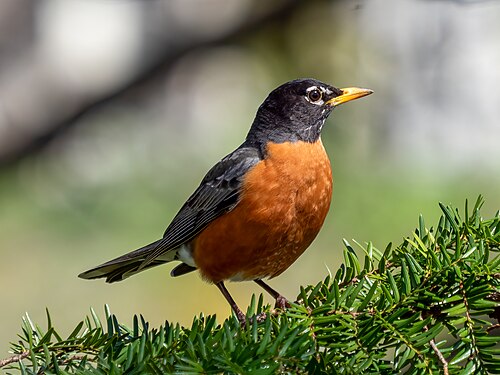
American Robin
Turdus migratorius
A gray-brown thrush with a rusty-orange breast, often seen sprinting and pausing across lawns while hunting worms.
- Medium
- Backyards
- Cities
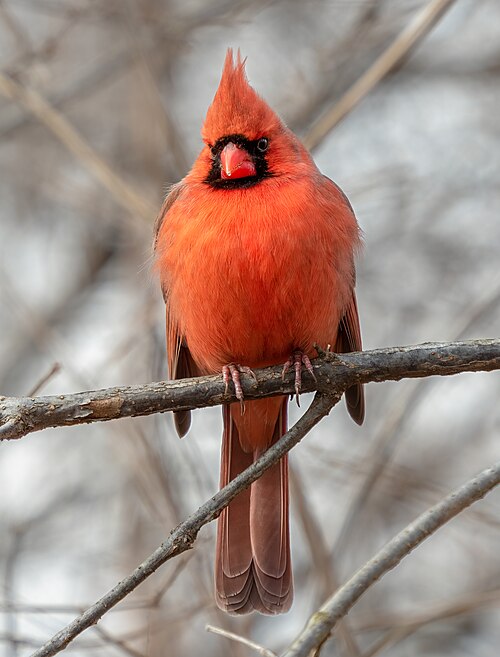
Northern Cardinal
Cardinalis cardinalis
A crested, year-round songbird. The male is brilliant red with a black face; the female is warm tan with red accents.
- Medium
- Backyards
- Forests
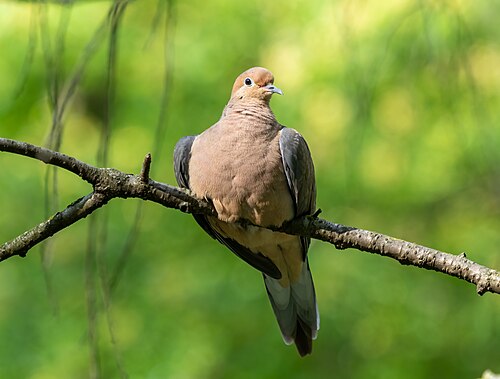
Mourning Dove
Zenaida macroura
A slim, soft gray-tan dove with a long pointed tail and a low, owl-like coo, common on wires, lawns and under feeders.
- Medium
- Backyards
- Grasslands
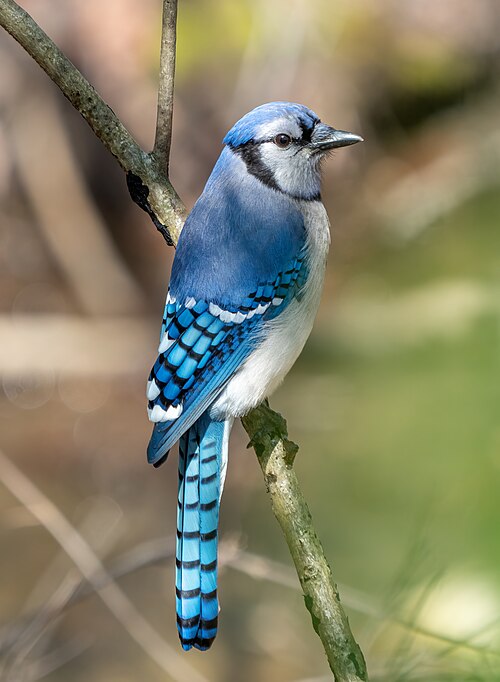
Blue Jay
Cyanocitta cristata
A loud, crested jay in blue, white and black. Common in eastern woods and yards, with some birds migrating in fall.
- Medium
- Forests
- Backyards
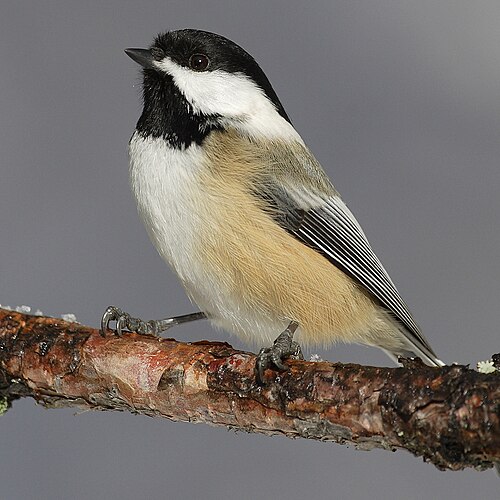
Black-capped Chickadee
Poecile atricapillus
A tiny, curious songbird with a black cap and bib, white cheeks and a clear fee-bee song. A resident across the northern states.
- Small
- Forests
- Backyards
Keep reading
Sources
- Audubon — How to Start Birding
- eBird Help — Getting started with eBird checklists
- Audubon — Guide to Ethical Bird Photography
- Audubon — Dos and Don’ts of Nest Photography
Sources are the pages consulted when this entry was written. How we choose and use sources: sources and identification criteria.