
Regional bird guide
Alaska and Hawaii Bird Guide
Alaska and Hawaii are grouped here only because they are not part of the contiguous states. Their birds, habitats and visitor rules are very different. Bird presence and timing vary by location, weather and migration. Coverage on this site is partial for Alaska and not yet in depth for Hawaii.
Read this first: what this site covers
The first 30 species on this site are mostly mainland birds, and few of them occur in Hawaii. Alaska coverage is partial: some species on the site reach the state, and many Alaska specialties are not yet included. Hawaii is not yet covered in depth. This page is a short, honest overview, not a full guide.
Treat the two states as separate places. Alaska is a huge northern region with tundra, boreal forest, mountains and long coasts. Hawaii is a chain of tropical islands with many unique birds found nowhere else.
Alaska: landscape and migration
Alaska has Arctic and subarctic tundra, spruce forest, glaciated mountains, huge wetlands and vast coastlines. Summer daylight is long, and many birds that winter in the lower 48, Central America, South America or Asia travel there to nest. Large numbers of waterfowl, shorebirds and seabirds gather in some places.
Timing is compressed. Birds arrive in late spring, nest quickly and leave in late summer and fall, with details varying by region and year. Winter birding exists, especially on southern coasts, but conditions are cold and daylight short. Some mainland species on this site, such as the Bald Eagle, reach Alaska, though abundance varies.
Hawaii: unique native forest birds
Hawaii’s native forest birds, including the honeycreepers, are largely different from mainland species. They evolved on isolated islands, and many are rare. Many are threatened or endangered, and some have already been lost. Avian malaria, carried by introduced mosquitoes, is a major threat, and USGS research describes how cooler high-elevation forests have long served as a refuge where mosquitoes struggle to survive.
Because of this, many of the rarest native birds live in protected high-elevation forests, including national wildlife refuges and parks such as Hakalau Forest National Wildlife Refuge on Hawai’i Island. Many sites have restricted access, permits or closures. Lowland areas are dominated by introduced birds.
Both states are important for seabirds. Alaska’s coasts and islands host large colonies of nesting seabirds, and Hawaii’s islands and surrounding waters support seabirds that nest on remote shores and in burrows. These nesting areas are very sensitive, and many are closed to visitors or have strict access rules. Seeing them usually means joining an authorized tour or visiting an official viewing area, and keeping well back.
Visitor rules and etiquette
In Hawaii, follow every refuge and park rule exactly. Stay on marked trails, obey closures and permit requirements, and clean shoes, clothing and gear as asked, since carrying seeds, soil or pests can harm fragile forests. Do not play recordings, approach nests or leave trails to look for a rare bird.
In Alaska, keep a safe distance from wildlife, including bears, and follow local guidance. Nesting colonies and shorebird areas need space. Weather and remote conditions can be serious hazards, so plan carefully and tell someone your route. See our responsible birding guide.
Planning tips
For Alaska, summer is the main birding season, and local guides, state and national park offices and Audubon chapters can advise on current conditions. For Hawaii, contact the refuge or park first, ask which areas are open and consider a guided visit led by a permitted local organization.
Do not expect mainland birds to match what you see in Hawaii. Check regional guides for the mainland and the migration hub for general background. We plan to expand coverage of both states.
A final reminder: our species library, filters and tools are built mostly around mainland species, so some birds you encounter in Alaska or Hawaii will not appear here. Local field guides, refuge and park staff, and state wildlife agencies are better sources for those places today. Please treat anything on this page as general orientation, and use official, local sources before you plan a trip or head into a protected area.
Frequently asked questions
Does this site cover Hawaii’s native birds?
Not yet in depth. The first 30 species are mostly mainland birds. Hawaii’s native forest birds, including honeycreepers, are largely different, and many are threatened.
Can I visit protected Hawaiian forests freely?
Not always. Many sites have restricted access, permits or closures to protect rare birds and habitat. Contact the refuge or park first and follow every rule.
When is the best time to bird in Alaska?
Summer is the main season for nesting birds, with spring and fall migration at certain sites. Timing varies by region and year, so check local sources.
Season by season
Presence varies. Bird presence and timing change with location, weather, habitat and migration. Treat this page as a starting point, then check recent local sightings (for example on eBird) before you go.
Spring
Alaska: birds arrive from late spring in a short, busy window. Hawaii: seasonality is less pronounced, and forest birds are best checked with refuge staff.
From our library (14): American Robin, Bald Eagle, Barn Swallow, Belted Kingfisher, Black-capped Chickadee, Canada Goose, Downy Woodpecker, Great Blue Heron, Mallard, Red-tailed Hawk, Red-winged Blackbird, Sandhill Crane, Song Sparrow, Steller’s Jay
Summer
Alaska’s main birding season, with long daylight and nesting everywhere. Hawaii: access to protected forests may be limited, so confirm rules.
From our library (15): American Robin, Bald Eagle, Barn Swallow, Belted Kingfisher, Black-capped Chickadee, Canada Goose, Downy Woodpecker, Great Blue Heron, Mallard, Osprey, Red-tailed Hawk, Red-winged Blackbird, Sandhill Crane, Song Sparrow, Steller’s Jay
Fall
Alaska: birds leave quickly after nesting. Hawaii: conditions vary by island, elevation and rainfall.
From our library (12): American Robin, Bald Eagle, Belted Kingfisher, Black-capped Chickadee, Canada Goose, Downy Woodpecker, Great Blue Heron, Mallard, Red-tailed Hawk, Sandhill Crane, Song Sparrow, Steller’s Jay
Winter
Alaska: cold, short days, with birding mostly on ice-free southern coasts. Hawaii: some migratory shorebirds and waterbirds visit.
From our library (4): Bald Eagle, Black-capped Chickadee, Great Blue Heron, Steller’s Jay
Birds in our library for this region
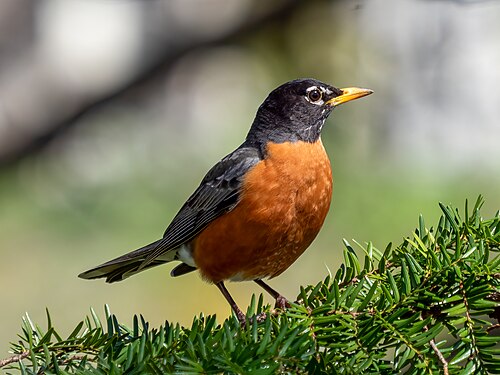
American Robin
Turdus migratorius
A gray-brown thrush with a rusty-orange breast, often seen sprinting and pausing across lawns while hunting worms.
- Medium
- Backyards
- Cities
Spring, Summer, Fall
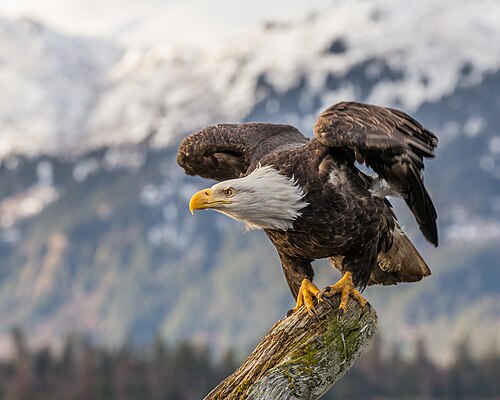
Bald Eagle
Haliaeetus leucocephalus
America’s national bird, a huge dark-brown raptor with a white head and tail that fishes along coasts, rivers and large lakes.
- Very large
- Wetlands
- Coastlines
Year-round
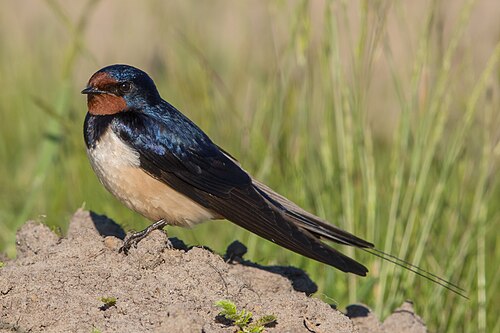
Barn Swallow
Hirundo rustica
A graceful, blue-backed swallow with a rusty throat and a deeply forked tail, often seen skimming over fields and nesting under bridges.
- Small
- Grasslands
- Wetlands
Spring, Summer
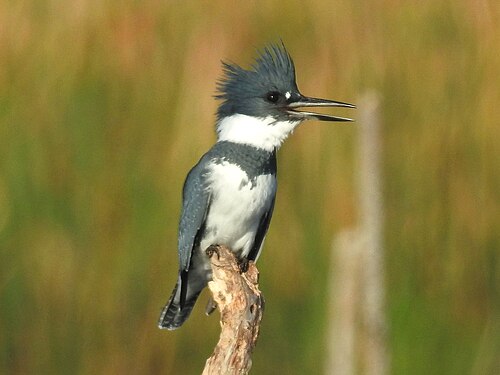
Belted Kingfisher
Megaceryle alcyon
A shaggy-crested, blue-gray waterside bird that rattles along rivers and plunges headfirst for fish.
- Medium
- Wetlands
- Coastlines
Spring, Summer, Fall
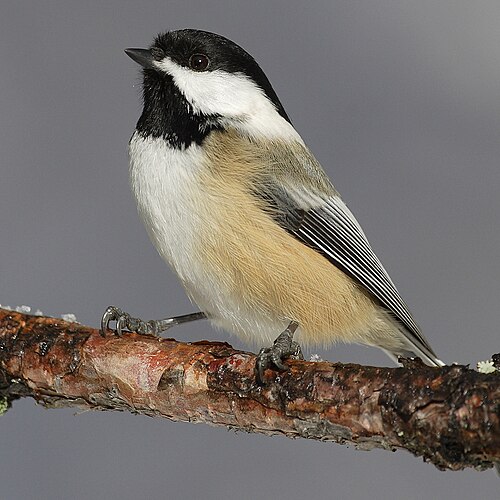
Black-capped Chickadee
Poecile atricapillus
A tiny, curious songbird with a black cap and bib, white cheeks and a clear fee-bee song. A resident across the northern states.
- Small
- Forests
- Backyards
Year-round
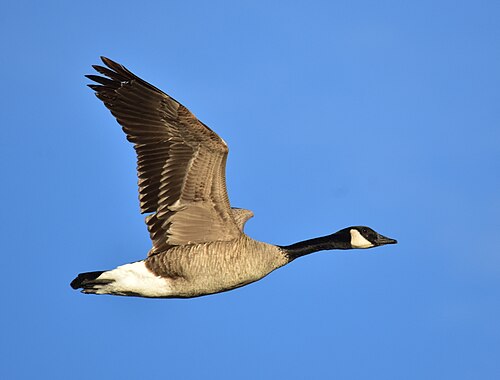
Canada Goose
Branta canadensis
A big brown goose with a black head and neck and a white chinstrap, now common on lakes, golf courses and fields across the US.
- Very large
- Wetlands
- Cities
Spring, Summer, Fall
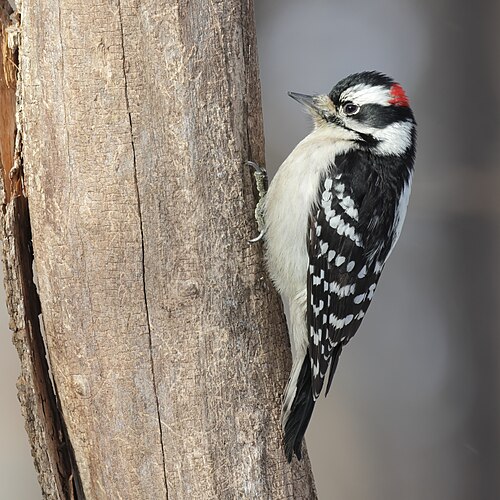
Downy Woodpecker
Dryobates pubescens
The smallest woodpecker in North America, a black-and-white bird with a short bill that visits suet feeders and tiny branches.
- Small
- Forests
- Backyards
Spring, Summer, Fall
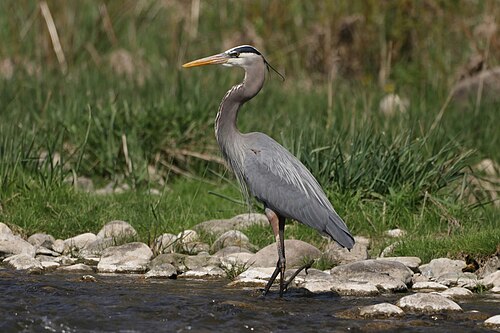
Great Blue Heron
Ardea herodias
North America’s largest heron, a tall gray-blue wader that stands motionless in shallows and strikes with a spear-like bill.
- Very large
- Wetlands
- Coastlines
Year-round
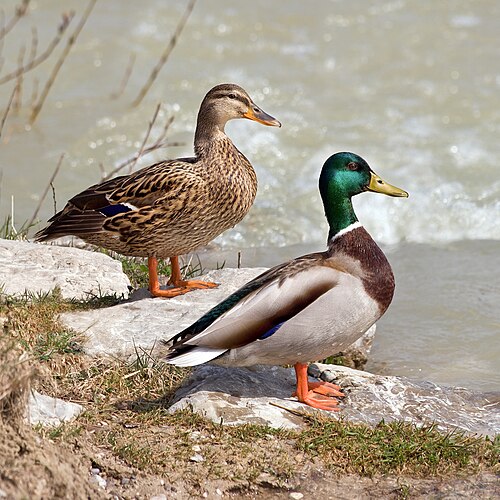
Mallard
Anas platyrhynchos
The familiar dabbling duck of ponds and park lakes. Males have a glossy green head; females are mottled brown with an orange bill.
- Large
- Wetlands
- Cities
Spring, Summer, Fall
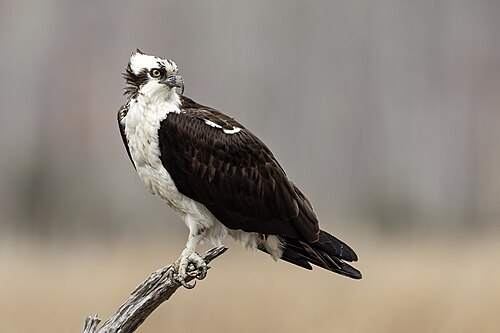
Osprey
Pandion haliaetus
A large fish-eating raptor that hovers over water and plunges feet-first for its catch. Look for its stick nests on poles and platforms.
- Large
- Wetlands
- Coastlines
Summer
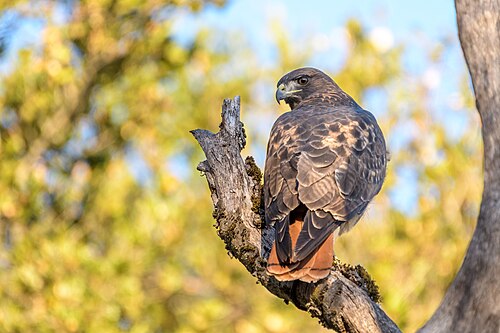
Red-tailed Hawk
Buteo jamaicensis
The most common large hawk in North America, often seen soaring over fields or perched on roadside poles, with a brick-red tail as an adult.
- Large
- Grasslands
- Forests
Spring, Summer, Fall
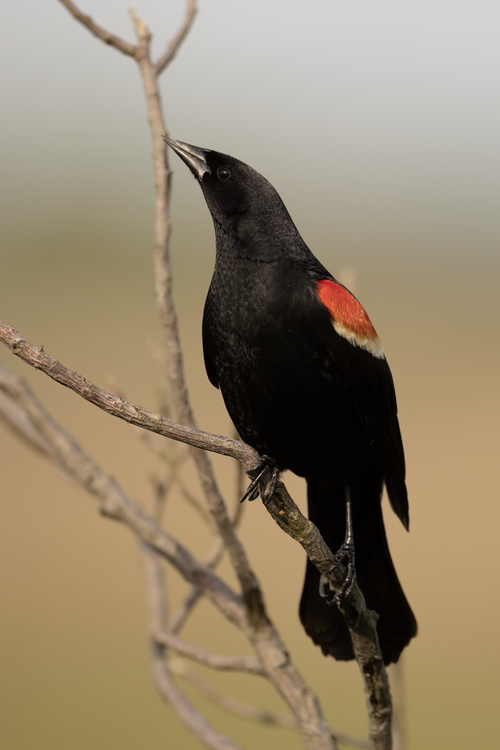
Red-winged Blackbird
Agelaius phoeniceus
A marsh-edge blackbird: males are glossy black with red-and-yellow shoulder patches, females are heavily streaked brown.
- Small
- Wetlands
- Grasslands
Spring, Summer
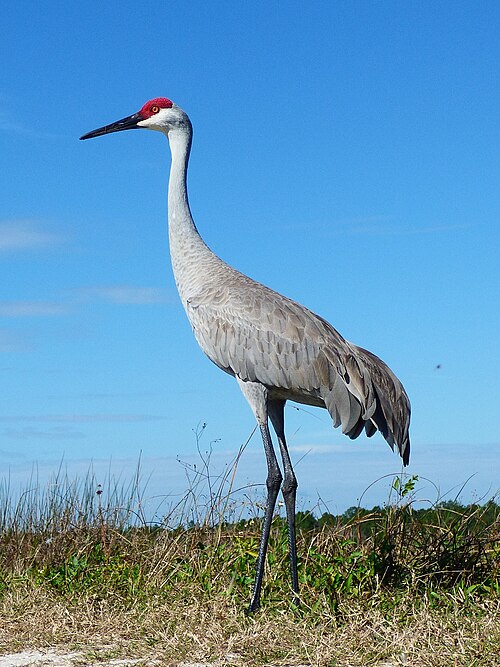
Sandhill Crane
Antigone canadensis
A tall gray crane with a red forehead, a bugling rattle, and migrations that fill Great Plains skies with hundreds of thousands of birds.
- Very large
- Wetlands
- Grasslands
Spring, Summer, Fall
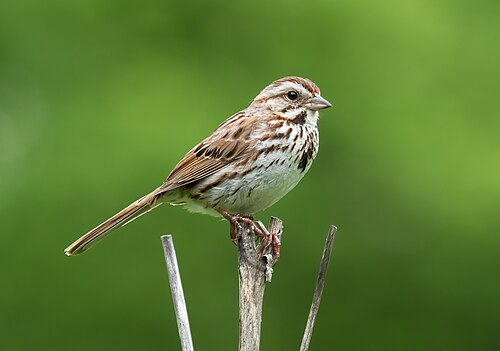
Song Sparrow
Melospiza melodia
A streaky, medium-sized sparrow with a central breast spot and a loud, varied song. It turns up in thickets, marsh edges and yards across the continent.
- Small
- Wetlands
- Backyards
Spring, Summer, Fall
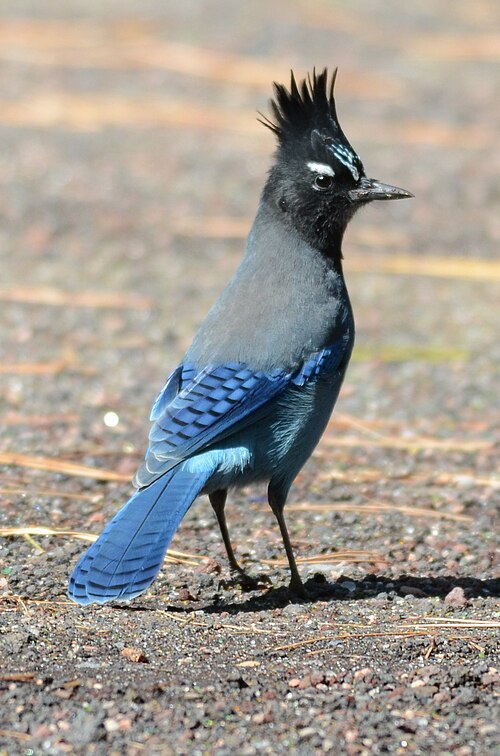
Steller’s Jay
Cyanocitta stelleri
A crested, sooty-black and deep-blue jay of western evergreen forests, and a noisy regular at mountain campgrounds and feeders.
- Medium
- Forests
- Backyards
Year-round
Related guides
Sources
- USGS: Mitigating future avian malaria threats to Hawaiian forest birds from climate change
- U.S. Fish & Wildlife Service
- National Park Service
Sources are the pages consulted when this entry was written. How we choose and use sources: sources and identification criteria.