
Habitat guide
Grasslands Birdwatching
Prairies, pastures, hayfields and meadows hold birds found almost nowhere else. This guide explains how grassland birds live, how the seasons shape what you see, and how to watch them without harming nests that sit right on the ground.
What grasslands are
Grasslands are open lands dominated by grasses and wildflowers with few trees. In the US they range from the tallgrass prairies of the central states, to mixed and shortgrass prairies farther west, to coastal prairies, mountain meadows and the open pastures and hayfields of farm country.
Much native grassland has been converted to cropland or developed. Because of this, many grassland birds depend on whatever remains, including prairie preserves, grazing lands and some well-managed farms. Habitat quality, such as grass height and how recently an area was mowed, matters a great deal.
How birds use grasslands
Without trees, grassland birds use the ground and the stalks above it. Many nest directly on the ground, hidden in thick grass. Others use fence posts, shrubs and tall forbs as perches for singing and hunting. The Western Meadowlark is famous for singing from such perches across open country.
Raptors hunt over open fields, watching for movement from the air or a perch. The Red-tailed Hawk is a common sight on poles along grassy roadsides. Sparrows, larks and longspurs forage on the ground, often unseen until they flush at your feet.
Grass height and structure are crucial. Some species want short, grazed turf, others need tall, dense cover with standing dead grass, and others prefer a patchwork of both. Shrubs scattered across a prairie attract different birds again. Because of this, a single large grassland often holds more species than several small ones, and fragments can be too small or too disturbed for some birds to nest successfully.
Seasonal change
In spring, males sing from high points to claim territories, making this the best season for detecting grassland birds. Many species nest from late spring into summer, and the timing depends on region and weather.
After breeding, birds become quiet and less visible. Fall brings migration and the gathering of flocks. Winter grasslands can look empty, but some species, including certain sparrows, raptors and winter visitors from the north, use them heavily. Snow depth and food supplies change where birds go, so what you find can differ from year to year.
What to look for
Scan for birds on posts, wires, fences and the tops of tall plants. Listen as much as you look, because songs carry across open ground. Watch the air for soaring hawks, and check ditches, field margins and fencerows where cover is better.
Grassland sparrows are famously secretive and tough to identify. Notes on song, flight behavior and habitat help as much as plumage. A car pulled safely off the road can serve as a blind, since birds are often more tolerant of a vehicle than of a person on foot. The bird identification basics guide covers the habits that help.
Weather shapes your visit more than in forests. Wind flattens song and makes birds hard to hear, so calm mornings are best. Midday heat makes birds retreat to cover, and rain can drive them off perches. Bring a hat and sun protection, because there is little shade. In winter, look for birds that gather along fence lines, in weedy patches and around stubble, where seeds remain above the snow.
Watching grasslands responsibly
Ground nests are almost impossible to see, so walking through nesting grass can crush eggs or chicks without your knowing. Stay on mowed trails and roads during nesting season, and never wade into tall grass to get closer to a singing bird.
Respect private property. Much grassland is working farm or ranch land, and you need permission to enter. Avoid stopping where you block traffic or farm equipment, do not flush birds from roadsides for photos, and do not use playback to lure territorial males, which pulls them away from nesting duties.
Regional variation across the US
The Great Plains hold the largest remaining grassland areas, from tallgrass in the east to shortgrass in the west. California’s grasslands and oak savanna, the Southwest’s desert grasslands, and the Southeast’s pine savannas and open fields each have their own bird communities.
In the East, hayfields and pastures act as substitutes for native grassland and are best checked in early morning. Presence and timing vary by location, weather and migration. Use our regional guides and seasonal calendar as starting points, and confirm with local birders and land managers.
Frequently asked questions
Why are grassland birds declining?
Sources point mainly to loss and fragmentation of grassland habitat, along with changes in farming and mowing. Exact trends vary by species and region, so check Partners in Flight and the State of the Birds reports for current information.
Why do grassland sparrows seem impossible to see?
They spend most of their time low in dense grass and flush briefly. Listening for song, watching posts at dawn, and noting habitat and flight pattern help. Avoid chasing them into the grass.
Can I walk off-trail in a prairie to find birds?
Please do not during nesting season. Nests sit on the ground and are almost invisible. Use roads, trails and mowed paths, and ask permission before entering private land.
Birds in our library that use this habitat
14 species in the library are commonly found here. Presence and timing vary by region and migration. Use the habitat and region explorer to narrow by region and season.
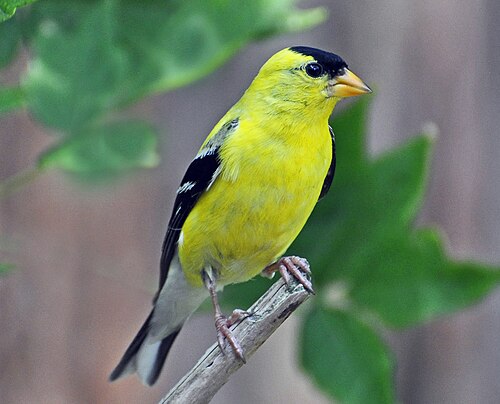
American Goldfinch
Spinus tristis
A small seed-eating finch. Breeding males are bright yellow with a black cap; winter birds turn a muted tan-olive.
- Tiny
- Grasslands
- Backyards
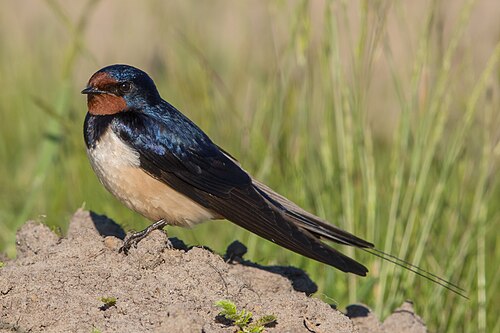
Barn Swallow
Hirundo rustica
A graceful, blue-backed swallow with a rusty throat and a deeply forked tail, often seen skimming over fields and nesting under bridges.
- Small
- Grasslands
- Wetlands
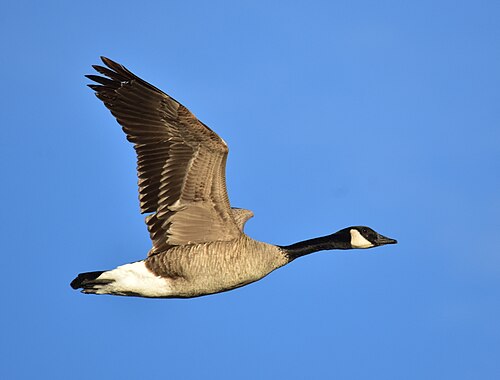
Canada Goose
Branta canadensis
A big brown goose with a black head and neck and a white chinstrap, now common on lakes, golf courses and fields across the US.
- Very large
- Wetlands
- Cities
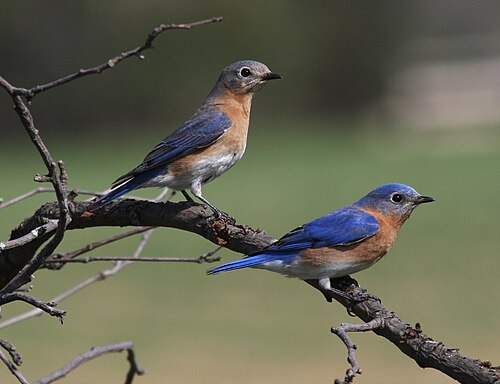
Eastern Bluebird
Sialia sialis
A small thrush of open country: the male is bright blue above with a rusty throat and chest, and a white belly.
- Small
- Grasslands
- Backyards
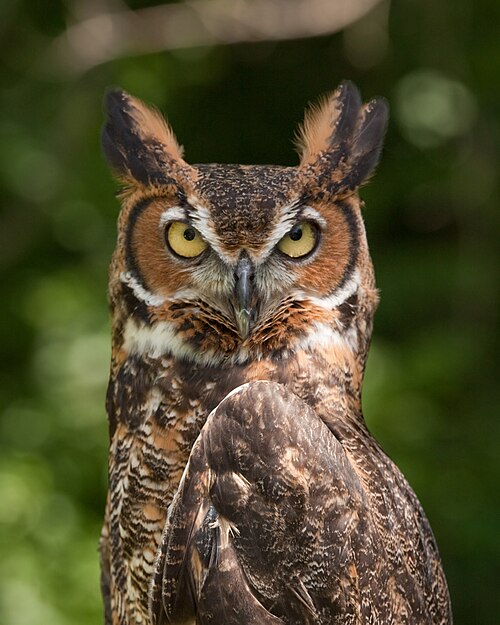
Great Horned Owl
Bubo virginianus
A big, heavy-bodied owl with feather tufts like horns and a deep, steady hoot. It lives in almost every kind of wooded or semi-open country.
- Large
- Forests
- Deserts
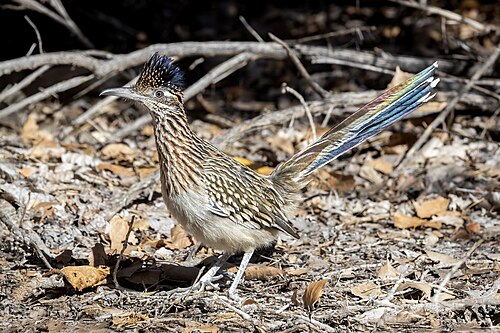
Greater Roadrunner
Geococcyx californianus
A long-tailed, ground-running cuckoo of the dry Southwest that hunts lizards, snakes, and big insects on foot.
- Large
- Deserts
- Grasslands
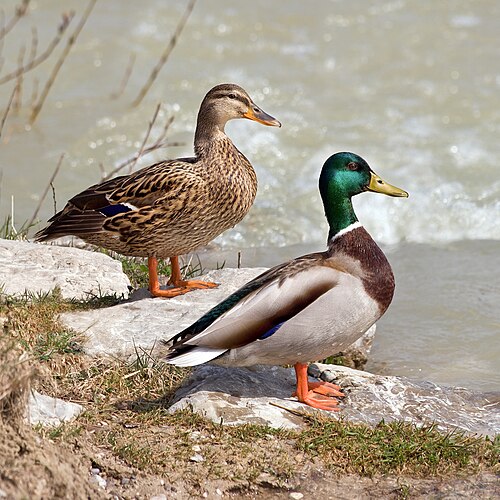
Mallard
Anas platyrhynchos
The familiar dabbling duck of ponds and park lakes. Males have a glossy green head; females are mottled brown with an orange bill.
- Large
- Wetlands
- Cities
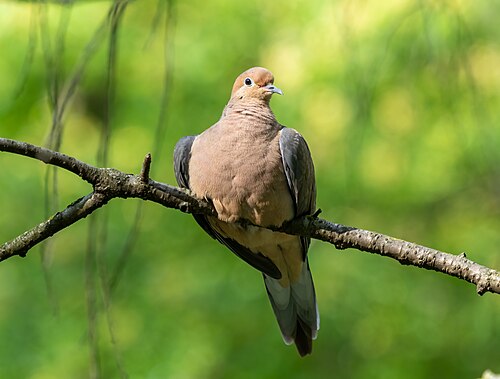
Mourning Dove
Zenaida macroura
A slim, soft gray-tan dove with a long pointed tail and a low, owl-like coo, common on wires, lawns and under feeders.
- Medium
- Backyards
- Grasslands
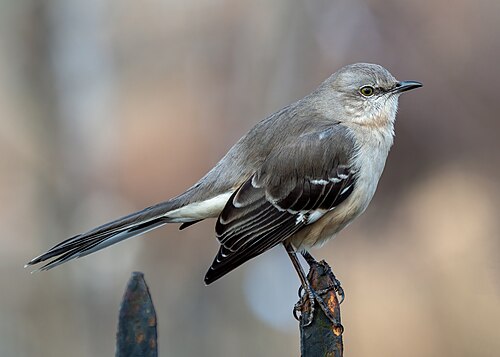
Northern Mockingbird
Mimus polyglottos
A slim gray songbird that sings from rooftops and wires, repeats borrowed phrases, and flashes white wing patches when it hops across a lawn.
- Medium
- Backyards
- Cities
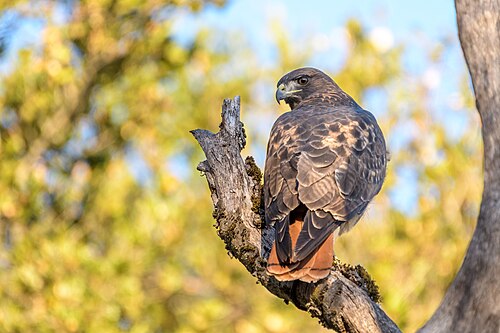
Red-tailed Hawk
Buteo jamaicensis
The most common large hawk in North America, often seen soaring over fields or perched on roadside poles, with a brick-red tail as an adult.
- Large
- Grasslands
- Forests
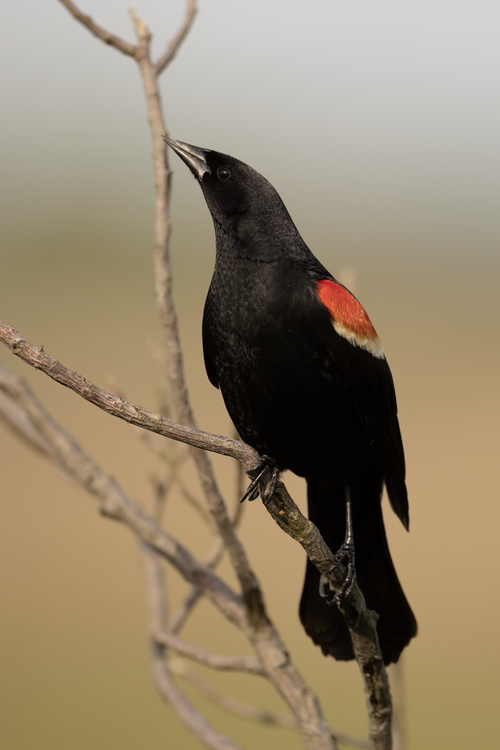
Red-winged Blackbird
Agelaius phoeniceus
A marsh-edge blackbird: males are glossy black with red-and-yellow shoulder patches, females are heavily streaked brown.
- Small
- Wetlands
- Grasslands
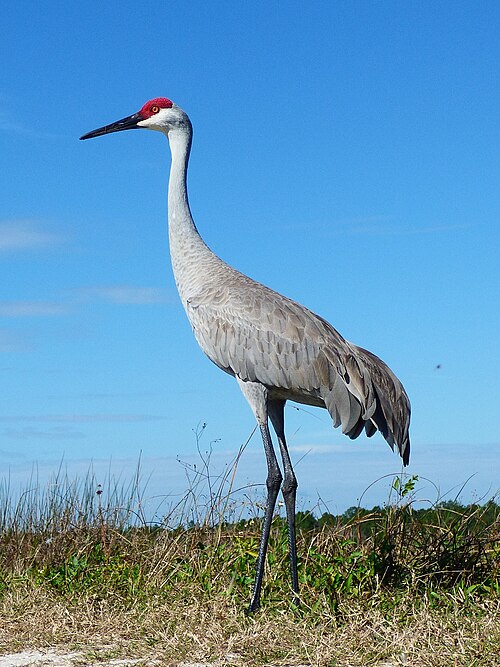
Sandhill Crane
Antigone canadensis
A tall gray crane with a red forehead, a bugling rattle, and migrations that fill Great Plains skies with hundreds of thousands of birds.
- Very large
- Wetlands
- Grasslands
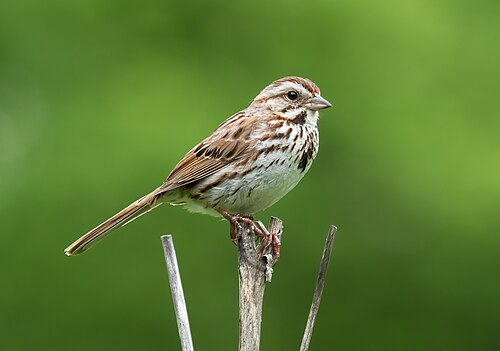
Song Sparrow
Melospiza melodia
A streaky, medium-sized sparrow with a central breast spot and a loud, varied song. It turns up in thickets, marsh edges and yards across the continent.
- Small
- Wetlands
- Backyards
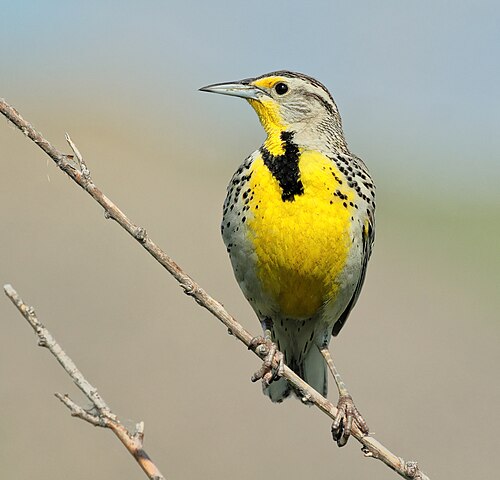
Western Meadowlark
Sturnella neglecta
A streaky brown grassland bird with a bright yellow chest and black V, best known for its flute-like, gurgling song from a fence post.
- Medium
- Grasslands
Related guides
Sources
Sources are the pages consulted when this entry was written. How we choose and use sources: sources and identification criteria.