
Habitat guide
Deserts and Scrub
Deserts and dry scrublands look sparse, yet they hold specialized birds adapted to heat, drought and open ground. This guide explains how birds use arid habitats, how seasons change what you see, and how to bird safely and gently in dry country.
What desert and scrub habitat is
This habitat covers hot deserts, cold high deserts, sagebrush steppe, chaparral and dry scrub. Plants are often spread out and low, with cactus, yucca, mesquite, creosote bush, sagebrush or thorny shrubs. Water is scarce and uneven, so rivers, springs, stock ponds and canyons stand out sharply.
The Southwest holds the best-known deserts, but arid habitats also reach into the Great Basin, parts of the interior West and California. Patches of dry scrub also occur in the Southeast and along coasts.
How birds use arid lands
Birds cope with heat and dryness in several ways. Many are most active at dawn and dusk and rest in shade at midday. Some get most of their water from food. Cactus and thorny shrubs provide nesting sites and protection. The Greater Roadrunner hunts on foot across open ground and is a classic example of a desert bird.
Water draws birds from far around. Springs, washes and desert gardens can concentrate activity, and the same is true of flowering plants for hummingbirds. Anna’s Hummingbird is a regular visitor to gardens and flowering shrubs in parts of the arid West.
Plants do much of the work. Large cacti, trees along washes and dense thorny shrubs offer nest sites, shade and food in the form of seeds, fruit, flowers and insects. Dry streambeds, known as washes, often have taller trees and more birds than the surrounding flats. Rain pulses, even short ones, can trigger bursts of plant growth and insect activity that birds quickly use.
Seasonal change
Spring is usually the best time to visit, with migrants moving through, resident birds singing and mild temperatures. Summer can bring heat that makes midday birding dangerous and unproductive, but it can also bring monsoon rains in parts of the Southwest that trigger new activity.
Fall brings more migrants, and winter draws birds from the north to the milder desert lowlands. Timing and numbers depend heavily on rainfall, which can vary widely between years, so conditions at a site can differ from one season to the next.
What to look for
Concentrate on water, shade and flowering or fruiting plants. Check the tops of cactus and shrubs, where birds sing and watch, and look low for birds running or hopping between cover. Scan the sky for raptors rising on warm air later in the morning.
Dry scrub birds can be shy and quick, so listen for calls and keep still near a promising bush. Bring plenty of water, a hat, sun protection and sturdy shoes, and tell someone your plan. Our binoculars and gear guide covers useful equipment.
Plan around the heat. Start at first light, keep to shaded stretches and stop to rest. Dark plumage and quick movement against bare ground make birds easier to spot than in dense forest, but heat shimmer after mid-morning can distort distant views. Binoculars with good brightness are useful. Learn the local plants as well as the birds, since many species stick to particular shrubs or cactus types.
Watching deserts responsibly
Desert soils and plants recover very slowly. Stay on trails and established roads, avoid trampling plants or crusts on the ground, and do not pick or move anything. Nest sites in cactus and shrubs are easy to disturb, so keep your distance and never approach a nest.
Heat is a real hazard for both people and birds. If a bird seems to be panting or sheltering, give it space. Be careful with water sources, which are often critical for wildlife: do not crowd or camp close to springs and tanks. Check local rules about access, and avoid playing recordings to lure birds in dry places where birds already face stress.
Regional variation across the US
The Sonoran, Chihuahuan, Mojave and Great Basin regions each have distinctive plants and birds, and mountain ranges that rise out of the desert hold forest birds not found on the plains below. Coastal scrub in California and sagebrush country in the interior West each add different species.
Birds and timing vary by location, weather and migration. Check local refuge and park pages for current conditions and closures, and see our southwest guide and seasonal calendar when planning.
Frequently asked questions
When is the best time to go birding in the desert?
Spring is popular because of migration and mild weather. In any season, go at dawn when birds are active and temperatures are lower, and plan to finish by midday in hot months.
How can I bird safely in hot weather?
Carry more water than you think you need, wear sun protection, avoid midday heat, tell someone your route and turn back if you feel unwell. Cell service may be limited in remote areas.
Why do birds gather around desert water?
Water is scarce, so birds, and many other animals, rely on a few reliable sources. Watch from a distance and avoid camping or lingering near springs or tanks that wildlife needs.
Birds in our library that use this habitat
7 species in the library are commonly found here. Presence and timing vary by region and migration. Use the habitat and region explorer to narrow by region and season.
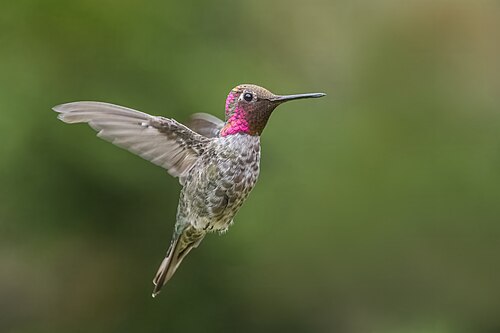
Anna’s Hummingbird
Calypte anna
A stocky Pacific Coast hummingbird with a rose-red head, now a year-round presence in many western yards and feeders.
- Tiny
- Backyards
- Cities
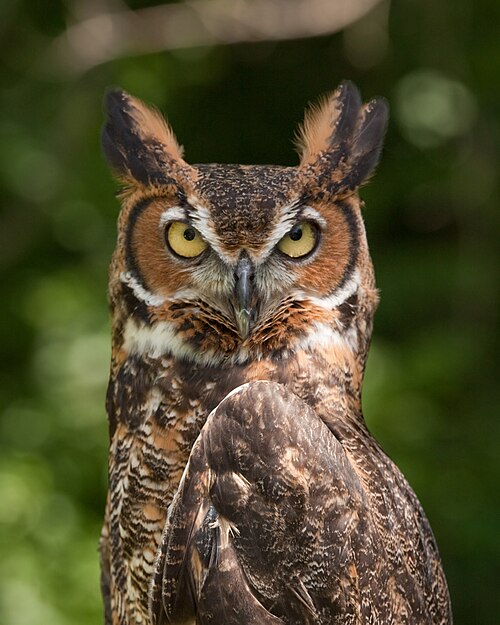
Great Horned Owl
Bubo virginianus
A big, heavy-bodied owl with feather tufts like horns and a deep, steady hoot. It lives in almost every kind of wooded or semi-open country.
- Large
- Forests
- Deserts
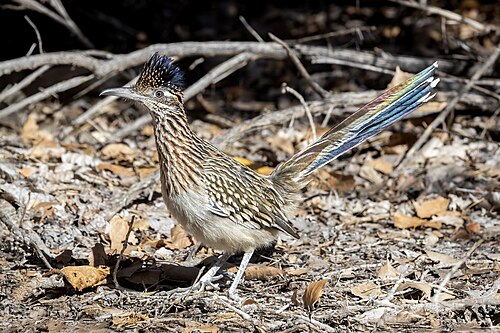
Greater Roadrunner
Geococcyx californianus
A long-tailed, ground-running cuckoo of the dry Southwest that hunts lizards, snakes, and big insects on foot.
- Large
- Deserts
- Grasslands
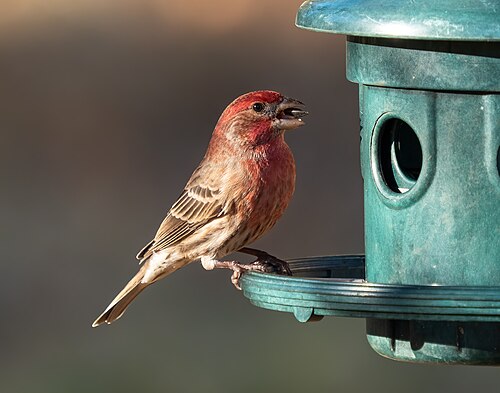
House Finch
Haemorhous mexicanus
A streaky brown finch. Males have a red head and chest. Native to the Southwest and now widespread in cities across the US.
- Small
- Cities
- Backyards
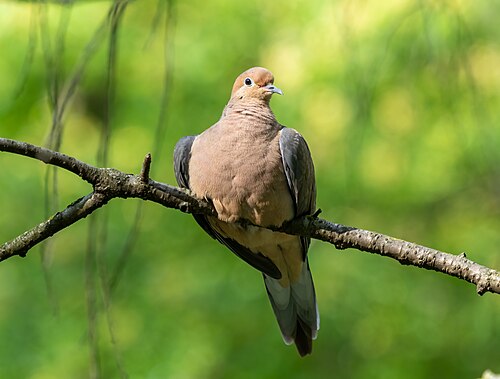
Mourning Dove
Zenaida macroura
A slim, soft gray-tan dove with a long pointed tail and a low, owl-like coo, common on wires, lawns and under feeders.
- Medium
- Backyards
- Grasslands
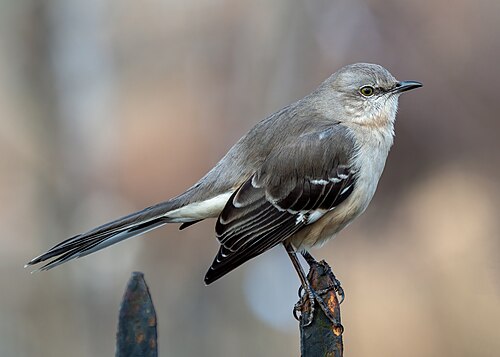
Northern Mockingbird
Mimus polyglottos
A slim gray songbird that sings from rooftops and wires, repeats borrowed phrases, and flashes white wing patches when it hops across a lawn.
- Medium
- Backyards
- Cities
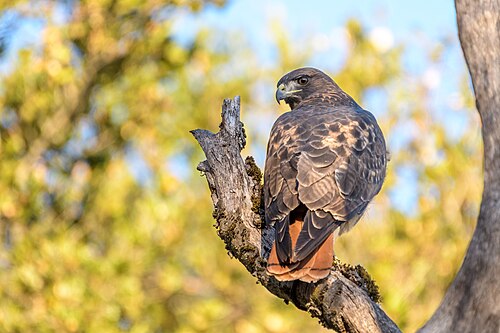
Red-tailed Hawk
Buteo jamaicensis
The most common large hawk in North America, often seen soaring over fields or perched on roadside poles, with a brick-red tail as an adult.
- Large
- Grasslands
- Forests
Related guides
Sources
Sources are the pages consulted when this entry was written. How we choose and use sources: sources and identification criteria.